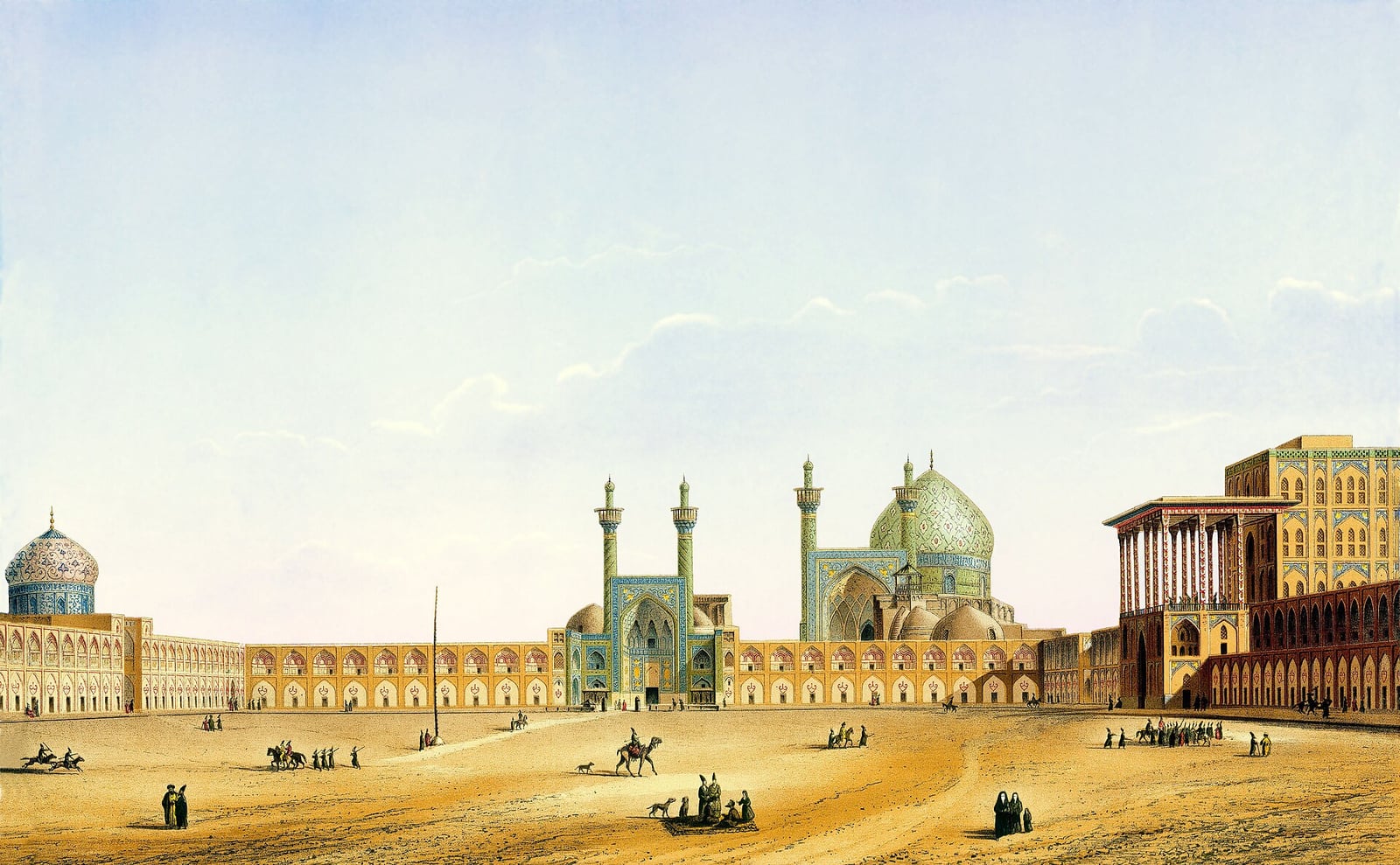
Shah Abbas Builds the Great Square of Isfahan
A new capital centered on one of the world’s largest city squares.
In 1598, Shah Abbas I relocated the seat of the Safavid Empire from Qazvin to Isfahan, setting off an extensive urban redevelopment program. Moving the administrative center southward left the imperial court far less exposed to military incursions by Ottoman forces. At the same time, the location along the Zayande River gave the Safavid state stronger administrative reach toward the Persian Gulf, where trading ventures like the English and Dutch East India companies were expanding their commercial presence.
Central to this transformation was the construction of the Maidan, known as Naqsh-e Jahan Square, whose design is traditionally credited in part to the scholar Shaykh Bahai. Beyond serving aesthetic goals, the grand public space functioned as a vehicle to consolidate imperial authority over provincial governors and the military elite of the Qizilbash. Measuring 160 meters wide by 560 meters long, the open rectangular expanse covered nearly 90,000 square meters, framed continuously by two-story vaulted porticoes housing rows of retail shops.

Keep reading in Yester
Coming soon to the App Store
Keep following the story
Sources
Image: Pascal Coste