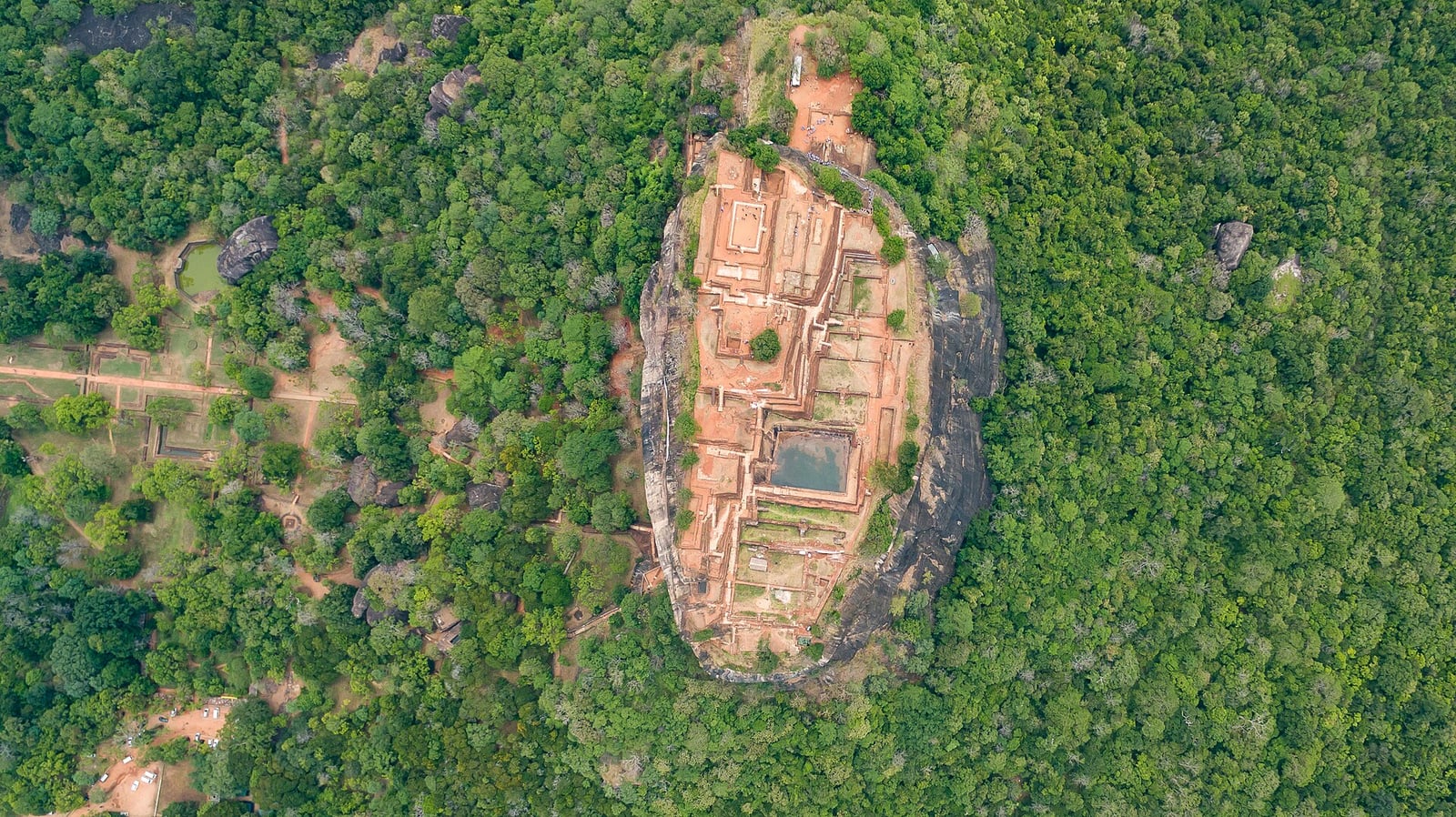
Sigiriya Combines a Rock Fortress with a Royal Landscape
Gardens, frescoes and waterworks reveal a complex political and artistic landscape in Sri Lanka.
Rising nearly two hundred meters above the central plains of Sri Lanka, the solitary granite column of Sigiriya was transformed during the late fifth century CE into a royal capital and citadel. According to the historical chronicle the Culavamsa, King Kashyapa established his seat here around 477 CE after seizing power from his father, Dhatusena. Fearing an attack by his exiled half-brother Moggallana, Kashyapa relocated the administrative center from Anuradhapura to this naturally fortified outcrop. Over his eighteen-year reign, builders constructed an upper palace upon the sheer summit, flanked by complex terraces, moats, and outer enclosures sprawling across the base.
Archaeological evidence demonstrates that human presence around the rock long predated the fifth-century royal citadel. Rock shelters such as Aligala reveal occupation dating to the Mesolithic period, while Brahmi inscriptions record that Buddhist ascetics resided in local caves as early as the third century BCE, receiving rock dwellings carved with drip ledges. While the Culavamsa presents Sigiriya as Kashyapa's defensive stronghold and palace, alternative traditions suggest different origins. Some accounts attribute the site to King Dhatusena, portraying Kashyapa as merely completing the project, while others characterize Sigiriya as a pleasure retreat. Certain scholars propose that the complex served primarily as a Buddhist monastery without military intent, perhaps reflecting rivalry between Mahayana and Theravada communities.

Keep reading in Yester
Coming soon to the App Store
Keep following the story
Sources
Image: dronepicr