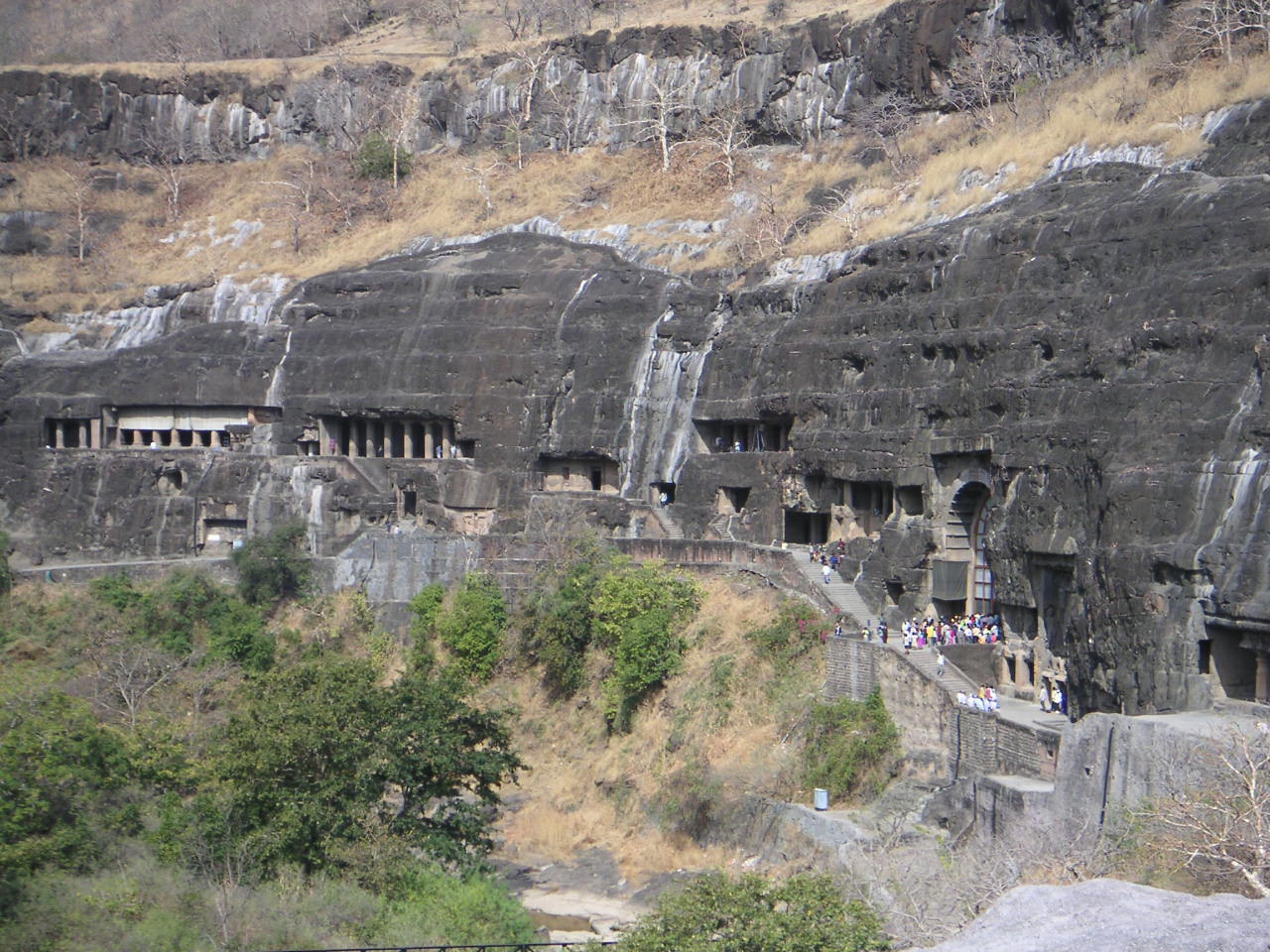
Ajanta’s Painters Fill Rock-Cut Caves with Human Stories
Buddhist murals in western India combine religious narratives with a richly observed social world.
In the basalt cliffs of the Waghur River gorge in western India, artisans excavated thirty rock-cut shrines and residential halls that preserve the largest surviving corpus of ancient Indian mural painting. Known collectively as the Ajanta Caves, the monuments encompass two separate periods of excavation. The earliest halls date to around the second century BCE through the first century CE, while the far more elaborate second group was constructed during the fifth century CE. Rather than serving purely ascetic ends, the monastic spaces combine devotional architecture with vibrant visual depictions of human life, royal courts, and religious narratives.
The primary subjects of the wall paintings are the Jataka tales, which recount the previous lives of the Buddha before his final rebirth. Across halls such as Caves 1, 2, 16, and 17, painters covered dry plaster surfaces with wide, multidirectional narrative compositions rather than rigid linear friezes. In Cave 1, widely linked to royal patronage, the murals focus on past lives in which the Buddha ruled as an earthly monarch preparing to renounce regal status. Alongside scenes of piety, the artists depicted courtiers, lovers, musicians, and domestic servants, using physical gesture and expressive posture to present human emotion within sacred architecture.

Keep reading in Yester
Coming soon to the App Store
Keep following the story
Sources
Image: No machine-readable author provided. Soman assumed (based on copyright claims).