Angkor Wat Builds a Universe in Stone
A Khmer king commissioned a temple on the scale of a landscape. Its towers and galleries expressed a sacred order, while the city around it depended on very practical work.
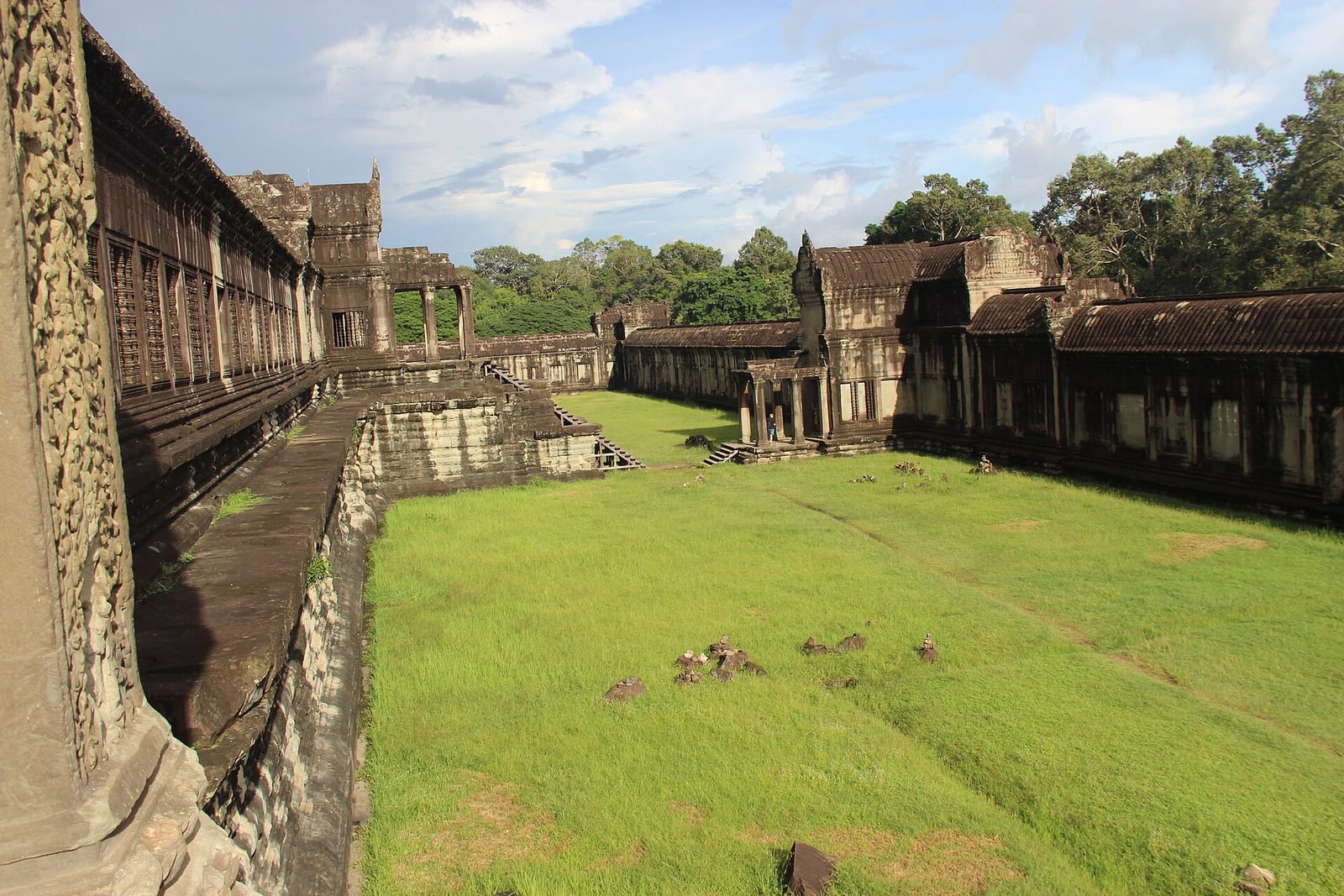
Approaching Angkor Wat means crossing water before entering a sequence of galleries and rising towers. The movement is part of the design. Built in the early twelfth century under the Khmer king Suryavarman II, the temple translated a sacred view of the universe into an experience of space. It was not simply a large building with decoration added afterward. Architecture, sculpture and the controlled passage toward the center worked together to make royal and religious order visible.
The temple was dedicated to Vishnu, and its central towers evoke Mount Meru, the cosmic mountain of Hindu and Buddhist traditions. Galleries carry extensive carved narratives. Their subjects connect divine stories with images of kingship and organized human activity. For a visitor, the building offers several scales of attention: the silhouette across the water, the measured walk through an enclosure, and the details of a figure cut into stone. Its ambition lies in the relationship among those scales.

Keep reading in Yester
Coming soon to the App Store
Keep following the story
Sources
Image: Gary Todd from Xinzheng, China