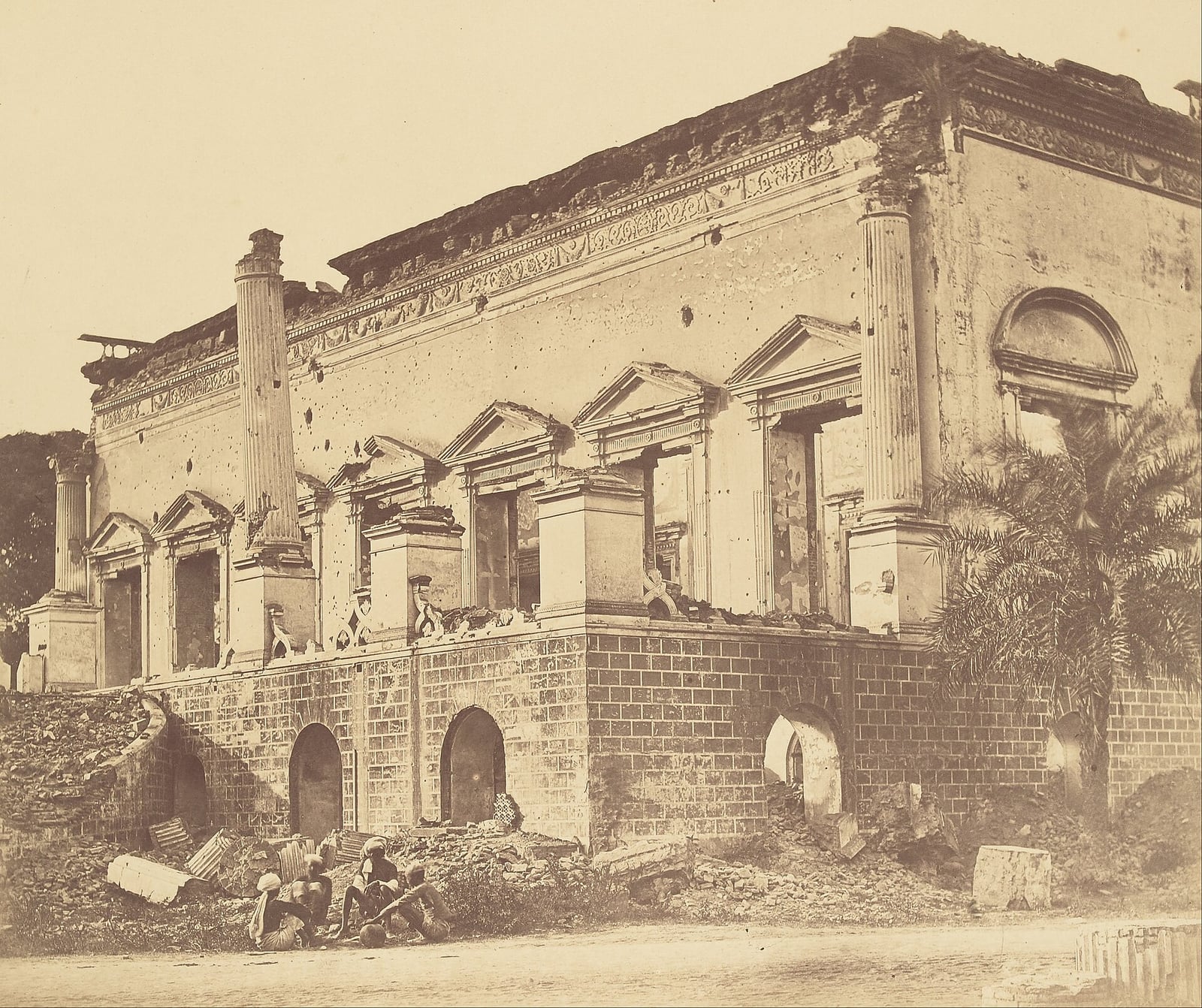
A Rebellion Spreads Across Northern India
A revolt against East India Company rule led to direct British government control.
On 10 May 1857, Indian soldiers stationed at the East India Company cantonment in Meerut turned against their commanders, beginning a vast armed uprising that challenged corporate governance across northern and central India. The company had maintained control through three regional armies, but the Bengal Army was particularly fragile. Its ranks drew heavily from high-caste Hindu and landowning communities in Bihar and Awadh, groups that held customary exemptions and ritual privileges. When administrative policies, low wages, and diminished allowances began eroding these advantages, discontent mounted steadily among the troops.
Tensions accelerated in early 1857 following the introduction of the Pattern 1853 Enfield rifle, whose paper cartridges required soldiers to tear them open with their teeth. Rumours spread rapidly that the grease coating the ammunition was composed of cow tallow and pig lard, which directly offended Hindu and Muslim dietary laws. Modern historians note that whether contaminated fat had actually been issued mattered less than the pervasive suspicion it generated. Earlier attempts to quell unrest, such as the disbanding of Mangal Pandey's entire regiment after he attacked his officers at Barrackpore on 29 March, had only heightened resentment throughout northern garrisons.

Keep reading in Yester
Coming soon to the App Store
Keep following the story
Sources
- Why did the Indian Rebellion happen? (National Army Museum)
- Decisive events of the Indian Rebellion (National Army Museum)
- British India and the 'Great Rebellion', by Peter Marshall (BBC History)
- Indians mark revolt anniversary (BBC News)
- The Government of India Act 1858 (legislation.gov.uk, The National Archives)
- Indian Rebellion of 1857
Image: Felice Beato