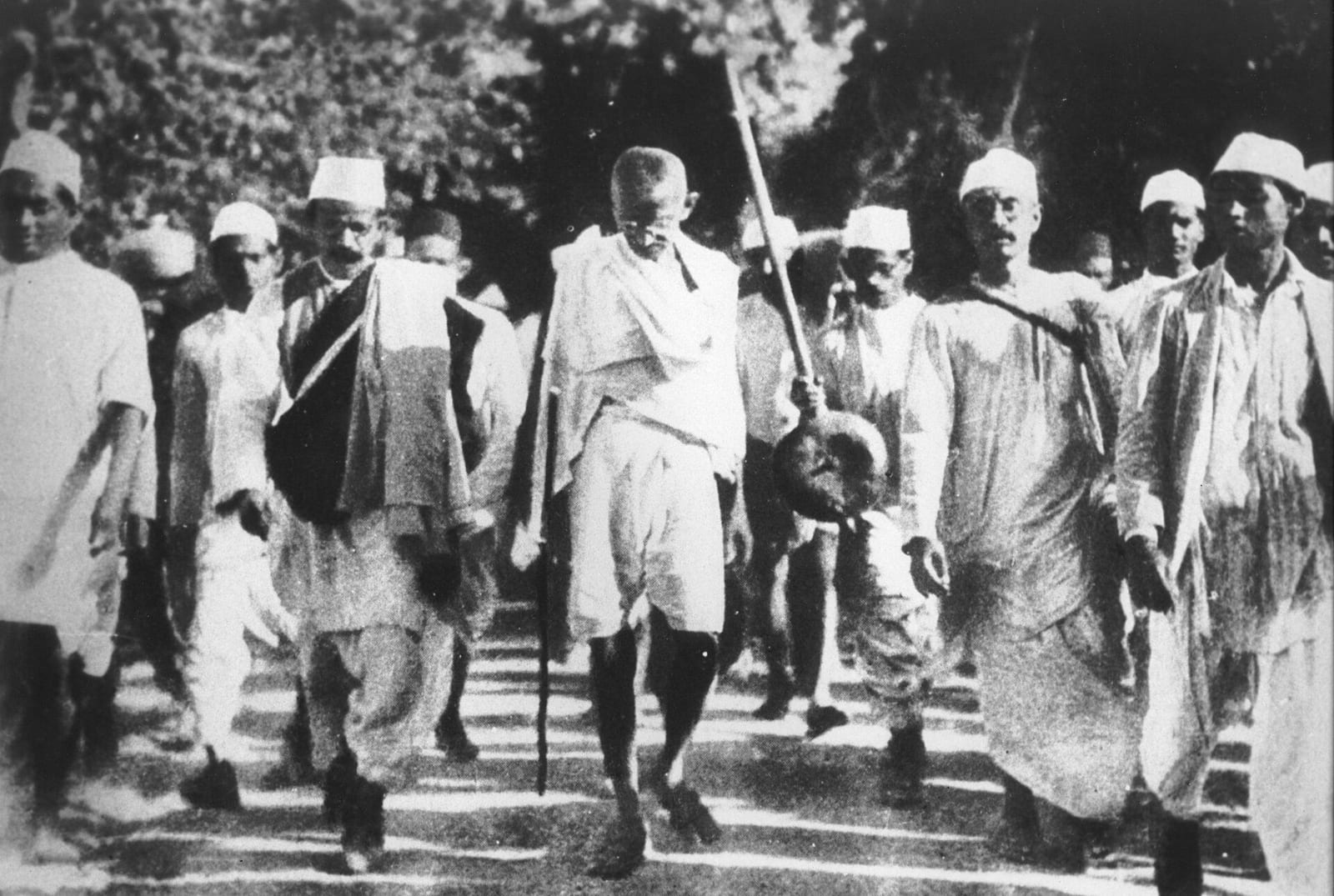
A Handful of Salt Against an Empire
Gandhi chose an ordinary necessity to challenge colonial authority. The walk to Dandi turned the salt law into a question millions of people could understand.
Salt was an unusual object around which to build a confrontation with an empire. It was not a palace, a military installation or an expensive imported luxury. It was a necessity. British control over its production and sale made an ordinary substance part of colonial power. Gandhi chose that connection deliberately. A campaign about salt could make a large argument about who governed India visible through something people encountered in daily life.
On March 12, 1930, Gandhi left Sabarmati Ashram with a group of seventy-eight companions and began walking toward Dandi on the Gujarat coast. The journey covered roughly 240 miles. Walking made the protest unfold over days rather than appear as a single surprise. People could see it approach, discuss its purpose and decide how to respond. The procession’s pace turned a planned act of lawbreaking into a public event before it reached the sea.

Keep reading in Yester
Coming soon to the App Store
Keep following the story
Sources
Image: Yann ( talk )