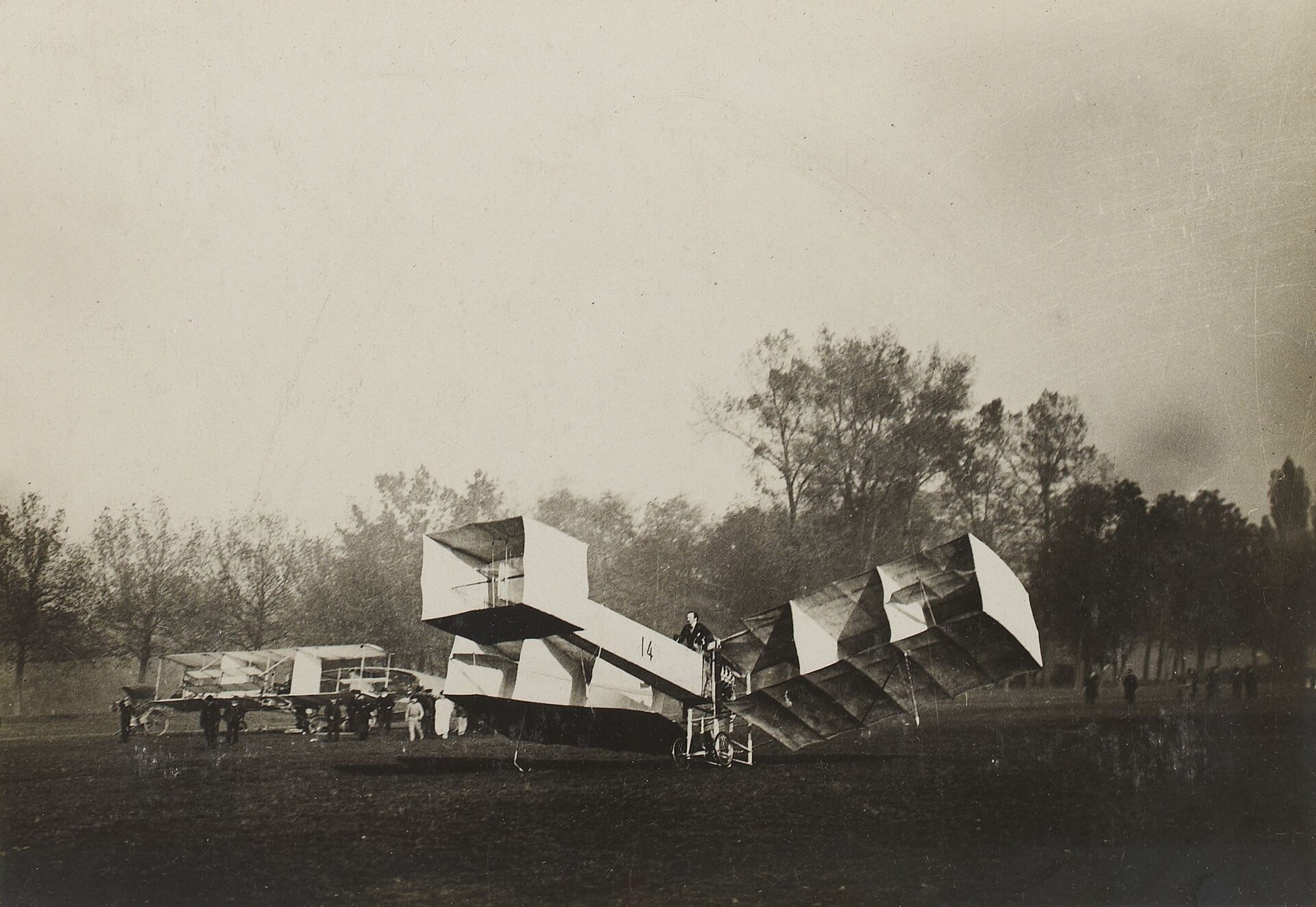
Santos-Dumont Makes Powered Flight a Public Spectacle
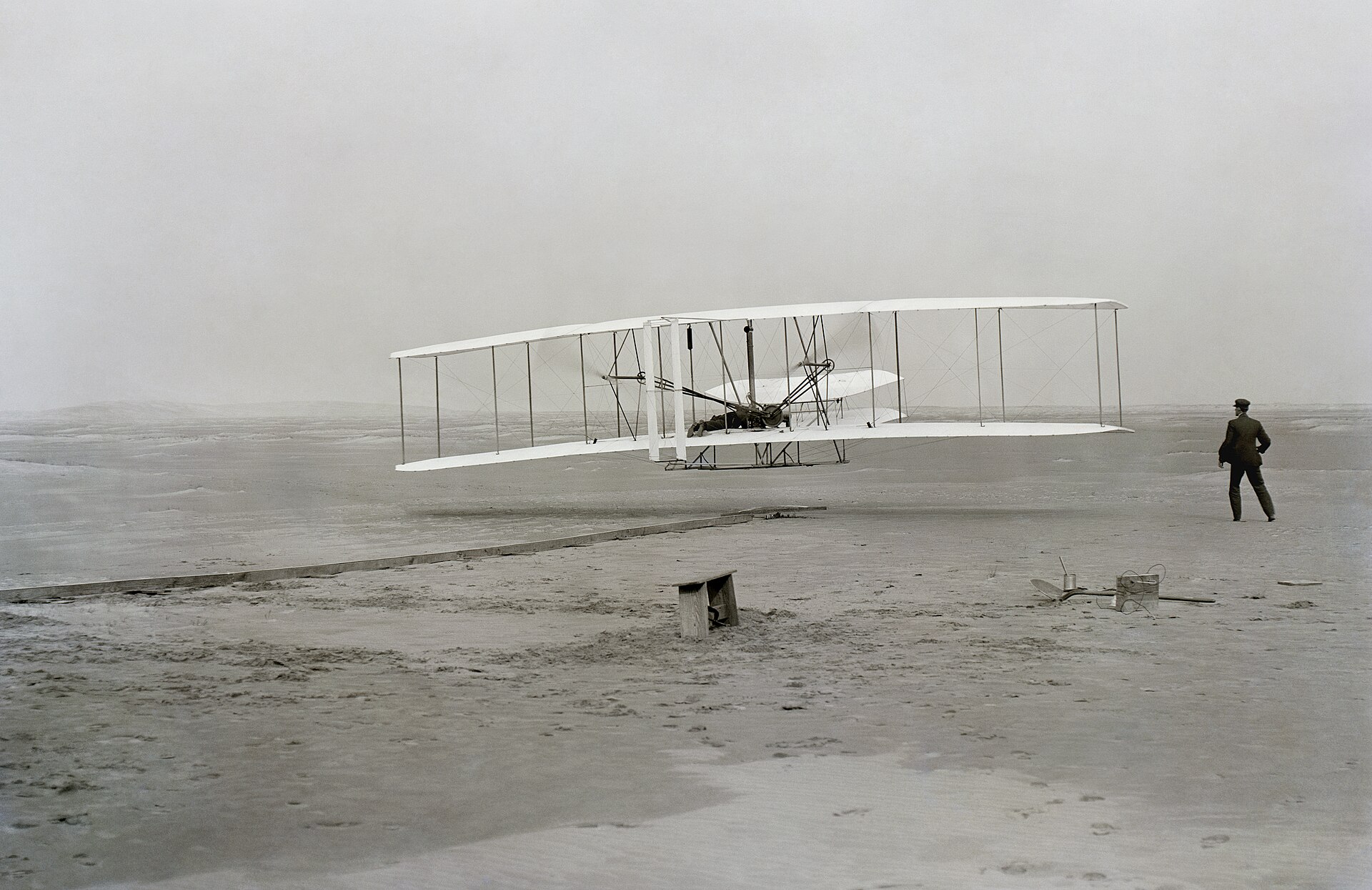
The 14-bis flew before witnesses in Paris in 1906. Its significance lies in demonstrable achievement, not in erasing the different experiments that had already made flight possible.
In the autumn of 1906, Brazilian aeronaut Alberto Santos-Dumont brought his experimental biplane, the 14-bis, before gathering spectators and official judges in Paris. Already widely known in Europe for designing and piloting agile non-rigid airships, Santos-Dumont turned toward heavier-than-air machines following encounters with contemporaries like Gabriel Voisin. Seeking to claim prizes offered by the Aero-Club de France to stimulate domestic aviation, Santos-Dumont devised a machine framed from pine and bamboo, jointed with aluminium sockets, and enclosed in Japanese silk.
The architecture of the 14-bis employed Hargrave cells, box-kite structures arranged at the rear with pronounced upward dihedral to provide lateral stability. At the nose, Santos-Dumont mounted an adjustable cellular unit on a universal joint, operated by control cables to manage pitch and yaw in what later became known as a canard configuration. The pilot stood upright in an open wicker basket directly ahead of an Antoinette 8V liquid-cooled engine, which drove an aft-mounted pusher propeller. Initial suspended tests underneath his No. 14 airship nearly damaged the envelope, prompting Santos-Dumont to shift to cable-slung trials and subsequent unassisted runway runs.

Keep reading in Yester
Coming soon to the App Store
Keep following the story

Sources
Image: Jules Beau