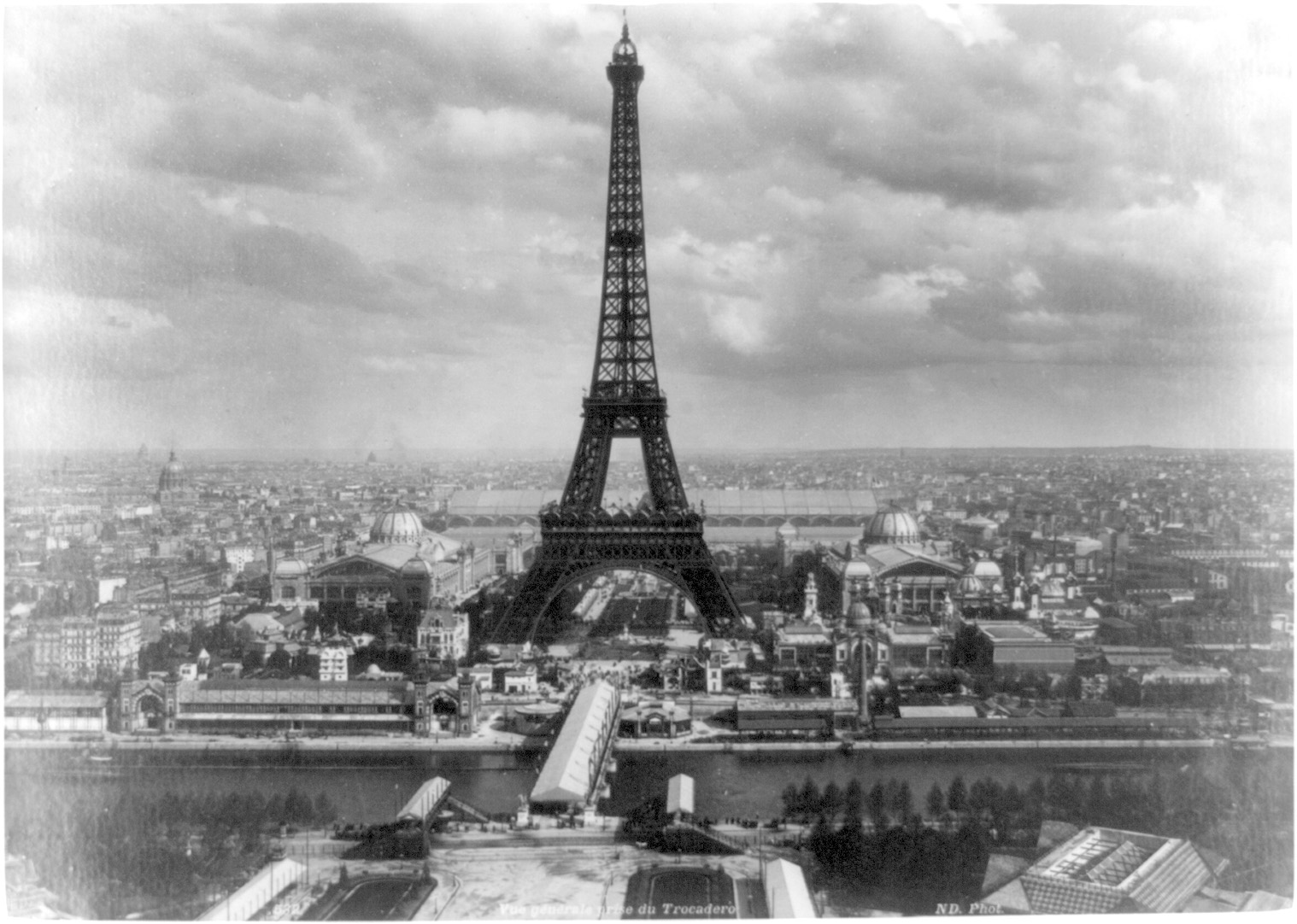
The Tower Paris Had to Get Used To
Built for an exposition, the Eiffel Tower made its structure impossible to ignore. Its survival depended on more than becoming a beloved view of Paris.
Before it became the most familiar outline in Paris, the Eiffel Tower was a proposal that many people had to be persuaded to accept. A structure of exposed iron rising above the city did not resemble the monumental architecture through which Paris usually presented itself. It advertised its engineering instead of concealing it behind stone. Built for the 1889 Exposition Universelle, it asked visitors to see industrial construction itself as something worth traveling to admire.
Gustave Eiffel gave the project its name and the resources of his company, but the design emerged through collaboration. Engineers Maurice Koechlin and Émile Nouguier developed the initial concept, and architect Stephen Sauvestre contributed to its architectural treatment. Remembering those names changes the picture from a solitary inspiration into an organized effort. The tower required calculations, drawings, fabrication and assembly to remain consistent across thousands of separate decisions made by different people.

Keep reading in Yester
Coming soon to the App Store
Keep following the story
Sources
Image: Neurdein