The Stone That Helped Egypt Speak Again
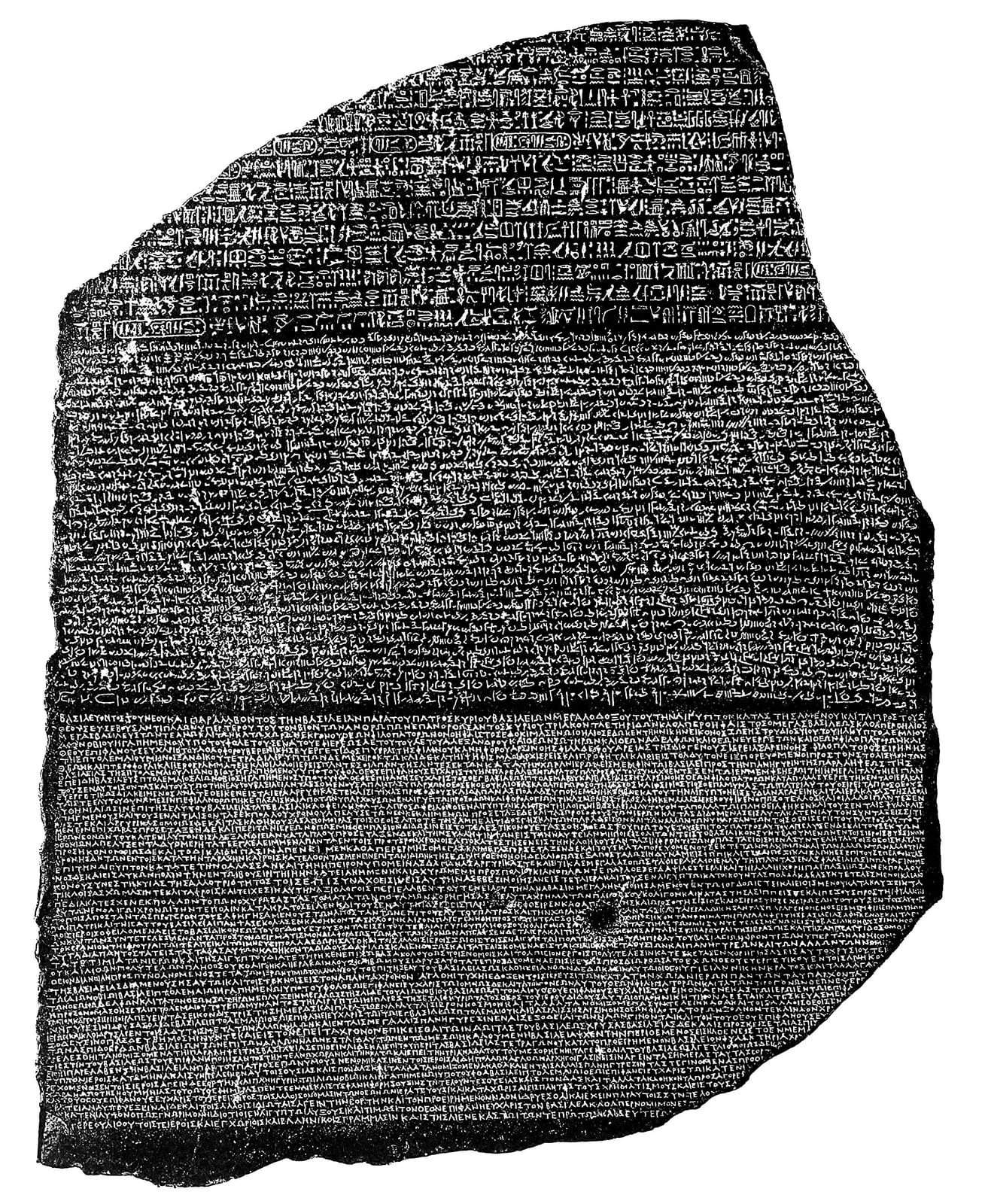
The Rosetta Stone offered the same royal decree in different scripts. Reading it required more than matching pictures to letters: Champollion had to rethink how Egyptian writing worked.
The Rosetta Stone did not contain a message written for future archaeologists. It carried a priestly decree honoring King Ptolemy V in 196 BCE. Its extraordinary later usefulness came from repetition: the decree appeared in hieroglyphic, demotic and Greek scripts. These were three scripts, not three different languages. Greek could still be read by scholars, while the Egyptian inscriptions posed a difficult problem. The object offered a comparison, but it did not supply an instruction manual for making that comparison work.
French soldiers found the stone near Rashid, known in Europe as Rosetta, in 1799, during the military campaign in Egypt. It passed into British possession after the French defeat and was displayed at the British Museum from 1802. That history belongs to warfare and imperial collecting, not a neutral delivery of an ancient object to European science. The stone’s scholarly importance should not make the circumstances of its movement disappear from the account.

Keep reading in Yester
Coming soon to the App Store
Keep following the story
Sources
Image: Book: Sir Ernest Alfred Wallis (1857-1934) Photo: Donald Macbeth