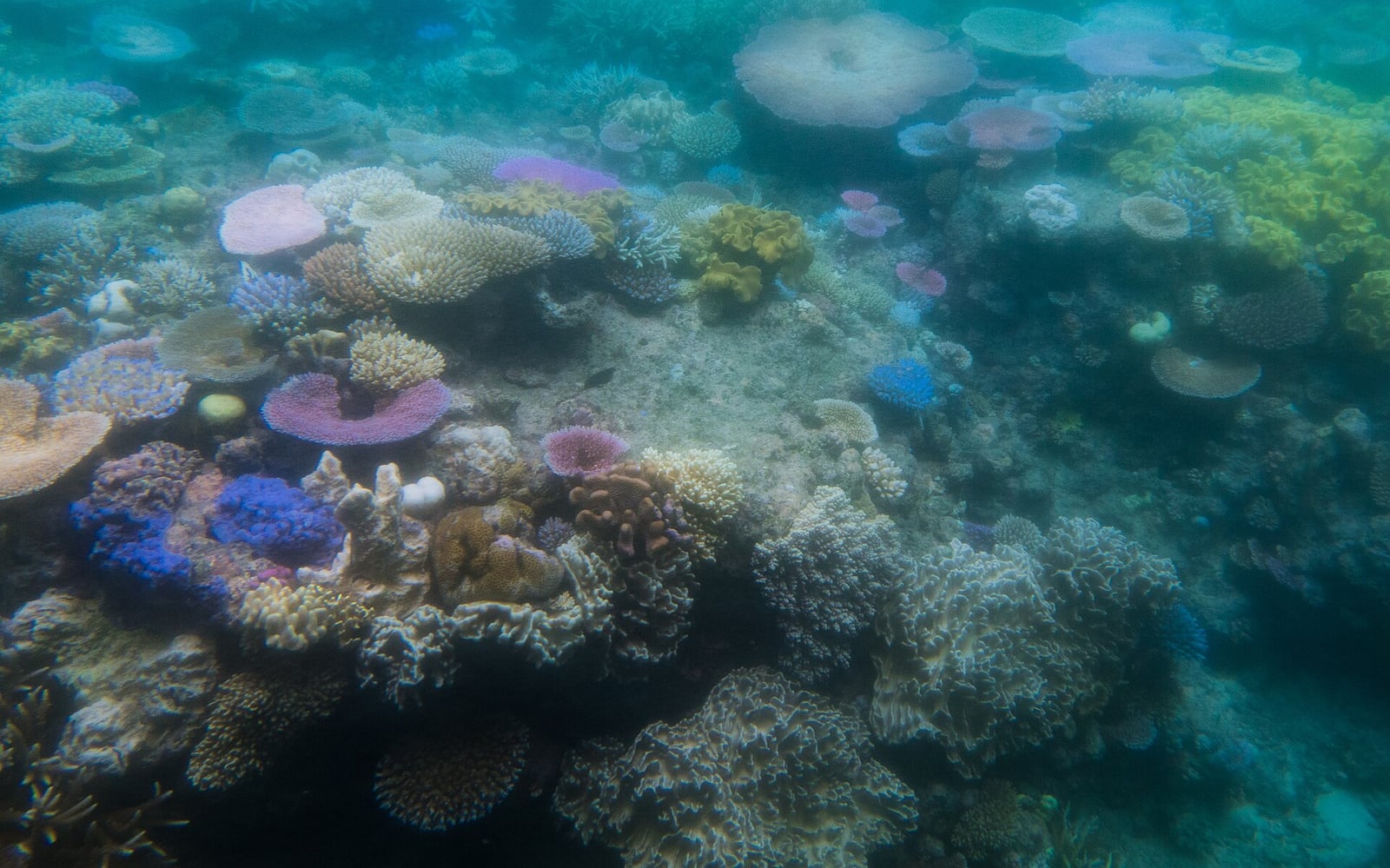
Mass Bleaching Strikes the Great Barrier Reef
Record ocean heat bleached and killed large areas of coral.
In March 2016, water temperatures along Australia's north-eastern coast rose far above normal, and researchers surveying the Great Barrier Reef found mass bleaching that was most severe in the north. Elevated ocean temperatures triggered mass coral bleaching, a stress response where coral polyps expel the symbiotic algae essential for their survival. While bleached corals can recover if temperatures cool in time, the heat persisted for months across vast areas off the northeastern coast of Queensland. A study published in Nature in 2018 found that about 30 percent of the reef's corals died over the nine months from March 2016, with 29 percent of its 3,863 reefs losing two-thirds of their coral, mostly in the north.
The disaster marked an acute inflection point in the modern history of the marine system. Extending some 2,000 kilometres along the coast of Queensland, the Great Barrier Reef comprises thousands of individual reefs and more than 900 islands. Aboriginal and Torres Strait Islander peoples maintain strong ongoing links to these waters as their sea country. The reef was inscribed on the World Heritage List in 1981, and about 99 percent of the listed area lies within the Great Barrier Reef Marine Park.

Keep reading in Yester
Coming soon to the App Store
Keep following the story


Sources
- Great Barrier Reef, World Heritage List (UNESCO World Heritage Centre)
- The 27-year decline of coral cover on the Great Barrier Reef and its causes (PNAS, via PubMed Central)
- 2016 Ocean Heatwave Killed 30 Percent of the Great Barrier Reef (Smithsonian Magazine)
- Global warming impairs stock-recruitment dynamics of corals (Nature)
- Climate change drives sharpest Great Barrier Reef coral loss in nearly 40 years (Down To Earth)
- Great Barrier Reef
Image: Jay Galvin