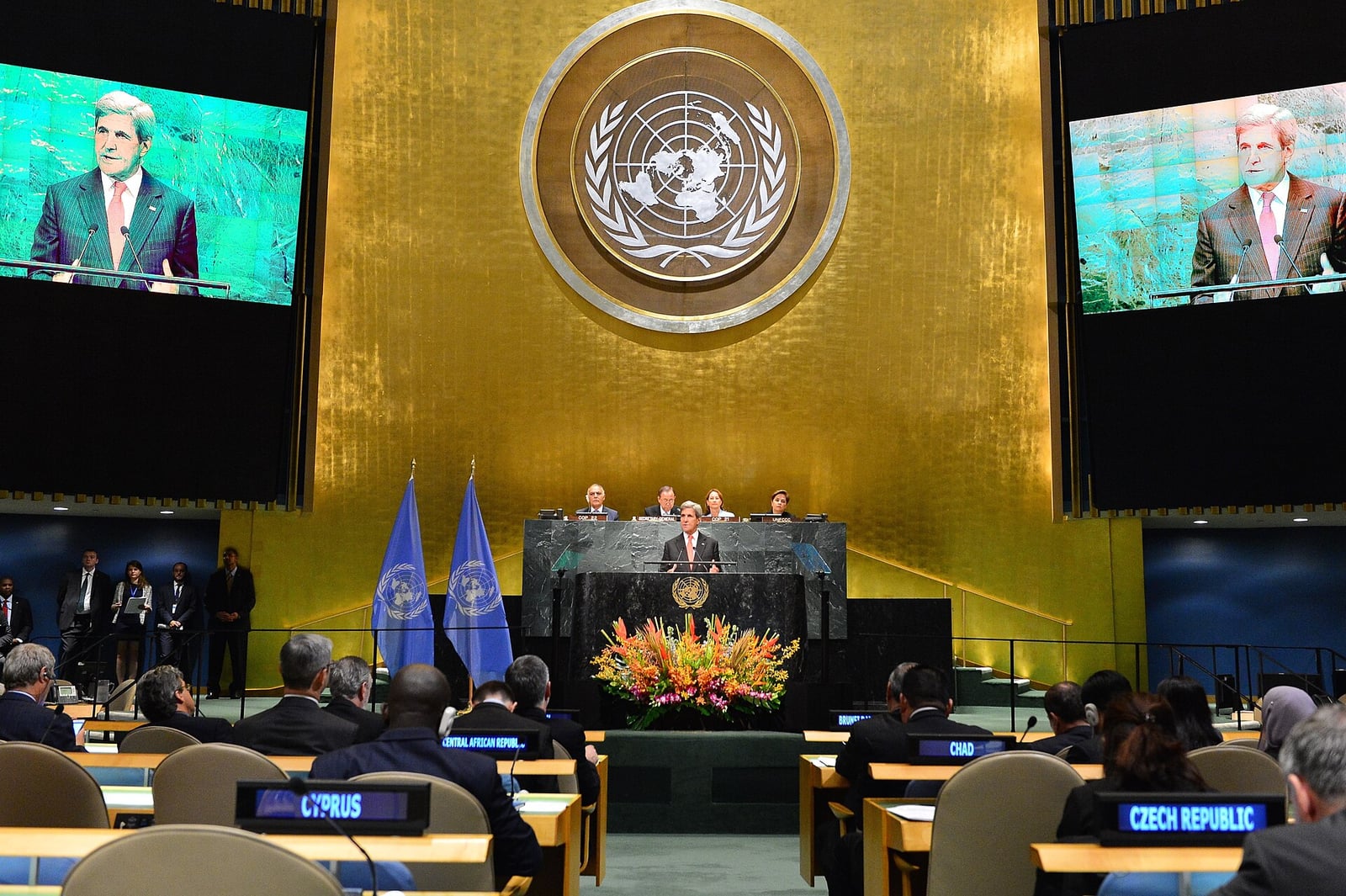
Nearly Every Nation Adopts the Paris Climate Agreement
Countries agreed to limit global warming and report their emissions.
On 12 December 2015, the Parties to the United Nations Framework Convention on Climate Change, including the European Union, reached a consensus near Paris, adopting the Paris Agreement. The treaty was designed to bolster the international response to climate change by addressing mitigation, adaptation, and finance. Its central long-term benchmark set an objective to keep the rise in global surface temperature well below 2 degrees Celsius above pre-industrial levels, while urging governments to pursue efforts limiting the rise to 1.5 degrees Celsius over multi-decade averages.
Negotiated during the twenty-first Conference of the Parties, known as COP21, the agreement emerged from years of difficult diplomacy following the collapse of talks in Copenhagen in 2009. The resulting structure departed significantly from its predecessor, the 1997 Kyoto Protocol. While Kyoto imposed legally binding reduction targets on a specific group of industrialized states, the Paris pact instituted a bottom-up framework. Under this system, individual countries determine, plan, and submit their own voluntary emission reduction targets, designated as nationally determined contributions, every five years.

Keep reading in Yester
Coming soon to the App Store
Keep following the story


Sources
- Paris Agreement, Status of ratification (United Nations Treaty Collection)
- The Paris Agreement (United Nations)
- COP21: UN chief hails new climate change agreement as 'monumental triumph' (UN News)
- WMO confirms 2024 as warmest year on record at about 1.55°C above pre-industrial level (World Meteorological Organization)
- Oil giant Shell wins appeal on landmark emissions ruling in the Netherlands (Al Jazeera)
- Klimaatzaak Urgenda (De Rechtspraak, Netherlands Judiciary)
- Paris Agreement
Image: U.S. Department of State from United States