Raden Saleh Repaints a Colonial Arrest
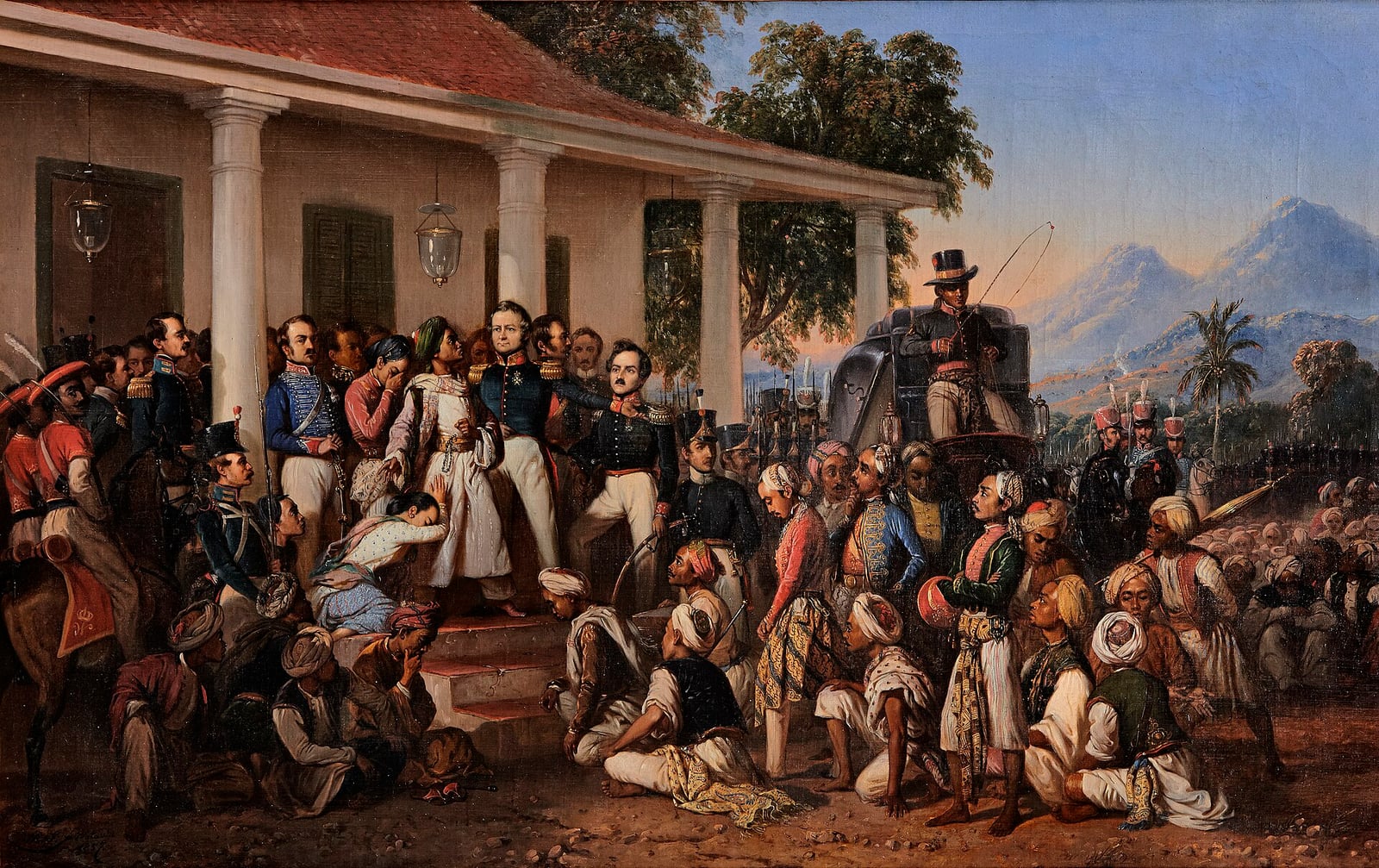
In 1857, a Javanese painter revisited the capture of Prince Diponegoro. His composition challenged how a familiar event could be framed without pretending to be an eyewitness record.
In 1857, the Javanese artist Raden Saleh completed The Arrest of Pangeran Diponegoro, an oil painting depicting the 1830 capture of the rebel leader Prince Diponegoro by Dutch colonial authorities. The historical incident had brought an end to the five-year Java War when Diponegoro, lured to Magelang under the impression that he was attending cease-fire negotiations, was taken into custody through colonial deceit and subsequently exiled. Saleh, who was not present at the arrest, constructed his historical work decades later, explicitly revisiting a composition created earlier by the Dutch painter Nicolaas Pieneman.
Saleh had spent more than two decades in Europe studying and working as a painter. Initially trained in Bogor by the Belgian artist A.J. Payen, he traveled to the Netherlands in 1829 under colonial government patronage. There he studied portraiture under Cornelis Kruseman and landscape painting with Andreas Schelfhout, later finding patronage at European courts such as that of Ernest I, Duke of Saxe-Coburg and Gotha. While living abroad, Saleh likely encountered Pieneman's earlier rendition of the event, which had been commissioned by Lieutenant General Hendrik Merkus de Kock.

Keep reading in Yester
Coming soon to the App Store
Keep following the story
Sources
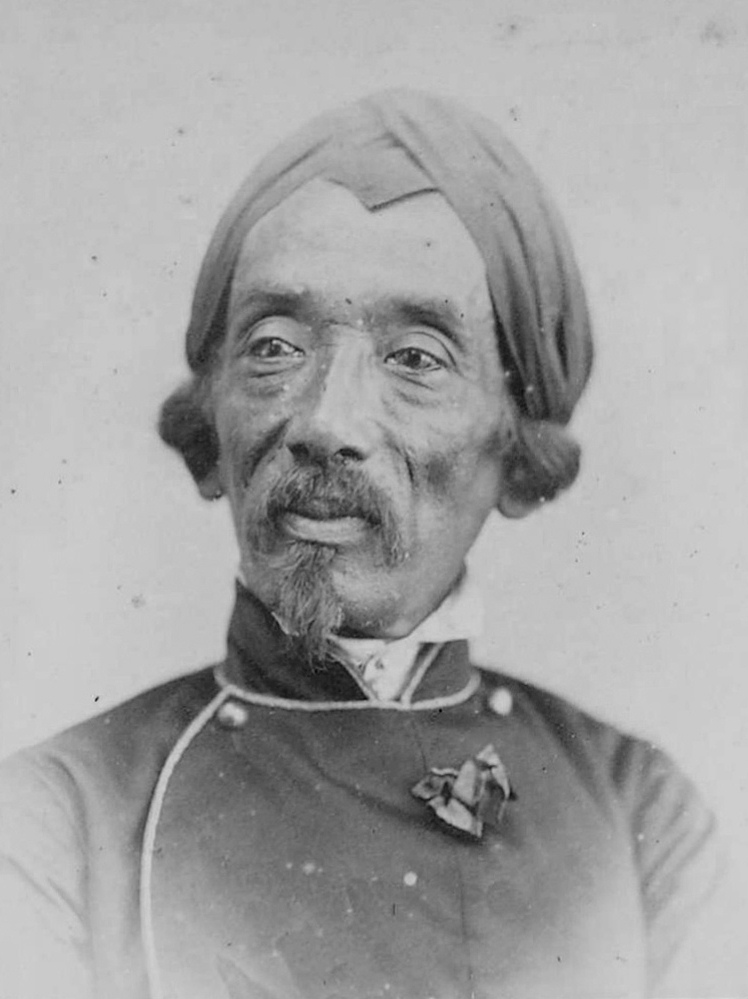
Image: Woodbury & Page (Walter B. Woodbury died in 1885)