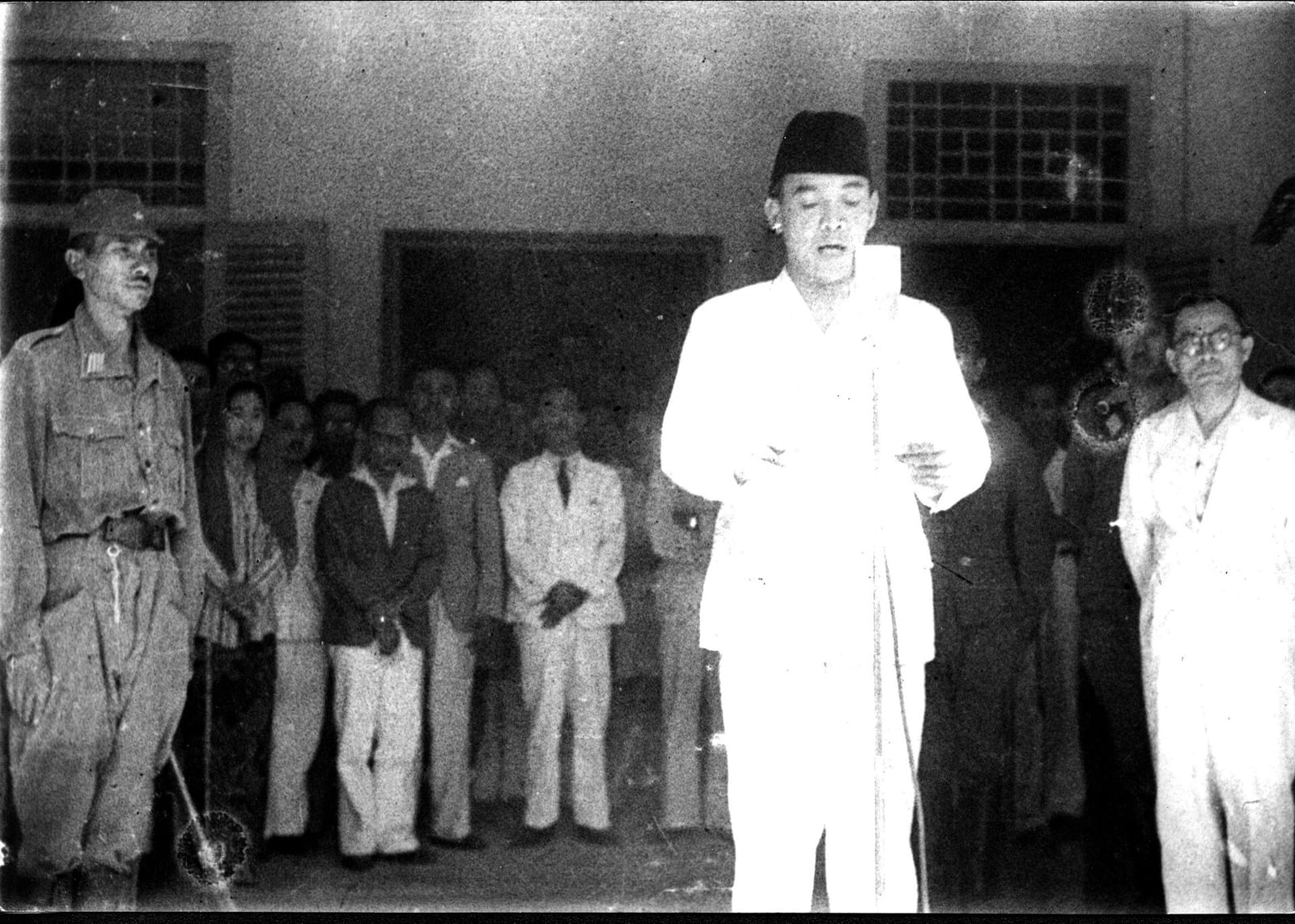
Two Sentences Declare Indonesia Independent
The announcement outside a Jakarta house was brief. Making its words a political reality required years of revolution, negotiation and sacrifice.
On the morning of August 17, 1945, Sukarno stood outside a house in Jakarta and read a brief proclamation. Mohammad Hatta stood beside him. The declaration announced Indonesian independence and stated that matters concerning the transfer of power would be arranged. Its brevity is striking against the scale of what it claimed: an archipelago long subjected to colonial rule would now speak as a country. Saying those words was a beginning, not the completion of independence.
Japan’s wartime occupation had displaced Dutch colonial authority, but it had not delivered freedom. When Japan announced its surrender, political space opened rapidly and uncertainty remained. Indonesian nationalists had to decide how and when to act rather than wait for another outside power to settle the country’s future. The proclamation asserted that independence belonged to the Indonesian people. Its authority did not depend on being granted as a reward by the defeated occupier or approved in advance by the returning Dutch.

Keep reading in Yester
Coming soon to the App Store
Keep following the story
Sources
Image: Frans Mendur (also Frans Mendoer) (1913 – 1971)