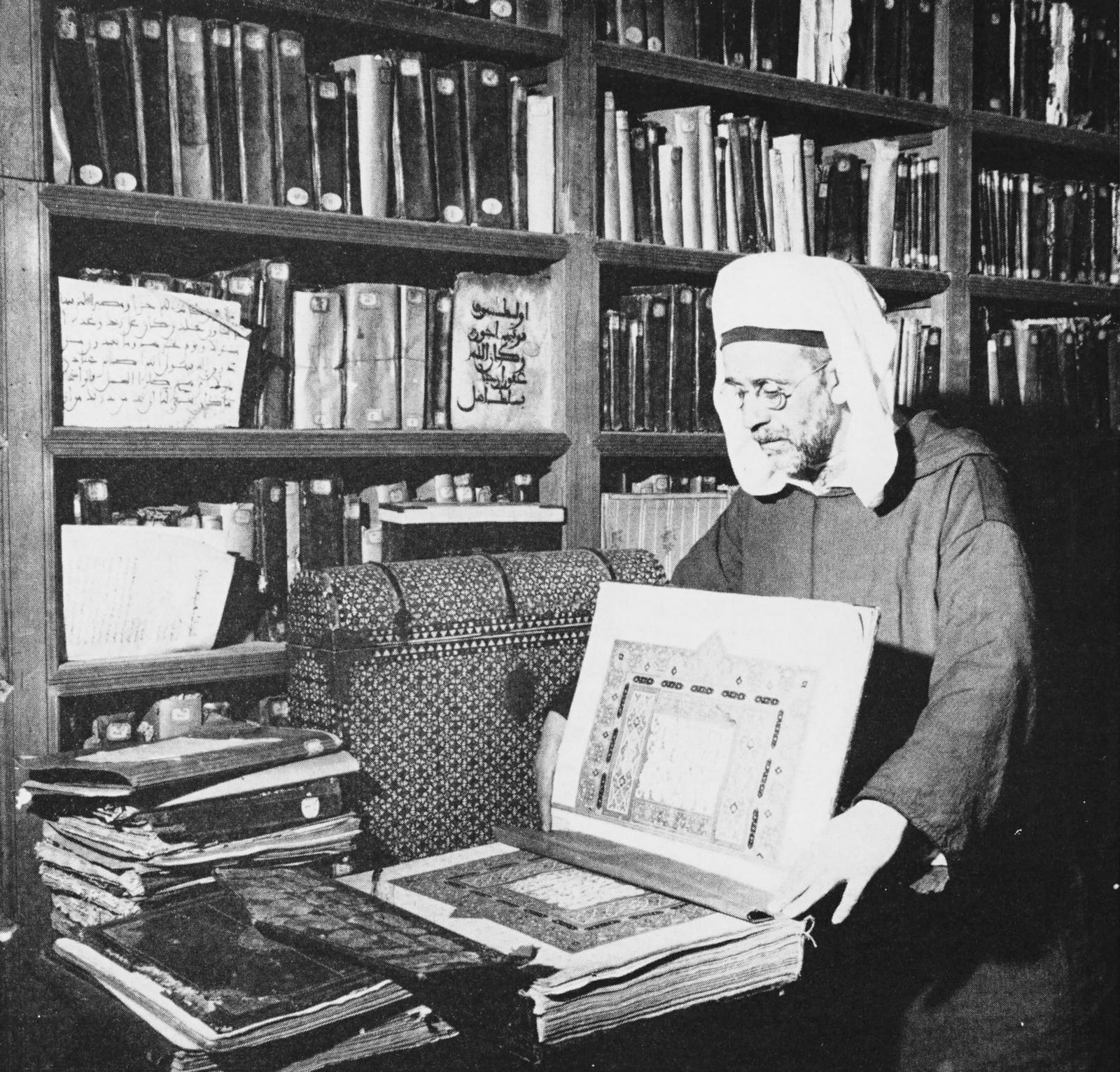
Al-Qarawiyyin Grows into a Center of Learning in Fez
A mosque and its teaching traditions developed over centuries, beyond simple claims about the first university.
In the ninth century, the city of Fez grew as the capital of the Idrisid dynasty, establishing itself as an administrative and cultural hub in what is now Morocco. Traditional historical accounts, recorded most prominently by fourteenth-century chronicler Ibn Abi Zar in the Rawd al-Qirtas, attribute the foundation of the Qarawiyyin Mosque to 857 or 859. According to this narrative, Fatima al-Fihri, a member of an emigrant family from Kairouan, dedicated her entire inheritance to erect a place of worship for her local community. Some modern historians, however, question this traditional account, noting that early texts provide scant verification and that a cedar wood foundation inscription rediscovered during twentieth-century renovations names Dawud ibn Idris as the founder in 877.
Regardless of its exact origins, the mosque rapidly evolved into a multifunctional civic space. Major mosques throughout the early Islamic world commonly housed teaching circles alongside daily prayers and communal governance. Early instruction at al-Qarawiyyin followed this fluid structure, where scholars gathered around individual pillars to guide study circles in Quranic recitation, hadith, and Islamic legal traditions. Early documentation remains sparse, with no systematic educational program described in ninth- or tenth-century records. While later traditions assumed teaching began from the very outset, modern historians propose dates ranging from the Almoravid period in the twelfth century to the Marinid era in the thirteenth century for the emergence of structured schooling.

Keep reading in Yester
Coming soon to the App Store
Keep following the story
Sources
Image: Istiqlal (Independence) Party of Morocco, Moroccan Office of Information and Documentation