Timbuktu’s Manuscripts Reveal a City of Readers
Books on law, astronomy, medicine and other subjects complicate the familiar image of a remote desert city. Preserving them also means recognizing the families who kept them.
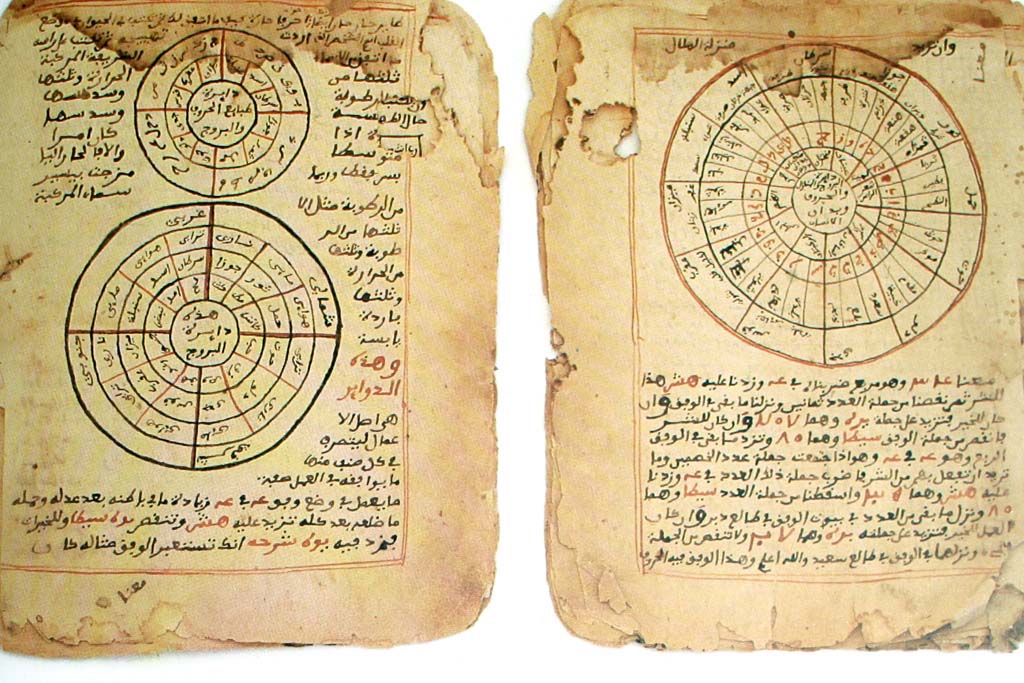
In the northern Malian city of Timbuktu, vast private household archives have long preserved a diverse written culture dating from the late thirteenth century to the early twentieth century. Spanning the era from the Islamisation of the Mali Empire through the decline of traditional regional schooling under French colonial rule, these works demonstrate that the city functioned as an active hub of intellectual life. Far from being confined to religious devotional texts, the surviving volumes record a wide range of academic, legal, and everyday inquiries.
The manuscripts are primarily composed in Arabic, though many use the Arabic script to transcribe African languages such as Songhay, Tamasheq, Fula, Bambara, and Soninke in a tradition known as Ajami. Local copyists transcribed classical works, producing copies of medical and philosophical treatises by thinkers such as Plato, Hippocrates, and Avicenna, alongside dictionaries and other reference works. Native scholars simultaneously generated their own literature, composing histories, poetry, and formal legal analyses addressing Islamic jurisprudence and obligatory alms.

Keep reading in Yester
Coming soon to the App Store
Keep following the story
Sources
Image: Elias Altmimi