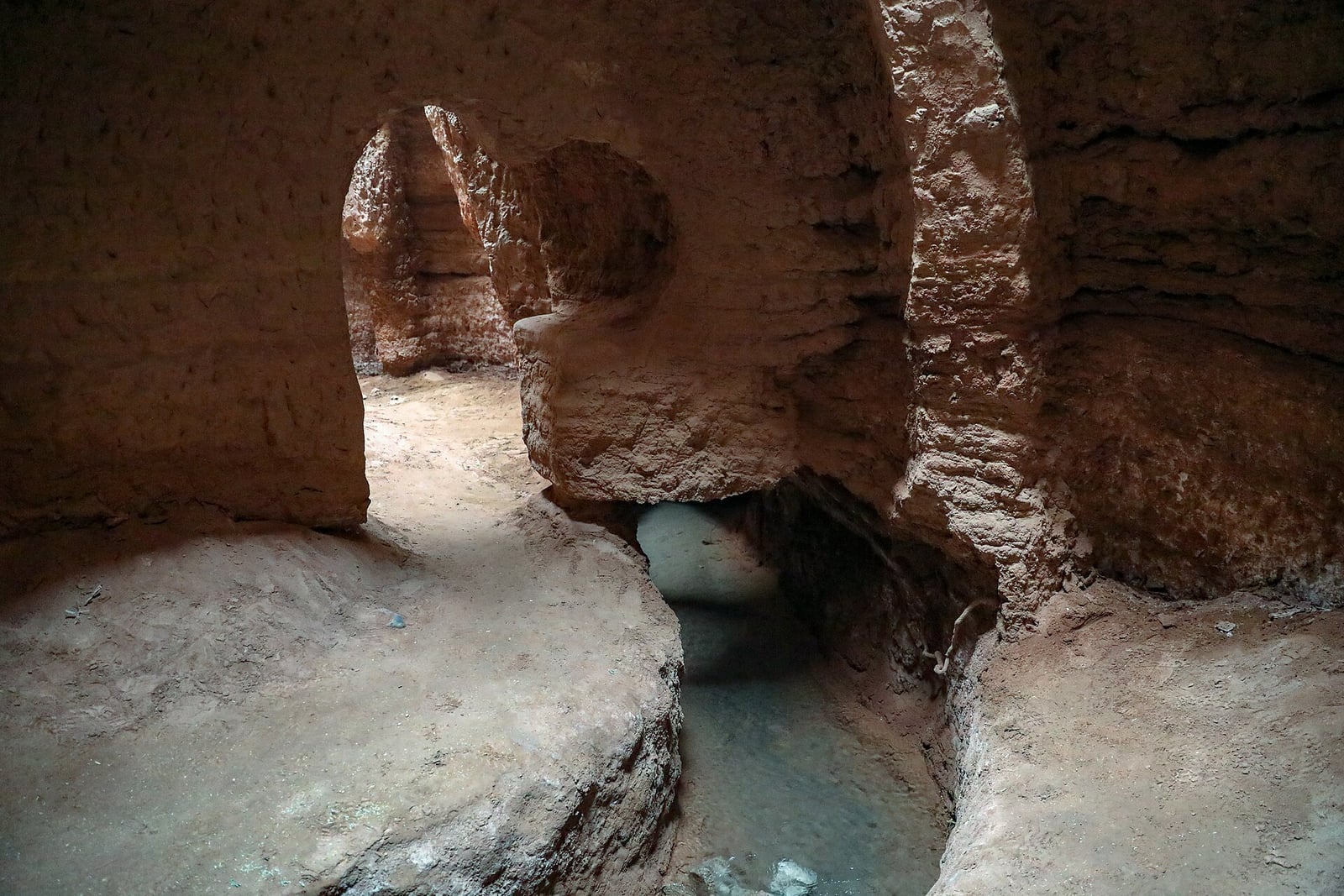
Persian Engineers Tunnel for Water with Qanats
Gently sloping underground channels carried groundwater to desert fields without any pumps.
Across the arid landscapes of the Iranian plateau, perennial rivers were scarce and intense heat quickly evaporated standing surface reservoirs. To cultivate the soil and sustain growing urban centers, ancient communities turned to subterranean engineering. Most historical accounts place the emergence of the qanat, or underground aqueduct, in early first millennium BCE Iran, although some scholars propose an origin in southeastern Arabia. By excavating gently declining subterranean conduits that tapped upland groundwater, builders guided water across arid basins without relying on mechanical lift systems.
The engineering behind a qanat required extraordinary topographic and geological precision. Teams of specialized excavators, historically known as muqannis, began by surveying alluvial fans along the foothills where mountains trapped moisture. After digging a trial well to confirm the depth and yield of an aquifer, workers plotted an underground channel sloping gradually downward toward the target fields. The tunnel descended at a shallower angle than the surrounding landscape, allowing the subsurface water to emerge naturally onto dry lowlands purely through gravity.

Keep reading in Yester
Coming soon to the App Store
Keep following the story
Sources
Image: Ninara from Helsinki, Finland