Persepolis Makes an Empire Visible in Stone
Architecture and reliefs reveal how Achaemenid rulers represented a vast and diverse empire.
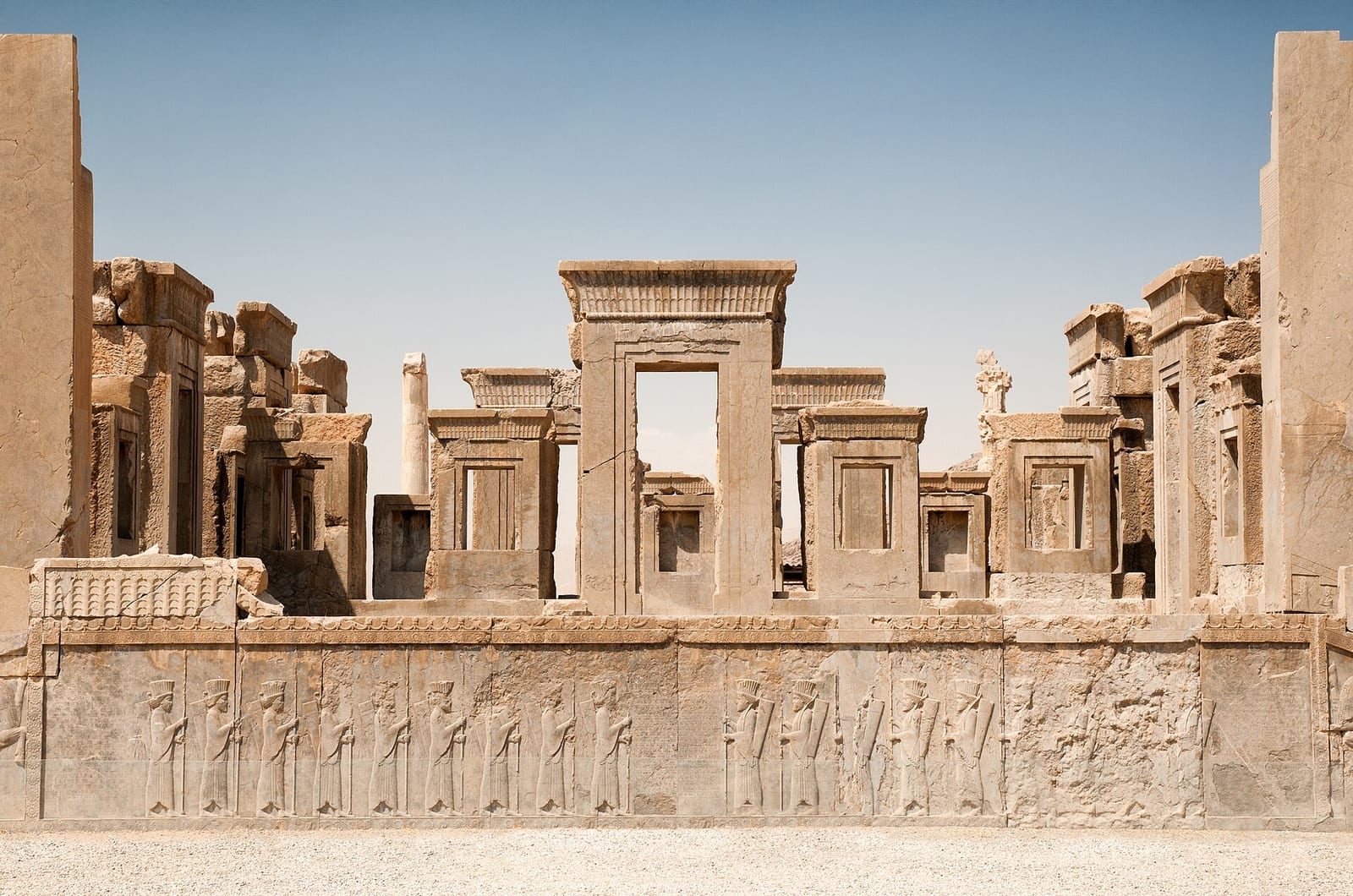
In the plains of Marvdasht beneath the southern Zagros Mountains, the stone platform of Persepolis rose around 515 BCE as a grand ceremonial seat of the Achaemenid Empire. Founded by Darius I, the complex occupied an elevated terrace measuring roughly 450 metres long and 300 metres wide, hewn partly from the living rock of Rahmat Mountain and built partly of grey limestone. Unlike the active administrative capitals at Susa, Babylon, and Ecbatana, Persepolis served primarily as a ceremonial focal point for royal receptions, seasonal festivities, and imperial representation.
The physical design of the terrace displayed the reach and authority of the monarchy. Darius initiated the monumental audience hall known as the Apadana, which his son Xerxes I completed alongside the Council Hall and the imperial Treasury. Beneath the foundation boxes of the Apadana, excavators uncovered foundation tablets of gold and silver recording Darius's dominion across distant territories, from Lydia to the Indus valley. Later additions, including the Throne Hall or Hall of a Hundred Columns, incorporated stone doorways carved with throne scenes and mythical combat, framed by monumental columns that drew upon regional styles.

Keep reading in Yester
Coming soon to the App Store
Keep following the story
Sources
Image: Laurens R. Krol