
Prambanan Creates a Towering Hindu Sacred Complex
Royal patronage and sculptural narratives transformed a Javanese landscape.
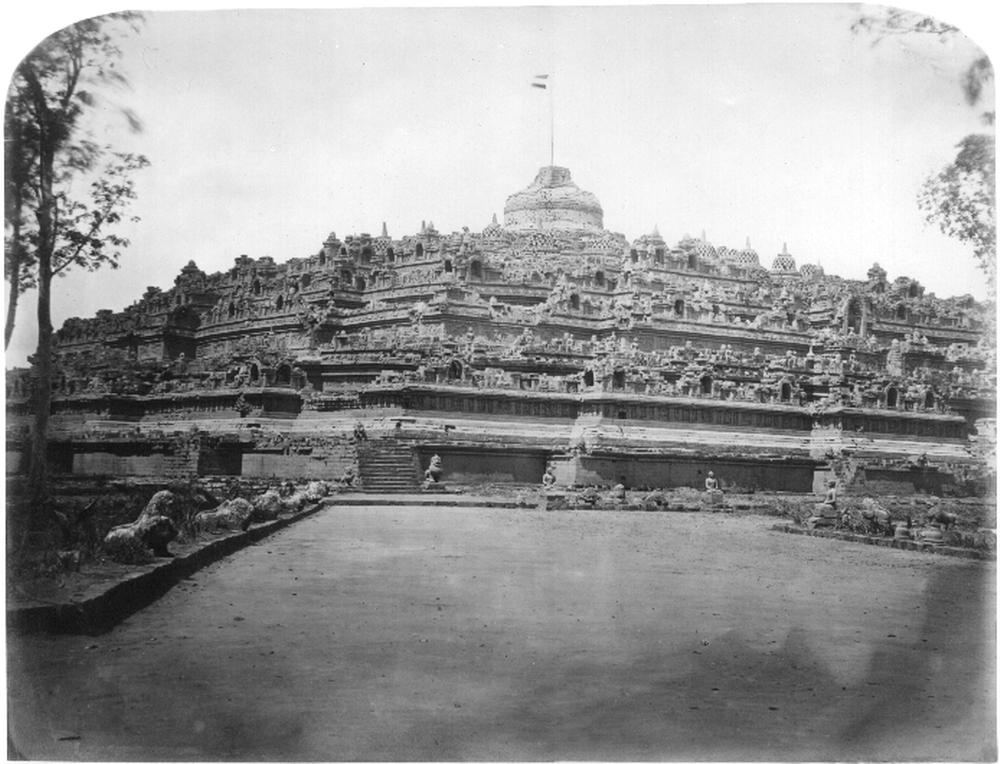
In 856, the Mataram kingdom in Central Java marked the formal consecration of a monumental religious center known in contemporary inscriptions as Shivagrha, or the House of Shiva. Today known as Prambanan, the complex was probably initiated by King Rakai Pikatan and inaugurated under King Lokapala. Some historians propose that the construction was the Shaivite Sanjaya dynasty's architectural answer to the earlier Mahayana monuments raised by the Sailendra dynasty, such as Borobudur. Regardless of whether dynastic competition drove the project, the massive undertaking signaled a clear shift in royal patronage toward Shaivite Hinduism.
Building the complex required an immense engineering feat alongside its masonry. According to the Shivagrha inscription, builders diverted the nearby Opak River by carving a straight channel running north to south along the outer wall of the precinct. The river had originally curved close to the temple buildings, and the diversion was meant to protect them from erosion. It also cleared room by leveling the abandoned riverbed, creating space to lay out hundreds of ancillary shrines in orderly rows around the primary temples.

Keep reading in Yester
Coming soon to the App Store
Keep following the story
Sources
Image: Anthony Cramp