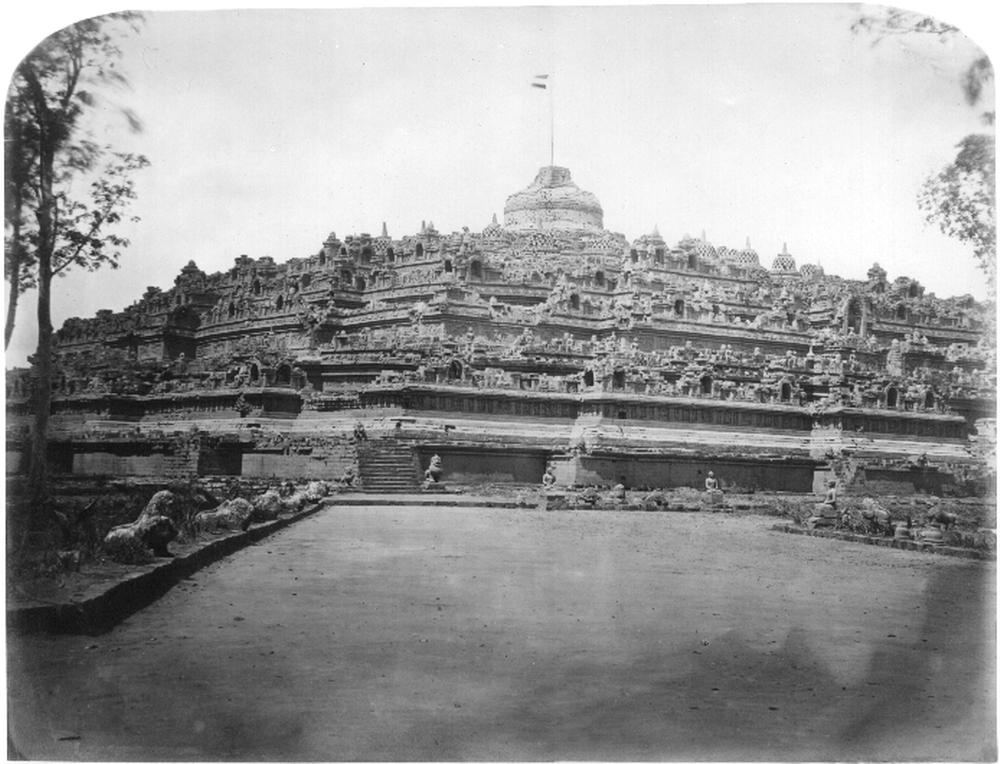
Borobudur Tells Its Story One Terrace at a Time
A Buddhist monument in Java turns walking into a way of understanding. Its reliefs, galleries and rising terraces bring sacred ideas into the experience of moving through stone.
Borobudur is a monument that asks its visitor to move. Built in central Java during the eighth and ninth centuries, its terraces carry a person upward through a carefully organized landscape of stone. Reliefs along the galleries invite attention at close range; the upper levels open toward bell-shaped stupas and the surrounding hills. The structure is not simply a large object to be seen from a distance. Walking is part of how its design becomes intelligible.
The monument belongs to the Buddhist world of the Sailendra period. Its architecture expresses ideas about different realms of existence and a path toward enlightenment. Those ideas were given a specifically Javanese material form, shaped by local building practice and landscape. It is therefore too narrow to describe the site merely as an imported religion translated into stone. Religious connections across Asia and the choices of local patrons, builders and artists worked together in the creation of something distinctive.

Keep reading in Yester
Coming soon to the App Store
Keep following the story
Sources
Image: en:Isidore van Kinsbergen