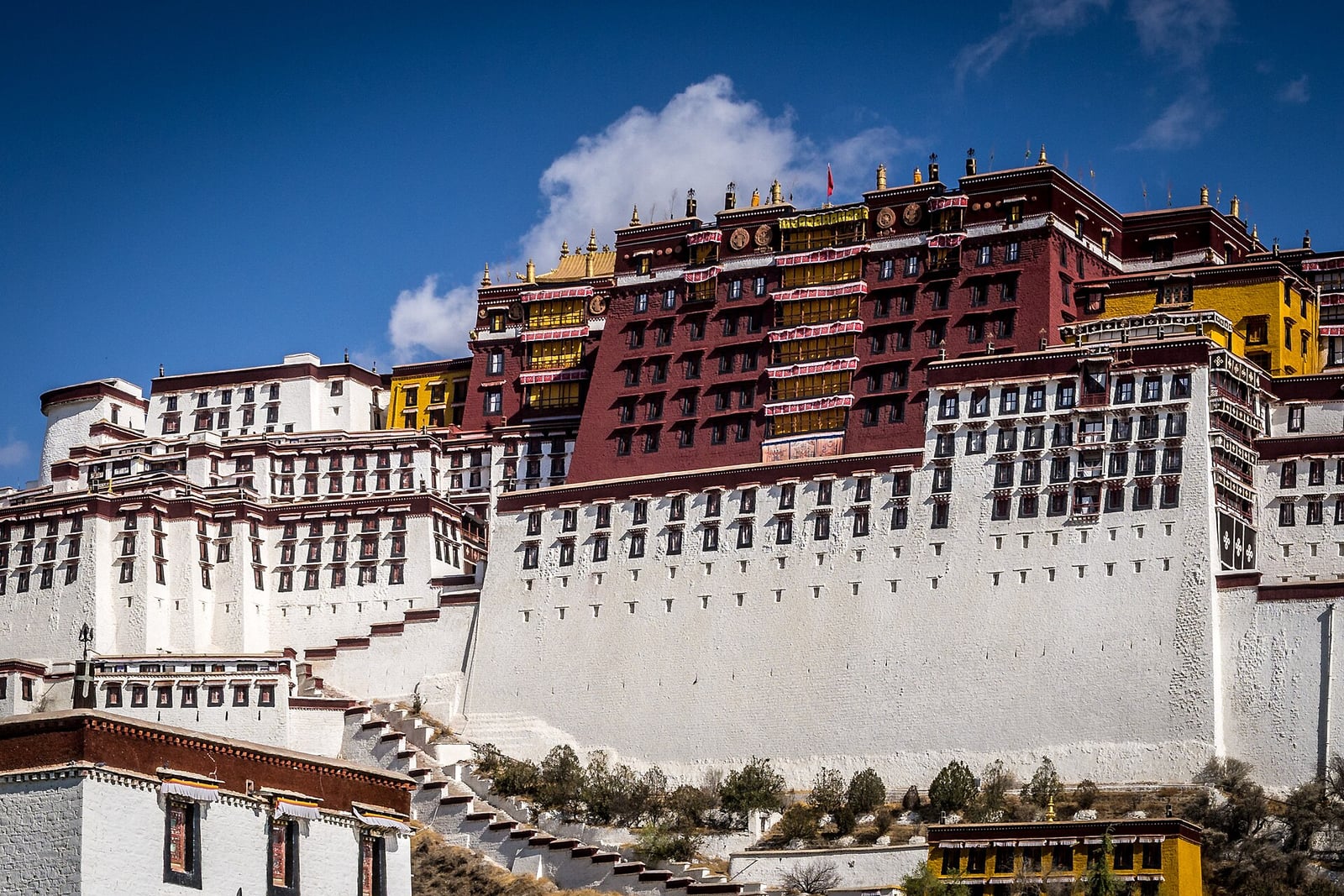
The Fifth Dalai Lama Begins the Potala Palace
A palace on a hill above Lhasa joined government and religion.
In 1645, Ngawang Lozang Gyatso, the Fifth Dalai Lama, ordered the construction of a grand palace complex on Marpo Ri, the Red Hill rising above the Lhasa Valley. The Dalai Lama had previously resided at the Ganden Podrang estate in Drepung Monastery. His political authority expanded significantly in 1642, when the Mongol leader Gushri Khan overthrew the rival Tsang authority by military force and transferred the governance of Tibet to him. The site was chosen for its associations with the bodhisattva Avalokiteshvara and with Tibet's early kings, and from its summit the palace would command the whole Lhasa valley.
The rocky summit had deep historical and sacred significance. It was the traditional site of a seventh-century palace attributed to Emperor Songtsen Gampo. Builders incorporated remnants of that earlier complex into the northwestern corner of the new foundation, preserving two specific shrines: the Phakpa Lhakhang and the Chogyel Drupuk, a cavern recognized as Songtsen Gampo's meditation cave. The entire complex was named the Potala after Mount Potalaka, venerated in Buddhist tradition as the mythical dwelling of the bodhisattva of compassion, Avalokiteshvara. Its establishment on the heights visually and symbolically united temporal administration with Tibetan religious authority.

Keep reading in Yester
Coming soon to the App Store
Keep following the story
Sources
Image: Mondo79