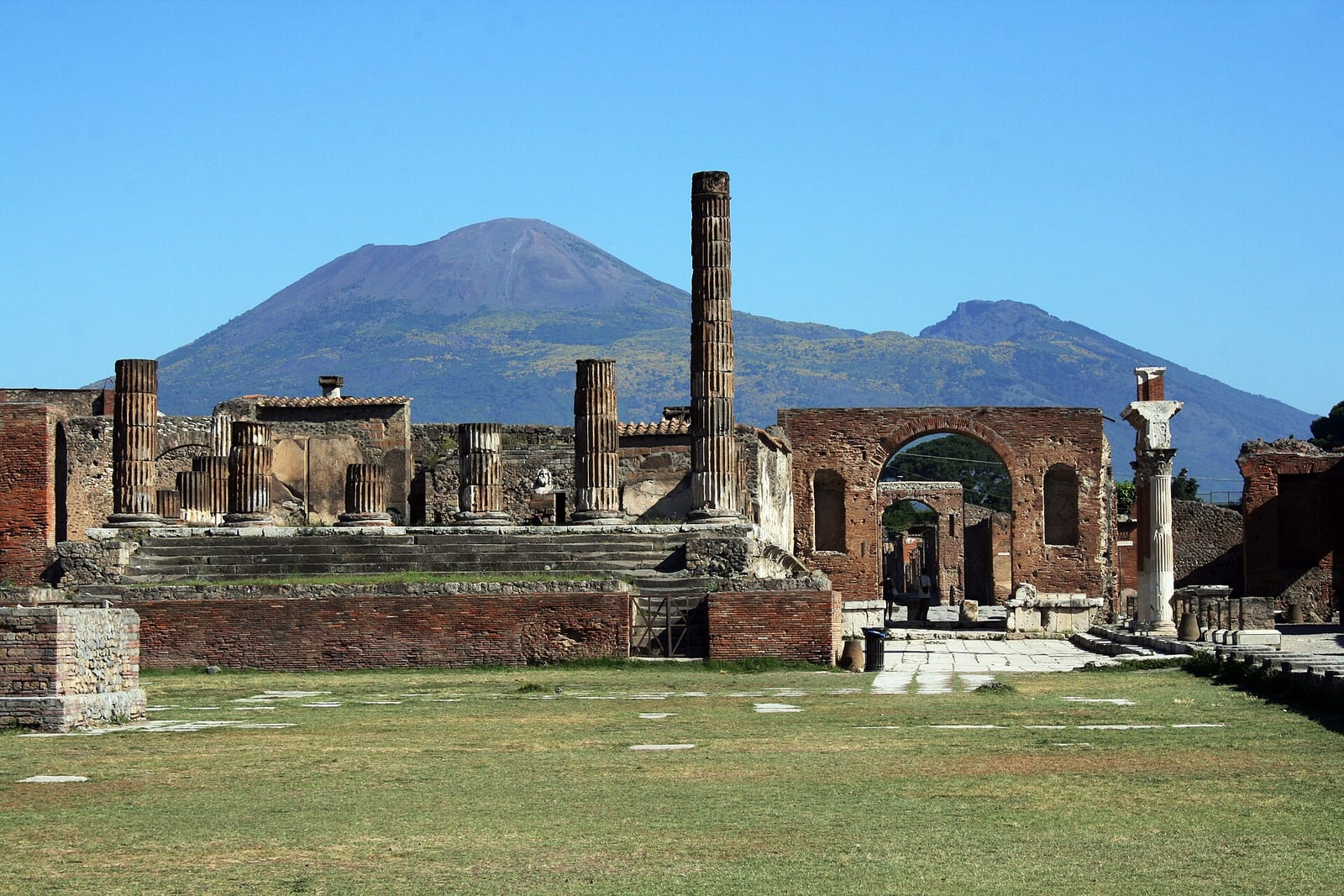
Pompeii Preserves a City Without Freezing Its Meaning
Buried streets and homes offer unusual evidence of Roman life, but their interpretation continues to change.
In 79 CE, Mount Vesuvius erupted across the Bay of Naples, burying the thriving Campanian settlement of Pompeii under four to six metres of volcanic ash and pumice. The cataclysm unfolded over two days. A sustained shower of pumice allowed most of the population to flee, but subsequent fast-moving pyroclastic surges brought extreme temperatures of at least 250 degrees Celsius, killing those who remained behind. Though earlier accounts attributed most deaths to suffocation under ash, multidisciplinary studies published in 2010 demonstrated that thermal shock was the primary cause of mortality.
The disaster sealed a complex provincial town that had evolved across centuries before Roman hegemony. First settled by Oscans in the eighth century BC, Pompeii later incorporated Etruscan and Greek architectural traditions, developing around a crucial inland river crossing. After surviving the Samnite Wars and the Second Punic War as an ally of Rome, Pompeii revolted during the Social War. The Roman general Sulla besieged the town in 89 BC, leaving artillery impacts that remain visible in the northern fortifications, before converting the community into a Roman colony.

Keep reading in Yester
Coming soon to the App Store
Keep following the story
Sources
Image: Glen Scarborough from The Central Coast, Australia