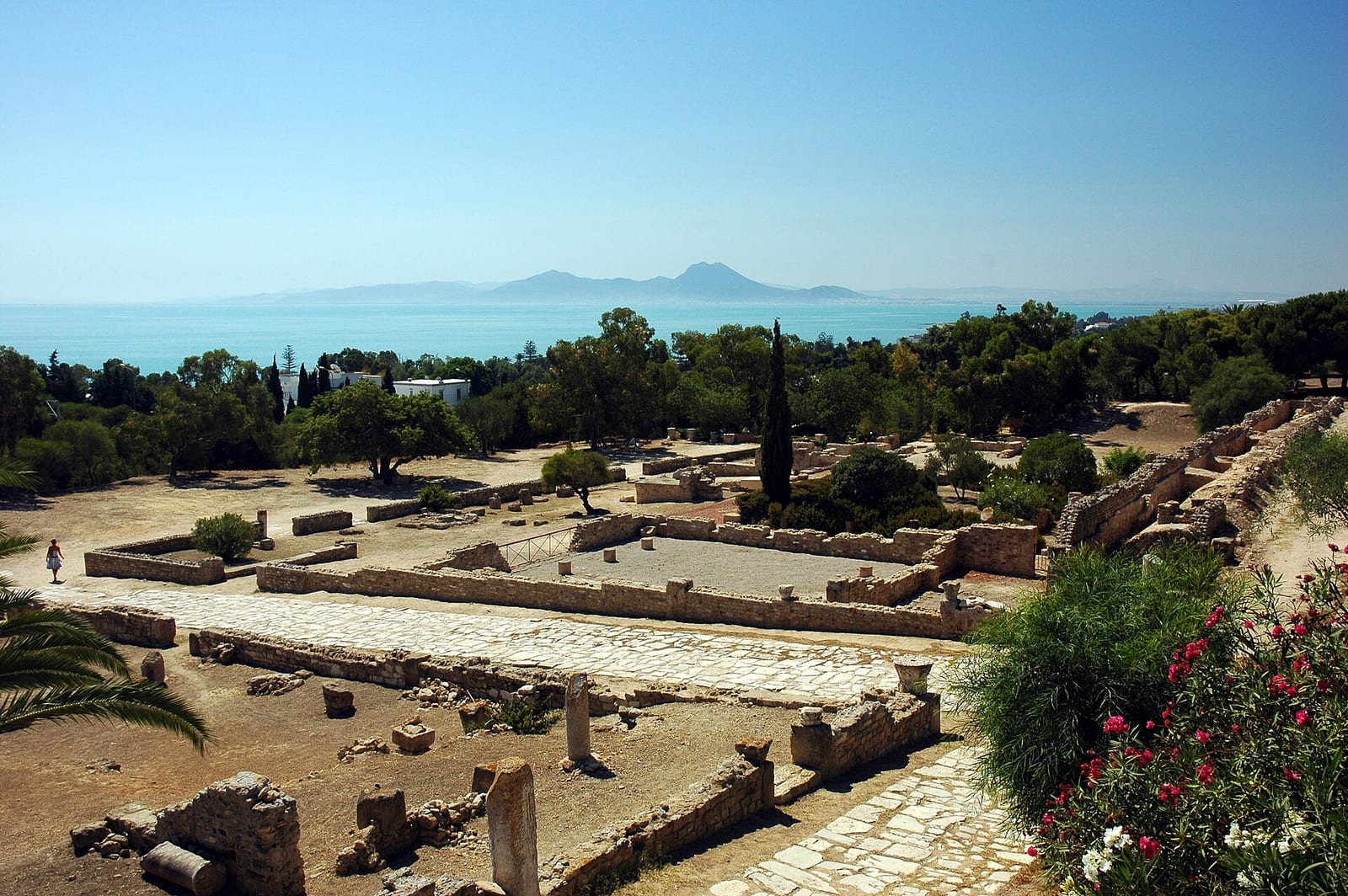
Carthage’s Ruins Become More Than a Story of Defeat
The ancient city survived through layers of rebuilding and reinterpretation. Protecting its remains in modern Tunisia meant preserving more than Rome’s account of an enemy.
Carthage stands on a promontory in the Gulf of Tunis, protected naturally by surrounding hills, the sea on three sides, and adjacent bodies of water. Founded according to tradition in 814 BC by Phoenicians under Dido, the settlement developed into a major commercial power, expanding across the Mediterranean and establishing colonies. Its prominence sparked protracted competition with Greek cities in Sicily and eventually led to over a century of confrontation with Rome during the Punic Wars between 264 BC and 146 BC. That conflict ended with the total destruction of the Punic metropolis, leaving its soil under an official Roman curse.
Despite this formal condemnation, the site did not remain abandoned. A short-lived veteran settlement led by Gaius Gracchus in 122 BC left rural centuriations, and after Julius Caesar conceived a plan to populate the area, Augustus refounded the city in 29 BC as Colonia Iulia Concordia Carthago. Roman Carthage became a major administrative seat and exporter of grain and olive oil, though fires and earthquakes obscured much of its earliest imperial phase. By the fifth century AD, the city possessed an estimated population exceeding 300,000 residents, emerging as an intellectual center for early Latin Christianity through writers such as Tertullian and Bishop Cyprian.

Keep reading in Yester
Coming soon to the App Store
Keep following the story
Sources
Image: Calips