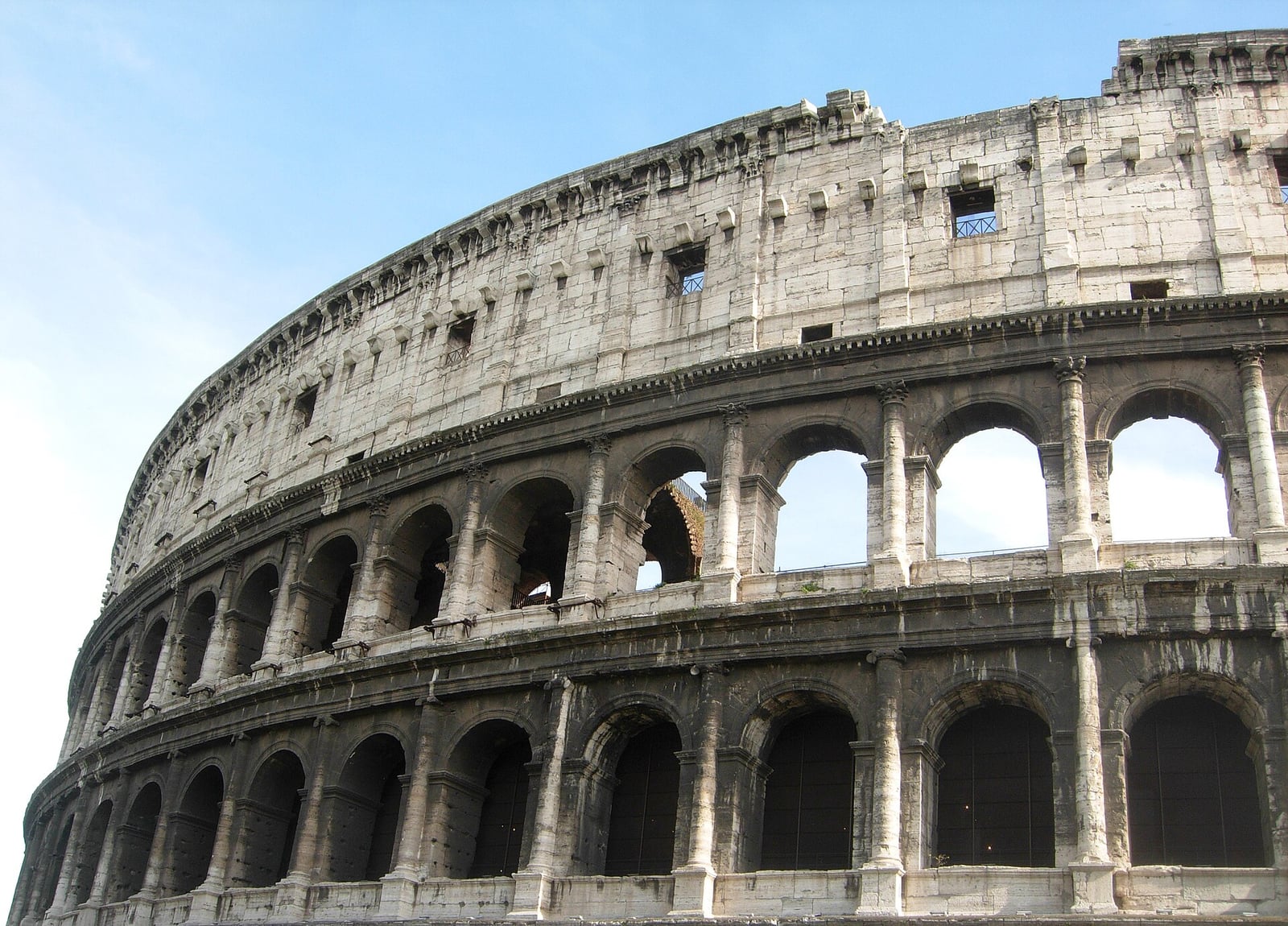
The Colosseum Opens with a Hundred Days of Games
A vast amphitheater turned public spectacle into imperial policy.
In the heart of imperial Rome, the Flavian Amphitheatre arose on grounds previously consumed by Nero's sprawling personal estate. Following the Great Fire of Rome in 64, Nero had seized the low valley between the Caelian, Esquiline, and Palatine Hills to build the opulent Domus Aurea, complete with an artificial lake. After the emperor's fall and the conclusion of the civil wars of 69, Vespasian initiated construction around 70 to 72. By draining the lake and opening the valley to public enterprise, the new Flavian dynasty used the ground as a populist symbol of returning confiscated territory to civic life.
Funding for the monumental undertaking was drawn from the vast spoils seized after the First Jewish-Roman War, including the sack of the Temple in Jerusalem. A dedicated workforce consisting of captured prisoners alongside professional Roman builders, masons, and decorators erected the elliptical structure using travertine, tuff, mortar, and Roman concrete. By the time Vespasian died in 79, the tiered amphitheatre stood complete through its third story. His elder son and successor, Titus, finished the upper levels and officially inaugurated the arena in 80.

Keep reading in Yester
Coming soon to the App Store
Keep following the story
Sources
- Cassius Dio, Roman History Book 66 (LacusCurtius, University of Chicago)
- Colosseum (World History Encyclopedia)
- New Excavations at Rome's Colosseum (Art & Object)
- Rome's Colosseum installs new paving to evoke lost outer ring (Wanted in Rome)
- A restored painting recalls the Colosseum's Christian past (Boston Globe)
- Colosseum
Image: Acediscovery