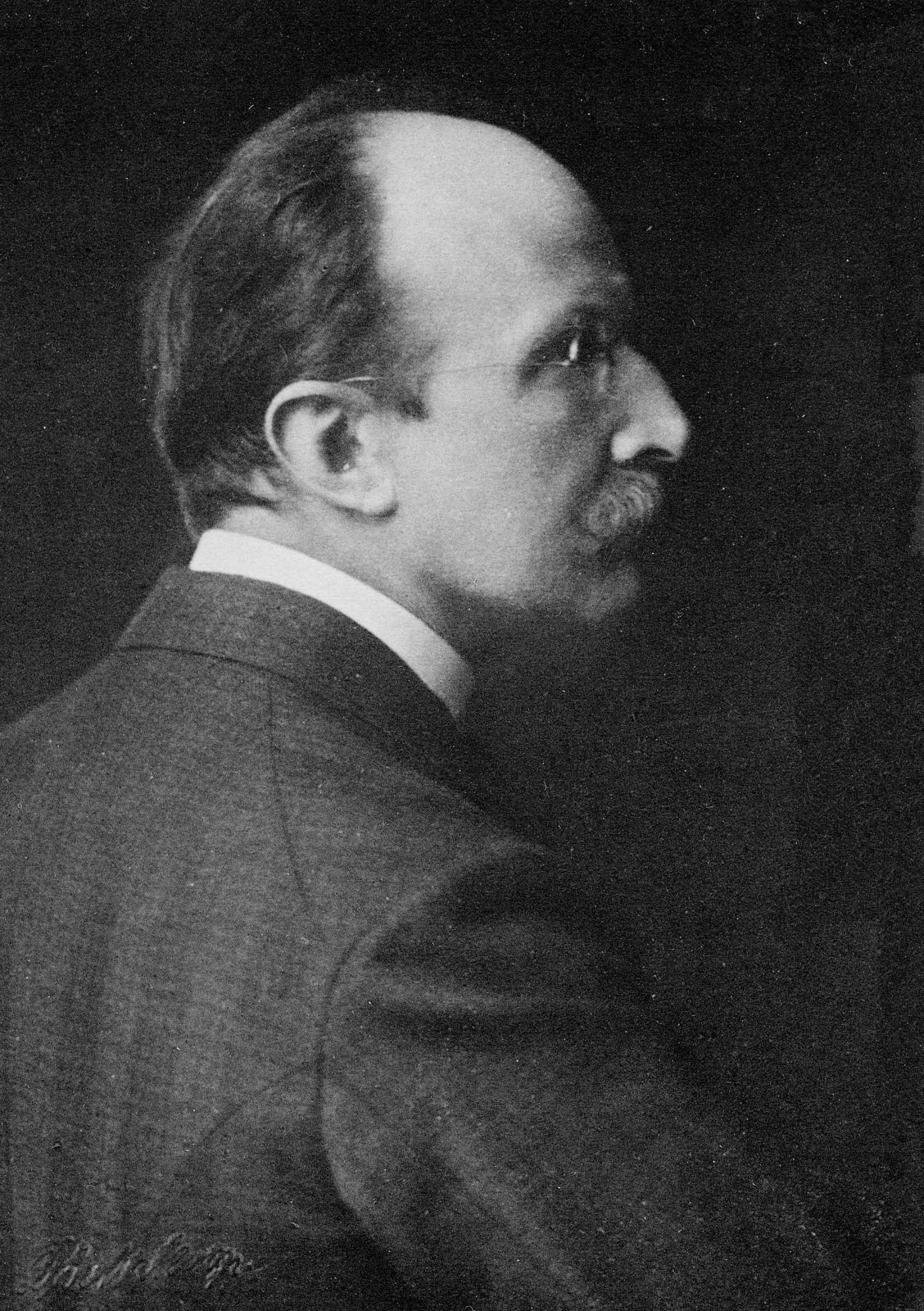
Planck Introduces an Energy Quantum
A problem in thermal radiation opened a new direction in physics.
In the autumn of 1900, the German theoretical physicist Max Planck addressed a persistent puzzle at the German Physical Society in Berlin. Four decades earlier, Gustav Kirchhoff had asked how the intensity of thermal radiation emitted by a perfect absorber, known as a black body, depends on temperature and frequency. Experimental measurements had advanced steadily, yet theoretical descriptions continued to fail. Wilhelm Wien's radiation formula predicted measurements well at high frequencies but broke down at low frequencies, while a competing classical approach associated with Lord Rayleigh matched low frequencies but, taken on its own terms, implied an impossible surge of energy at the upper end of the spectrum.
Planck had previously attempted to resolve the issue in 1899 by deriving Wien's relationship from assumptions about the entropy of an ideal oscillator. When newer laboratory data contradicted that derivation, he revised his mathematical description to fit the complete experimental spectrum. He presented this empirical equation to the German Physical Society on 19 October 1900. While the formula matched the observed radiation curve across all frequencies, it lacked a sound physical foundation. Seeking that deeper explanation forced Planck to reexamine basic principles of heat and statistical reasoning.

Keep reading in Yester
Coming soon to the App Store
Keep following the story
Sources
Image: AB Lagrelius & Westphal. The American Institute of Physics also credits the photo [2] to AB Lagrelius & Westphal , which is the Swedish company used by the Nobel Foundation for most photos of its book series Les Prix Nobel .