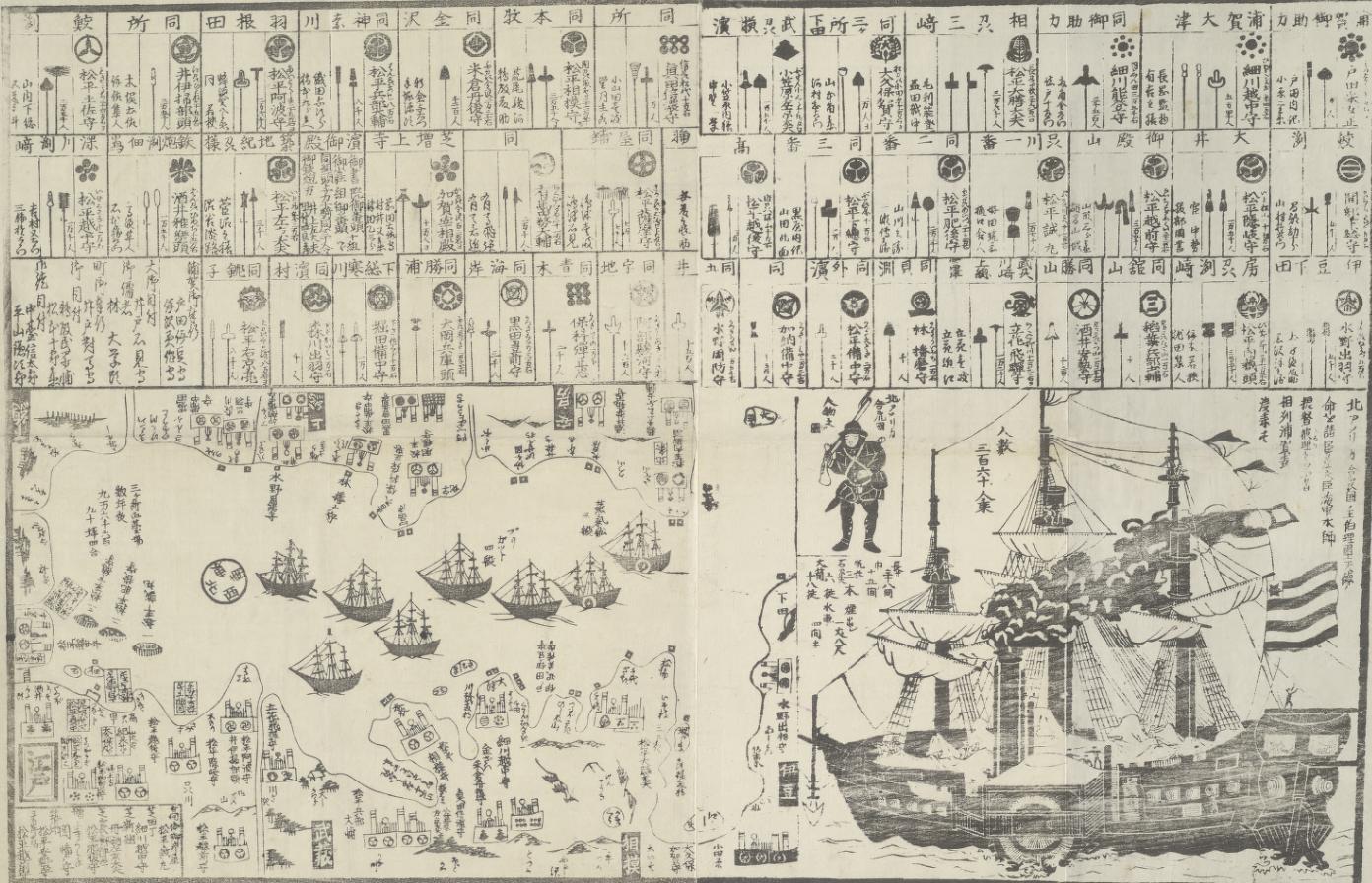
Commodore Perry’s Ships Arrive in Japan
An American naval mission pressed Japan to open its ports.
On July 8, 1853, Commodore Matthew Calbraith Perry brought four United States Navy warships into the waters of Uraga at the entrance of Edo Bay. Under directives from President Millard Fillmore, the naval squadron aimed to terminate the Tokugawa shogunate's two-century-old isolation policy and secure access to Japanese ports. American commercial interests in China, the activities of whaling vessels in the North Pacific, and the pursuit of coaling stations in East Asia all influenced Washington's initiative. Perry carried a presidential letter requesting friendship and commerce, provision of fuel, and humane treatment for shipwrecked foreign sailors.
Upon reaching Uraga, Perry adopted an assertive posture to compel negotiations. His warships, including the steam vessels Susquehanna and Mississippi, bypassed defensive positions and aimed their ordnance toward the shoreline. Refusing contact with local functionaries, Perry remained in his quarters and informed Japanese emissaries that he would deliver the presidential missive exclusively to high-ranking representatives. When local officials urged him to take his business to Nagasaki, the only port open to limited foreign trade, Perry refused and made plain his readiness to use force.

Keep reading in Yester
Coming soon to the App Store
Keep following the story
Sources
- The United States and the Opening to Japan, 1853 (U.S. Department of State, Office of the Historian)
- Black Ships and Samurai, by John W. Dower (MIT Visualizing Cultures)
- Black Ships and Samurai: Gifts (MIT Visualizing Cultures)
- 1-1 Opening of the Country (National Diet Library, Modern Japan in archives)
- Commodore Perry and Japan (1853-1854) (Asia for Educators, Columbia University)
- Perry Expedition
Image: Unknown author Unknown author