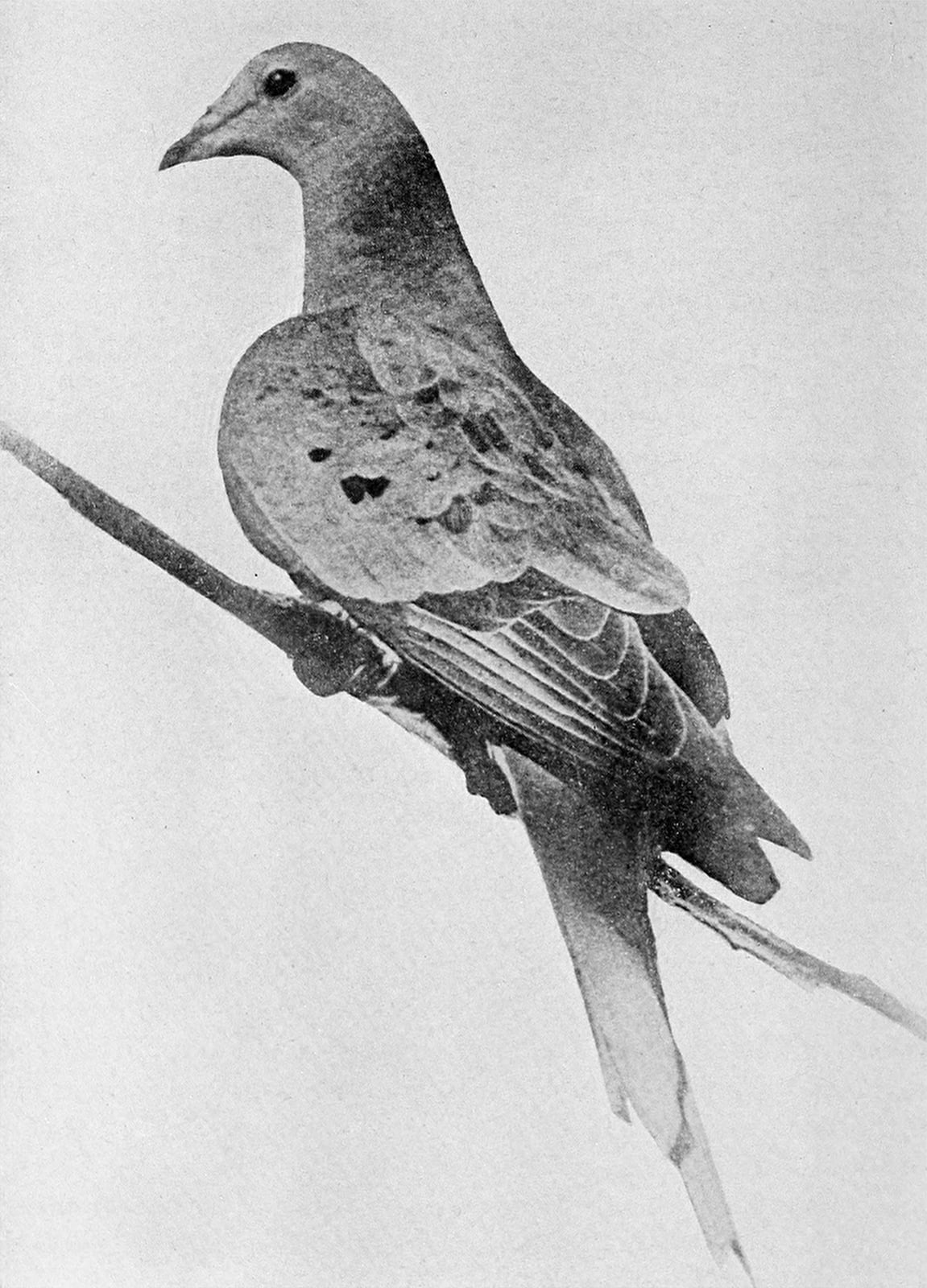
Martha, the Last Passenger Pigeon, Dies
A species once counted in billions vanished in a zoo.
On September 1, 1914, an aged female passenger pigeon named Martha was found dead on the floor of her cage at the Cincinnati Zoo. Her passing marked the complete extinction of a North American bird once estimated to have numbered between three and five billion individuals. The body was frozen in a block of ice and shipped to the Smithsonian Institution in Washington, where museum preparators mounted her skin for preservation. Within a human lifetime, what had been the most abundant bird species on the continent was reduced to mounted museum specimens and skeletal remains.
During the early nineteenth century, the passenger pigeon inhabited the vast deciduous forests east of the Rocky Mountains, congregating principally around the Great Lakes for breeding. These birds traveled in migratory aggregations that were documented by naturalists as dense, unbroken columns capable of obscuring the sun for hours or days. Feeding heavily on forest mast, the species relied on communal roosting and massive colonial nesting grounds. Their high degree of social gregariousness served as an evolutionary strategy for locating food resources and overwhelming predators, but it also tied their survival to the existence of immense flock numbers.

Keep reading in Yester
Coming soon to the App Store
Keep following the story

Sources
Image: Enno Meyer