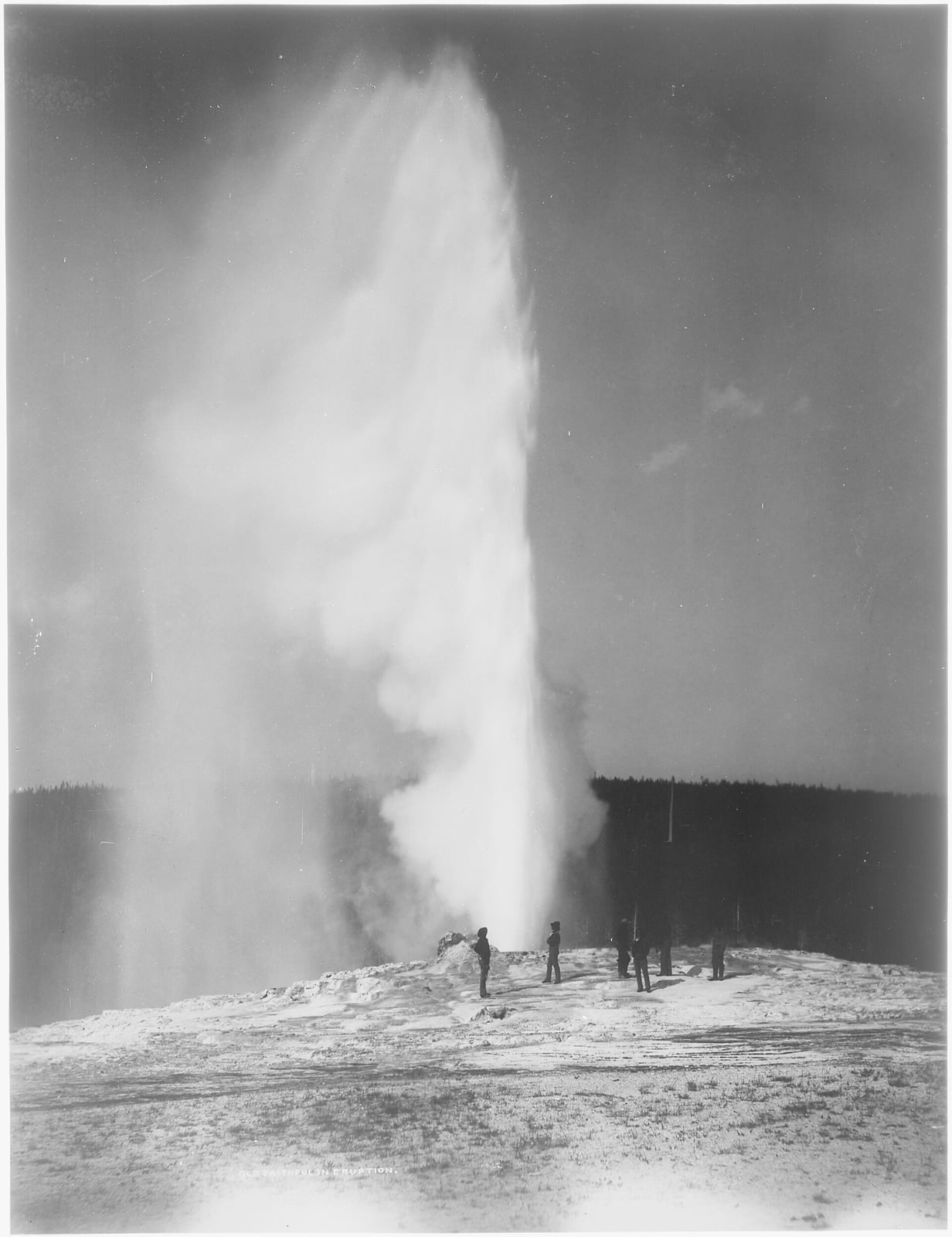
Yellowstone Becomes the First National Park
The United States set aside a landscape of geysers for public enjoyment.
On March 1, 1872, President Ulysses S. Grant signed into law the act establishing Yellowstone, withdrawing roughly two million acres of volcanic plateau in the northern Rocky Mountains from settlement, occupancy, or sale. The legislation designated the reserve as a public park and pleasuring ground for the benefit and enjoyment of the people. Situated primarily in the northwestern corner of Wyoming, with small tracts in Montana and Idaho, Yellowstone became the first national park in the United States and is widely regarded as the first in the world.
Human engagement with the landscape predated federal intervention by millennia. Indigenous peoples had utilized the territory for at least 11,000 years, quarrying obsidian and managing local vegetation with low-intensity burns to sustain bison herds. By the mid-nineteenth century, groups such as the Tukudeka band of Eastern Shoshone resided year-round in the area, while Bannock, Crow, and Nez Perce traveled through seasonally. As non-Native surveyors began exploring the region in the late 1860s, expanding federal reservation policies increasingly pushed to sever these native ties. In subsequent years, the federal government refused to honor negotiated treaties guaranteeing tribal hunting access, effectively displacing Indigenous communities from the designated preserve.

Keep reading in Yester
Coming soon to the App Store
Keep following the story
Sources
- Act Establishing Yellowstone National Park (1872) (U.S. National Archives)
- Timeline of Human History in Yellowstone (National Park Service)
- History of Fire Management (National Park Service, Yellowstone)
- 1988 Fires (National Park Service, Yellowstone)
- Park Beginnings, Yellowstone Travel Exhibit (National Park Service)
- Yellowstone National Park
Image: William Henry Jackson