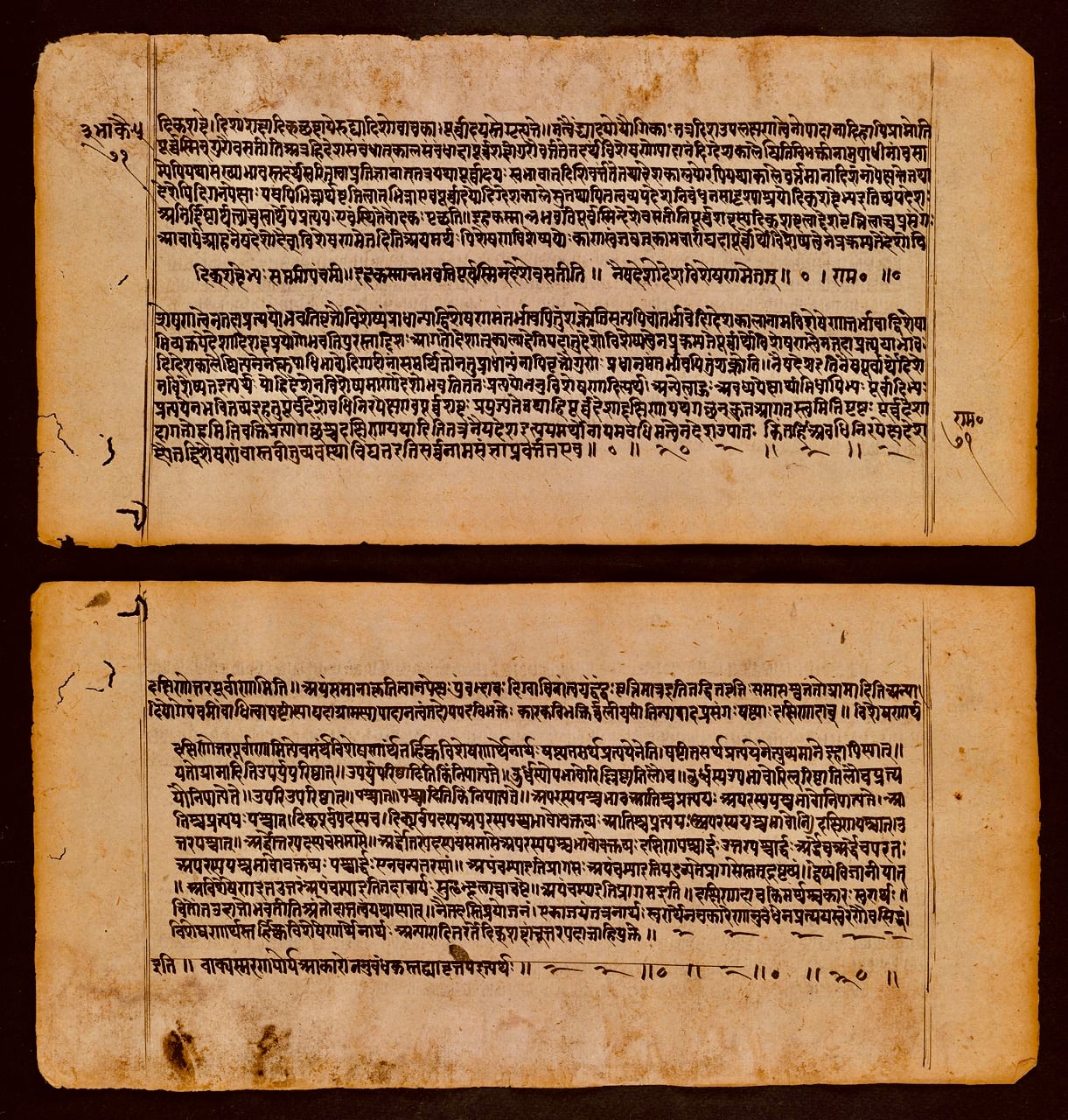
Pāṇini Captures Sanskrit Grammar in Nearly 4,000 Rules
His Aṣṭādhyāyī compressed a whole language into short, almost algebraic formulas.
During the middle of the first millennium BCE, an ancient scholar named Panini formulated a comprehensive linguistic framework that set the standard for Classical Sanskrit. His masterwork, the Ashtadhyayi, organized the phonology, morphology, and syntax of the language into nearly four thousand aphoristic rules known as sutras. Rooted in the need to maintain the exact phonetic and grammatical integrity of earlier sacred texts, the treatise is the earliest Sanskrit grammar that survives intact. It transformed grammatical analysis from descriptive observation into an integrated generative system.
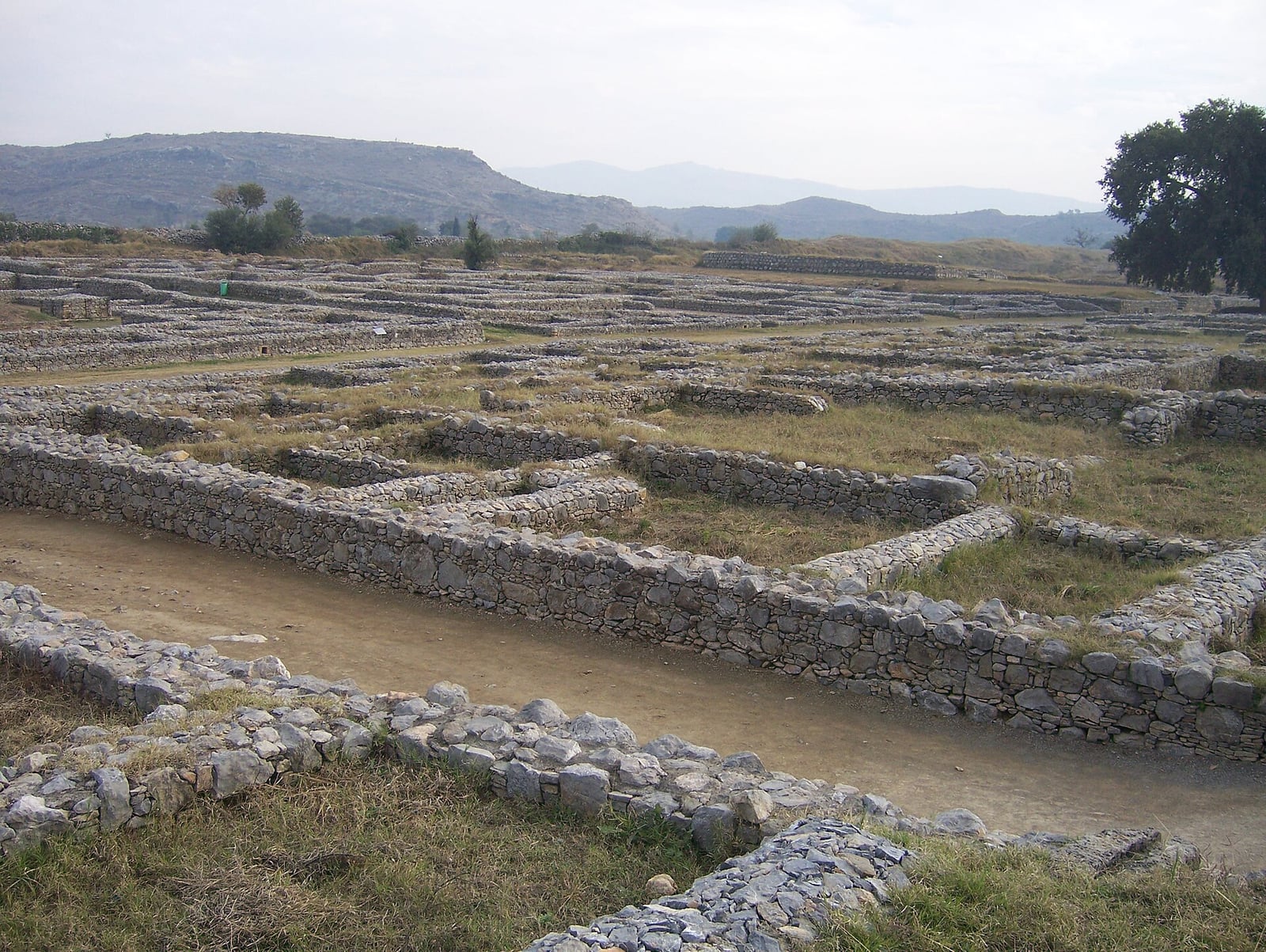
The historical details of Panini's personal background remain largely speculative. Centuries after his life, traditions recorded in sources such as Patanjali's Mahabhashya identified him by the matronymic Daksiputra, suggesting his mother was named Daksi. Later tradition calls him Salaturiya, indicating he came from Salatura, an ancient settlement in Gandhara situated near the confluence of the Indus and Kabul rivers in modern northwest Pakistan. Other later traditions linked him to Pataliputra or the ancient intellectual center of Taxila, though verifiable contemporary biographical documentation does not exist.

Keep reading in Yester
Coming soon to the App Store
Keep following the story
Sources
Image: Ms Sarah Welch and University of Pennsylvania Libraries