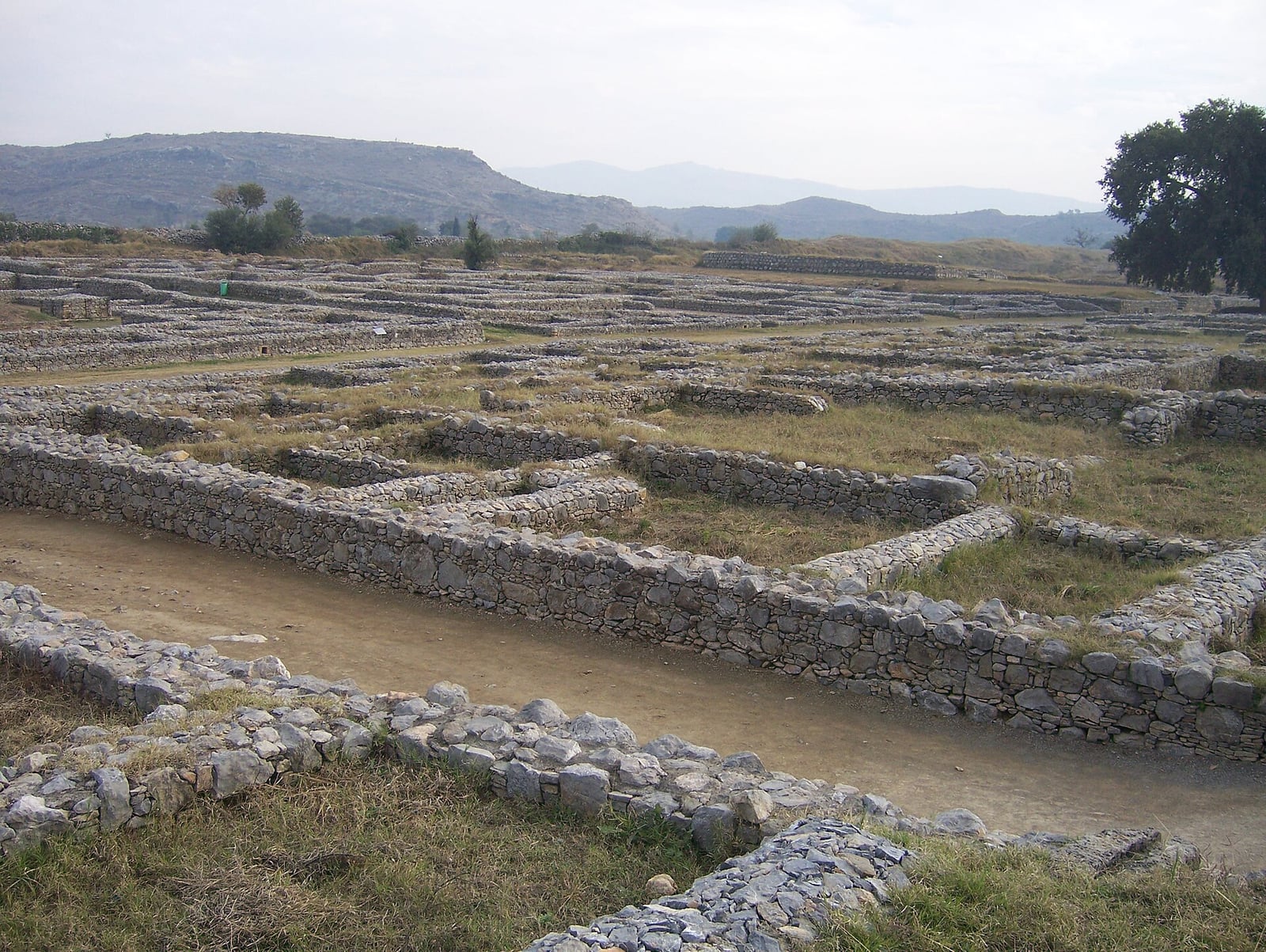
Taxila Grows into a City of Learning on the Silk Road
A crossroads city drew merchants, monks and scholars for centuries.
Positioned along critical trade routes linking the northern Indian plains with Central Asia, Taxila emerged as one of the prominent urban and intellectual centers of ancient South Asia. Settlement in the valley is far older than the historic city: the prehistoric mound of Saraikala preserves evidence of Neolithic, Bronze Age and Iron Age occupation. The settlement served as a major center of Gandhara, functioning alternately as an independent city-state and as a regional capital. During the sixth century BCE, the expanding Persian Achaemenid Empire conquered territories in the Indus basin, absorbing the district into its imperial administration.
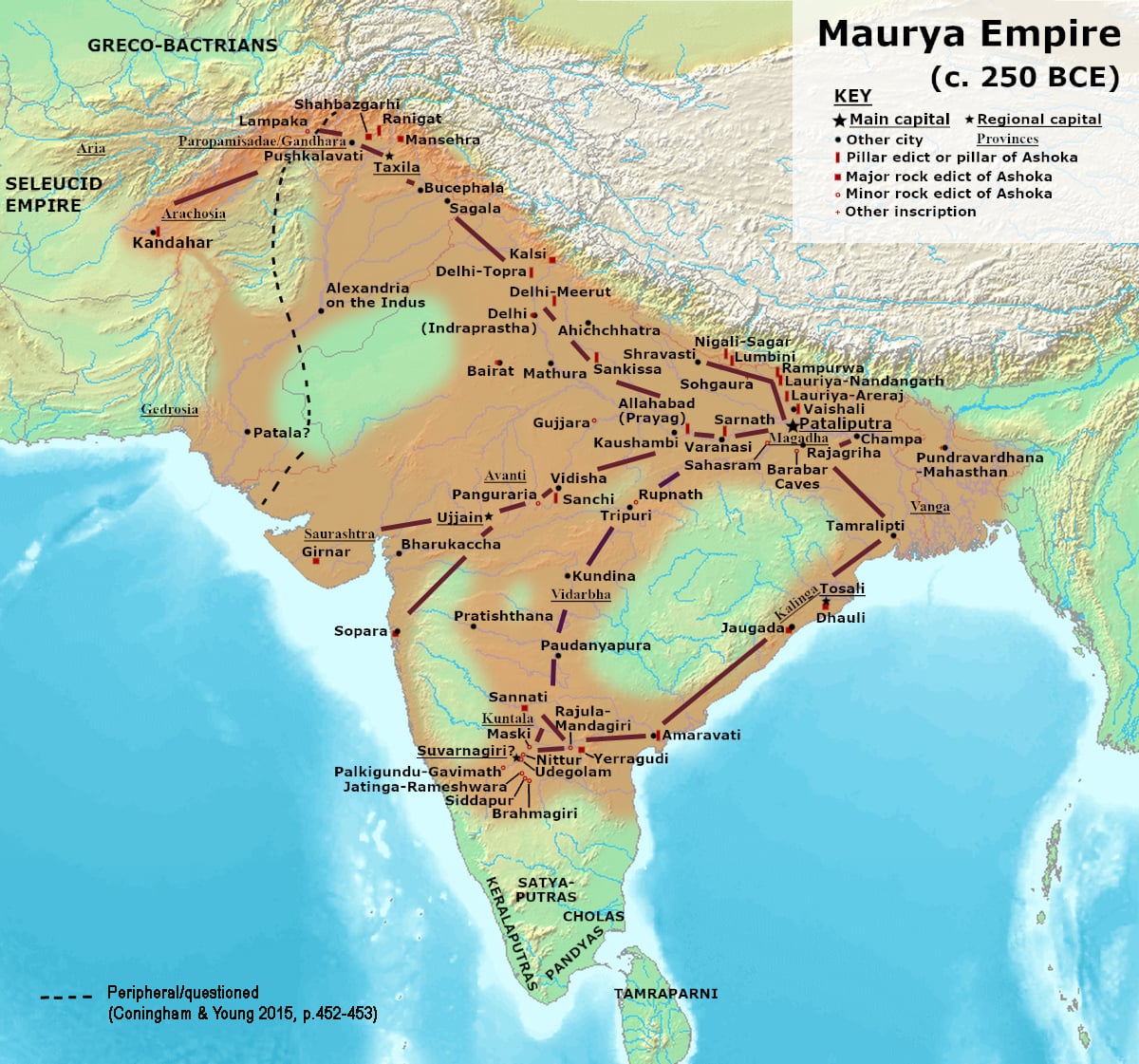
The city changed hands repeatedly across subsequent centuries, absorbing diverse political traditions. In 326 BCE, its ruler, known in classical Greek sources as Taxiles, submitted to Alexander the Great without fighting, an event that Greek chroniclers accompanied with praise for the city as wealthy and well governed. Control soon shifted to the Mauryan Empire under Chandragupta Maurya. During the rule of his grandson Ashoka, who converted to Buddhism, Taxila flourished as an administrative and religious center. Excavations have uncovered an Aramaic inscription from Ashoka's reign, confirming the diverse cultural influences coursing along the regional road network.

Keep reading in Yester
Coming soon to the App Store
Keep following the story
Sources
Image: Dawoodmajoka