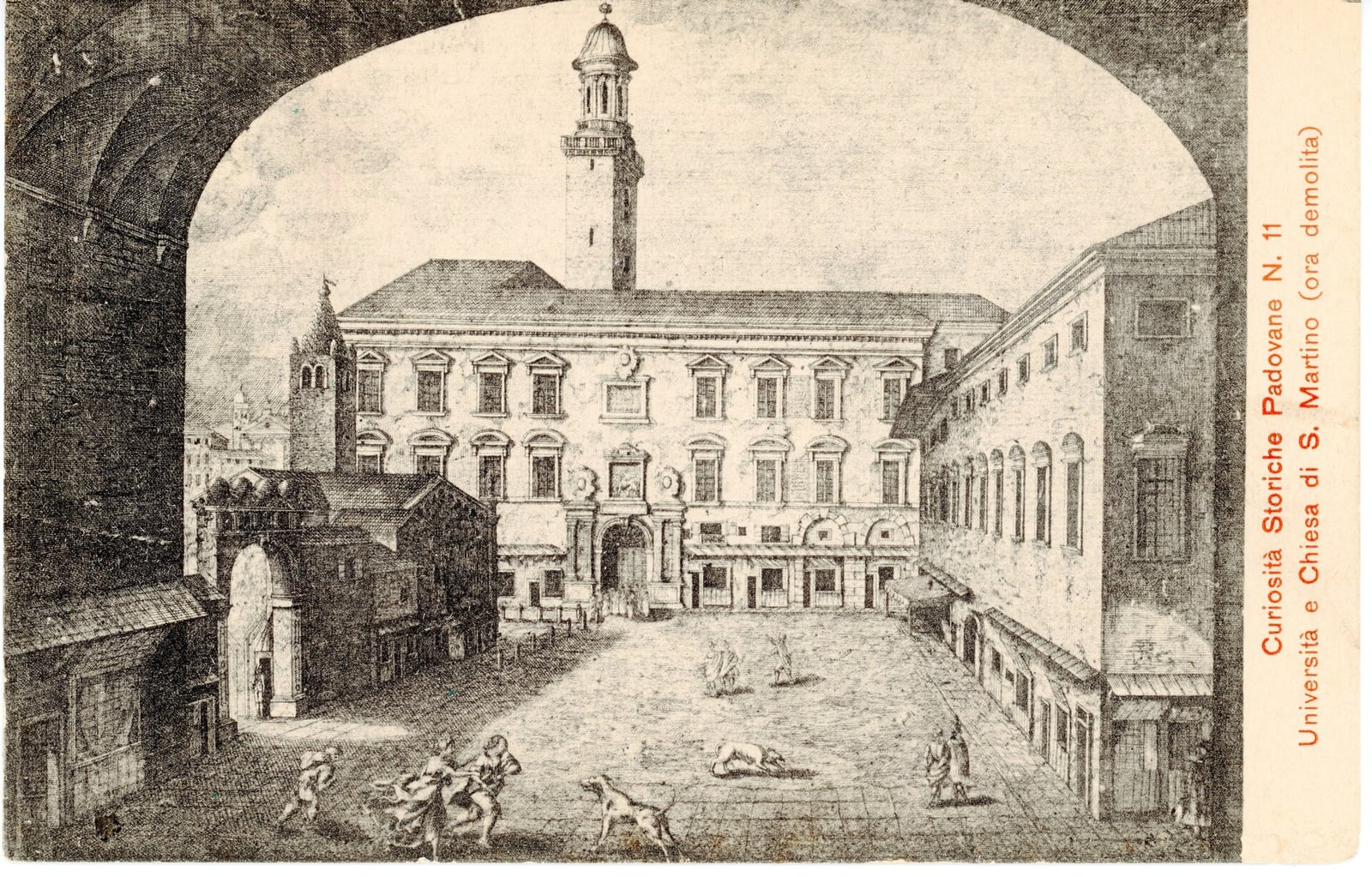
Padua Builds a Permanent Anatomy Theatre
Students crowded steep galleries to watch dissections.
In 1595, the University of Padua inaugurated a permanent anatomical theatre within the Palazzo del Bo. Although it is not known with certainty who designed it, the project was championed by Girolamo Fabrici of Acquapendente, an Italian anatomist and surgeon who occupied the chair of surgery and anatomy for half a century. Although temporary wooden structures had long been assembled across Europe for seasonal dissections, the Paduan installation is described by the university as the first permanent anatomical theatre in the world, establishing an architectural template that medical faculties across the continent would emulate throughout the seventeenth century.
The establishment of a permanent facility reflected centuries of medical tradition in Padua. The school's medical reputation owed much to the medieval philosopher and physician Pietro d'Abano, who read Greek and translated classical medical and philosophical works into Latin. By 1404, Paduan trained scholars such as Galeazzo di Santa Sofia were demonstrating public dissections in other university centers, including Vienna. During the early sixteenth century, the physician Alessandro Benedetti advocated for direct anatomical observation over purely theoretical instruction, publishing influential guidelines for setting up temporary tiered wooden enclosures to improve sightlines for observers.

Keep reading in Yester
Coming soon to the App Store
Keep following the story
Sources
- Anatomical Theatre (University of Padua)
- Visit the World's Oldest Anatomical Theater (National Geographic)
- The Morgagni Anatomical Theatre: 100 Years of Pathological Anatomy Education at the University of Padua (Pathologica)
- The eminent Italian scholar Pietro d'Abano and his contribution in anatomy (Italian Journal of Anatomy and Embryology)
- Pietro d'Abano (EBSCO Research Starters)
- Anatomical Theatre of Padua
Image: Francesco Belluco