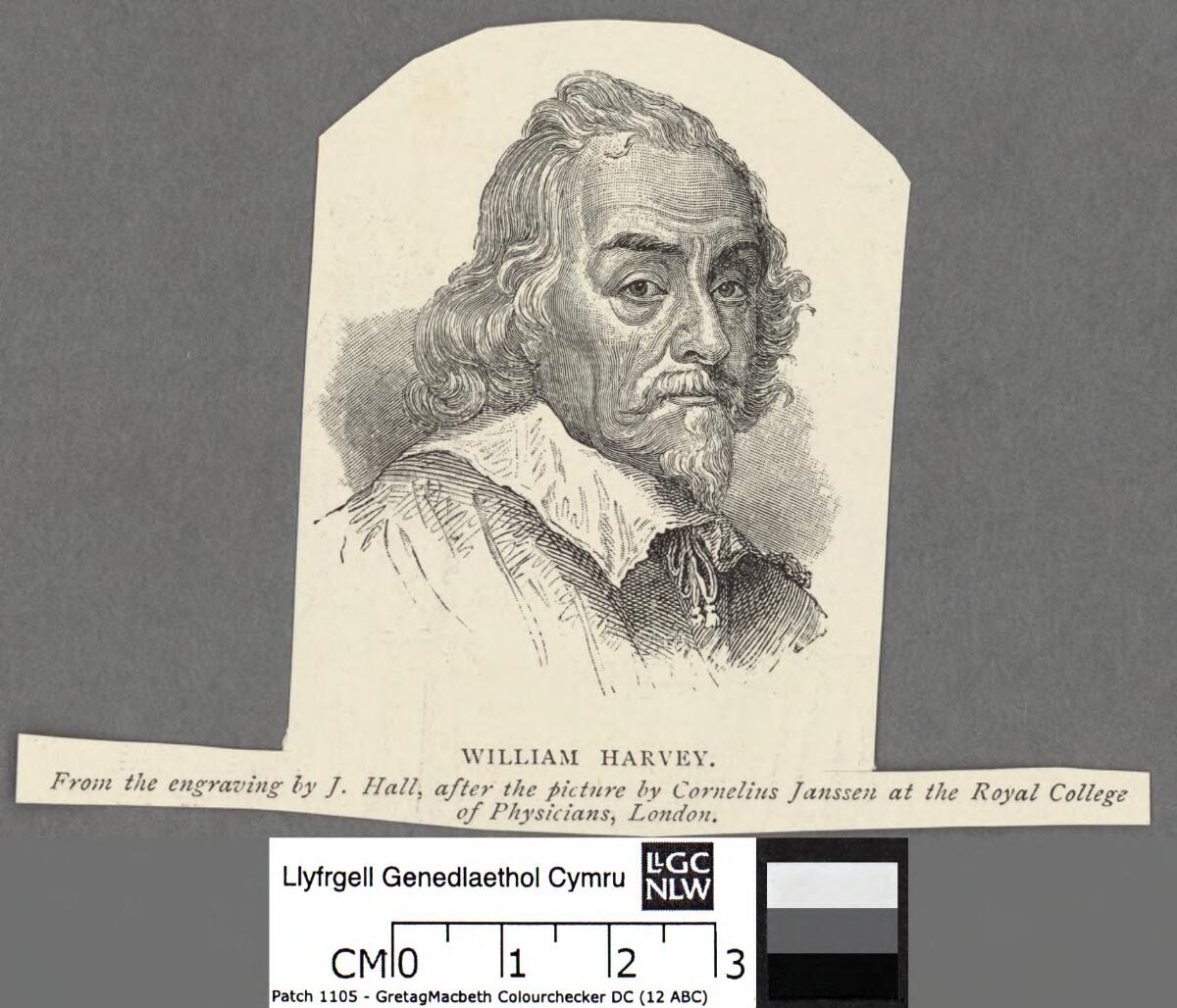
William Harvey Describes the Circulation of Blood
An account of the heart’s pumping action challenged inherited explanations of the body.
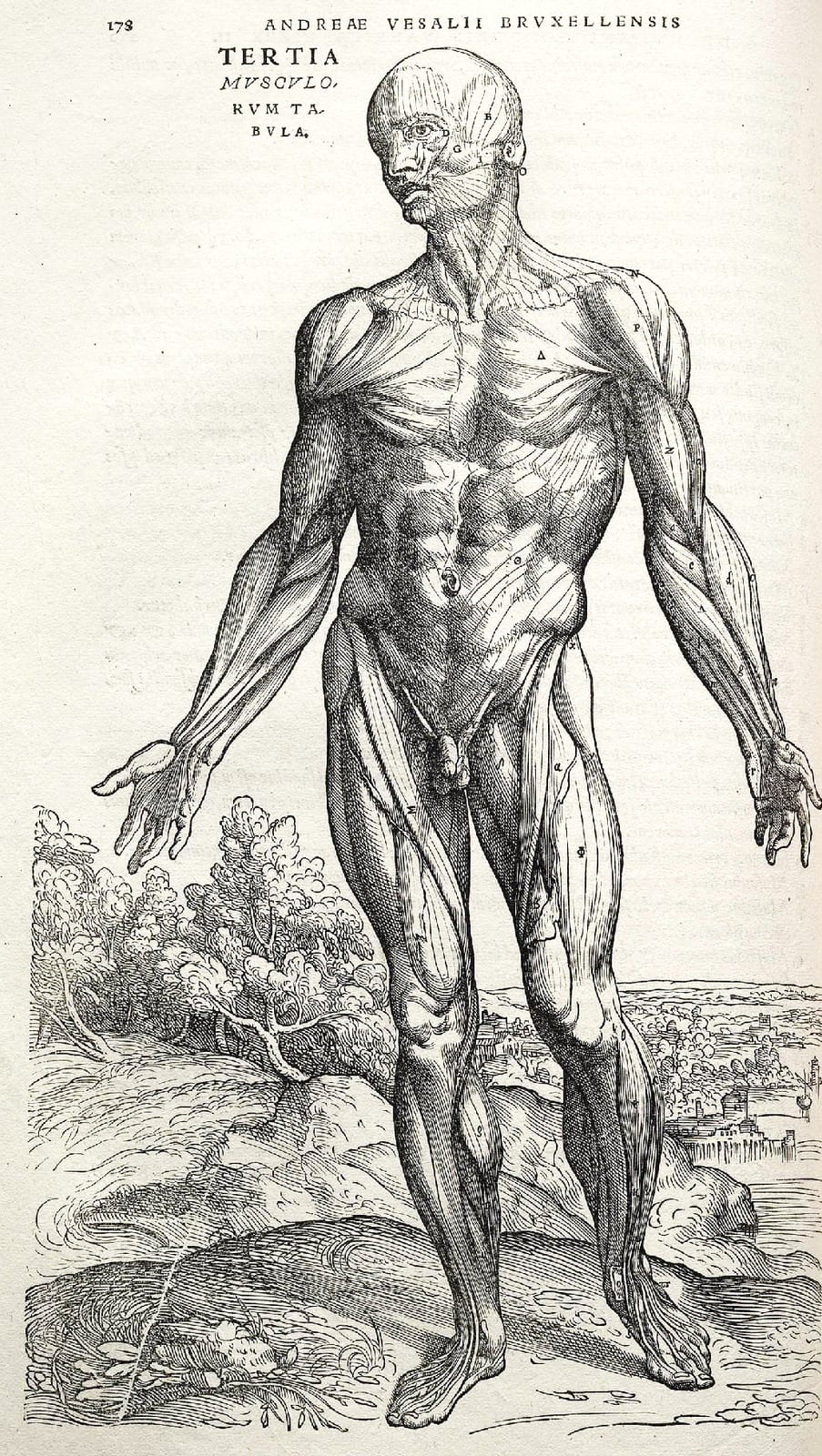
In 1628, the English physician William Harvey released his concise Latin treatise, Exercitatio Anatomica de Motu Cordis et Sanguinis in Animalibus, at the annual book fair in Frankfurt. The seventy-two-page volume challenged centuries of medical dogma regarding the motion of blood. Since antiquity, Western physiological thought had rested largely on the teachings of Galen, who maintained that the liver continuously created venous blood to nourish the body, while a separate arterial system distributed vital spirits originating in the heart. Galen held that blood seeped between cardiac ventricles through invisible pores, and that arterial pulsations served mainly to draw in cooling air and expel vapors through bodily pores. Earlier anatomists, including Andreas Vesalius, had reformed anatomical teaching at Padua, but medical practice continued to rely heavily on inherited Galenic frameworks.
Harvey approached the body through systematic dissection and direct physiological investigation. Having studied at Gonville and Caius College in Cambridge, he traveled to the University of Padua, where he studied under Hieronymus Fabricius before graduating as a Doctor of Medicine in 1602. Upon returning to London, he secured admission to the Royal College of Physicians and was appointed physician to Saint Bartholomew's Hospital in 1609. Appointed as the Lumleian lecturer in 1615, Harvey dissected human and animal specimens in public demonstrations, laying down explicit rules to rely on visible anatomical evidence rather than authoritative texts. He eventually rose to royal favor, serving as Physician Extraordinary to King James I and later accompanying King Charles I on his travels.

Keep reading in Yester
Coming soon to the App Store
Keep following the story
Sources
- William Harvey and the discovery of the circulation of the blood (Journal of Angiogenesis Research, via PubMed Central)
- A new idea in circulation (Gonville & Caius College, Cambridge)
- William Harvey (Encyclopedia.com)
- William Harvey (1578 - 1657) (BBC History)
- Harvey's Circulation Experiment (Princeton University)
- William Harvey
Image: John Hall