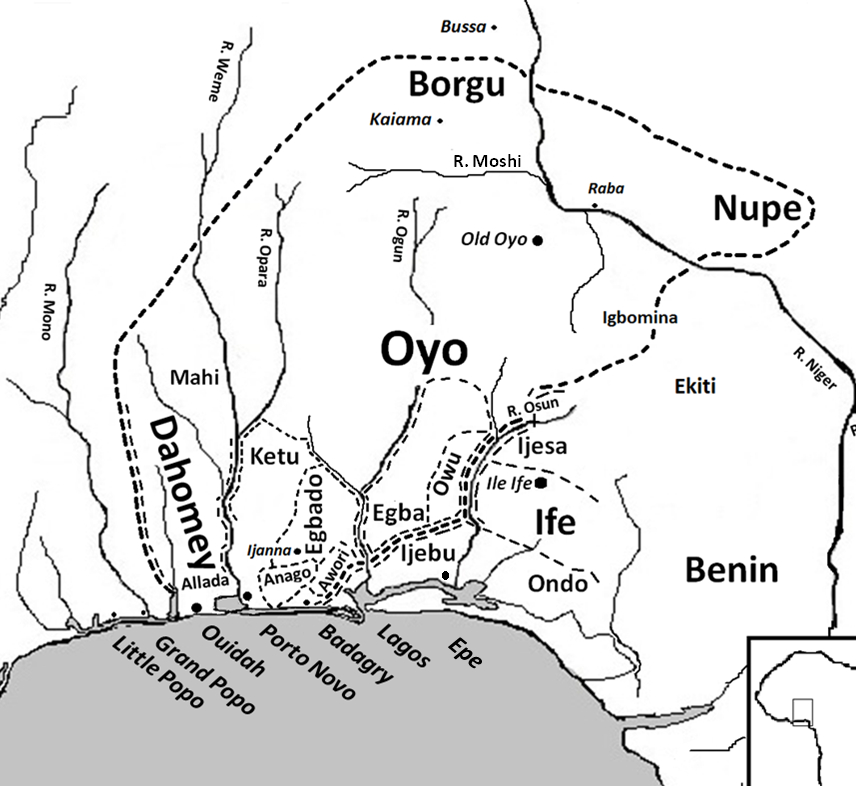
The Oyo Empire Becomes a Power in West Africa
A Yoruba state built its strength on cavalry and trade.
Originating according to oral traditions from the ancient spiritual cradle of Ife, the Oyo state emerged in the northern savannah of what is now western Nigeria. Estimates trace its foundation to roughly 1300 under Oranmiyan, who established its royal lineage and the title of Alaafin. By the close of the fourteenth century, the inland kingdom had expanded steadily, but its growth faced a severe crisis around 1535. Invading Nupe forces sacked the capital of Oyo-Ile and forced the ruling dynasty into an eighty-year exile in Borgu. Rather than extinguishing the polity, this catastrophe prompted a profound reorganization of its institutions and military doctrine.
During their prolonged exile and subsequent reconquest, the Oyo leadership adapted Nupe warfare methods by constructing a formidable cavalry arm. Situated north of the dense forest zones, the realm enjoyed partial relief from the tsetse fly, enabling the state to purchase horses through northern trade networks and breed local mounts. Mounted forces were divided into heavy units on imported horses and light units riding indigenous stock, frequently coordinated with skilled archers. Regaining their original capital under Oba Abipa in the early seventeenth century, the rulers rebuilt a centralized government designed to project power over vast distances.

Keep reading in Yester
Coming soon to the App Store
Keep following the story
Sources
Image: Henry B. Lovejoy “Old Oyo Influences on the Transformation of Lucumí Identity in Colonial Cuba”, UCLA Electronic Theses and Dissertations, https://escholarship.org/uc/item/5md66554 p. 6