Dahomey’s Women Soldiers Face Colonial Conquest
An elite military corps belonged to a complex kingdom, not simply to the legends later built around it.
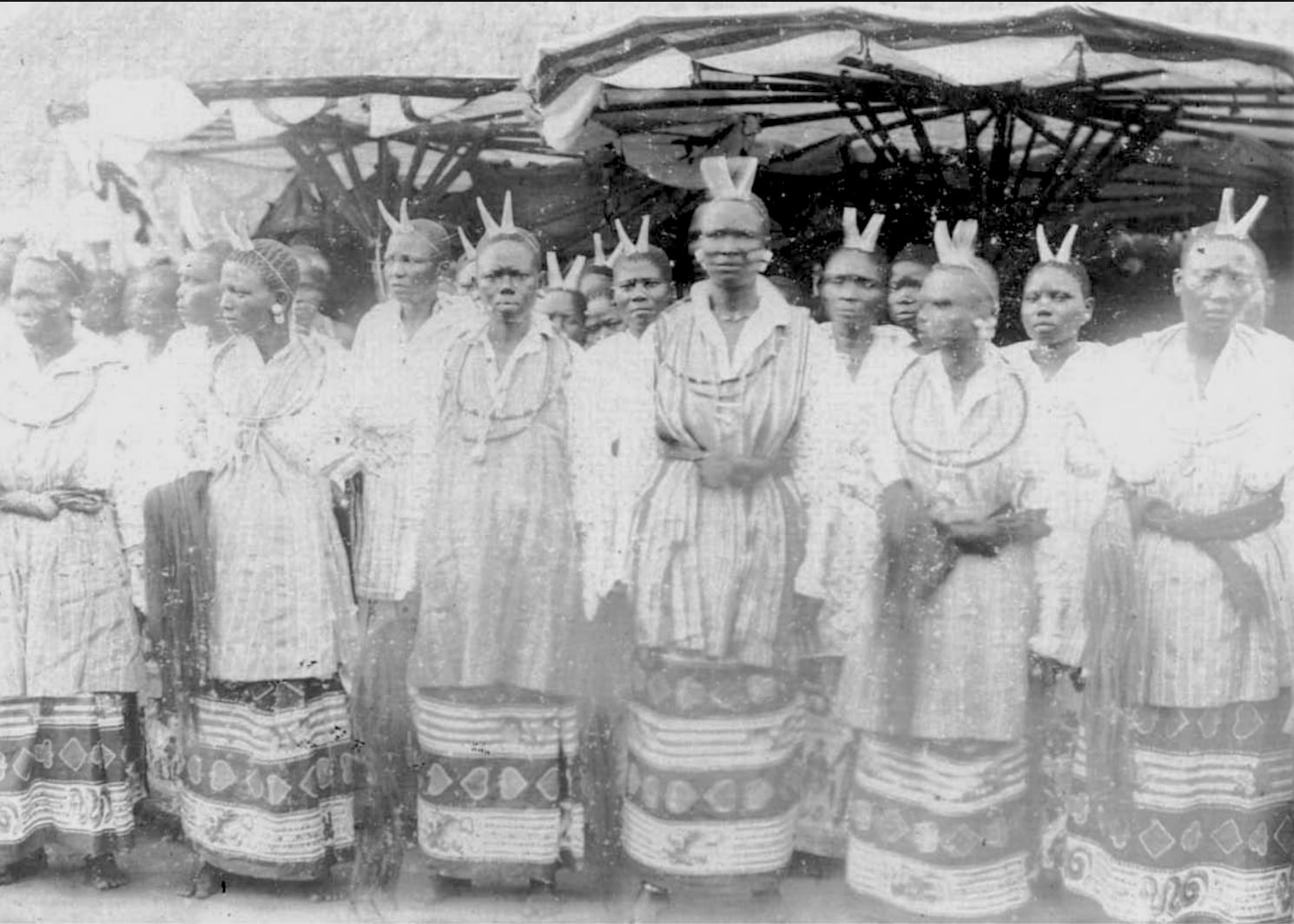
In October 1892, French colonial forces clashed with the royal army of Dahomey near the village of Adegon. Among the Dahomean defenders were hundreds of female soldiers, known locally as the Mino or Agojie, who formed an established military wing of the kingdom. During the encounter the corps suffered some of its worst losses; one account reports that only 17 of an initial force of 434 returned. Accounts describe very heavy Dahomean losses, although precise casualty totals should be treated cautiously. The battle marked a decisive step toward the French conquest of Dahomey, situated in present-day Benin, and brought an effective end to one of the most unusual military institutions in West African history.
Known to European visitors as Amazons after the warriors of Greek mythology, the women called themselves Mino, meaning our mothers, or ahosi, meaning king's wives. Their origins are rooted in competing traditions. Some accounts trace the force to King Houegbadja in the seventeenth century, who may have organized existing elephant hunters into an armed royal corps. Other traditions credit his daughter, Queen Hangbe, with forming a personal guard in the early eighteenth century, though her historical existence remains questioned by some scholars. Women soldiers first appear in written history in 1729, helping to recapture the port of Whydah after it fell to a surprise attack, demonstrating their growing tactical role.

Keep reading in Yester
Coming soon to the App Store
Keep following the story
Sources
Image: N.N.