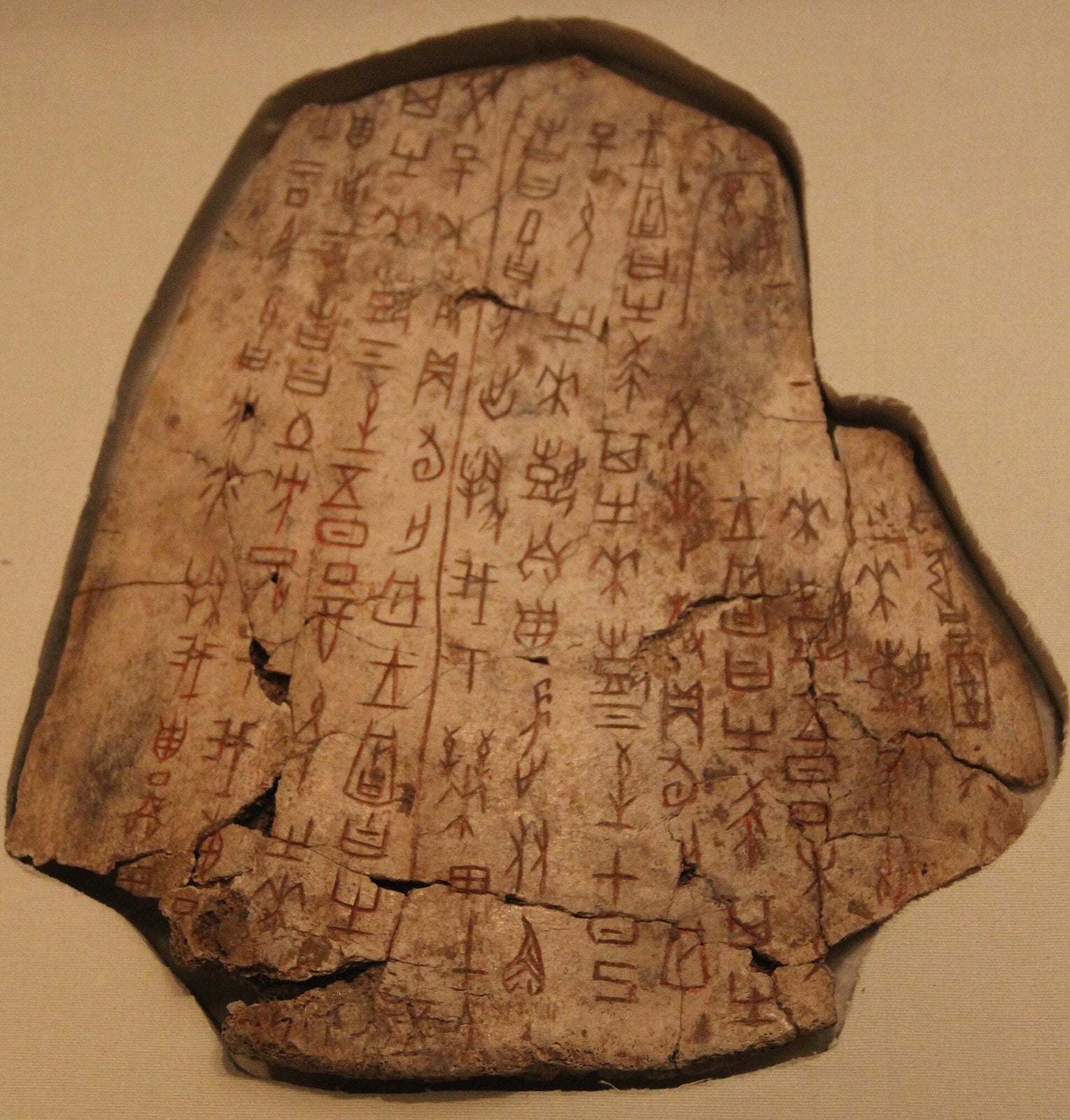
Oracle Bones Reveal the Earliest Chinese Writing
Inscribed bones used for divination pushed Chinese writing back to the Shang dynasty.
During the late nineteenth century, rural residents near Anyang in Henan province regularly turned up ancient animal fragments while digging in their fields. Known locally as dragon bones, these remains were routinely sold to traditional apothecaries, who pulverized them into remedies for ailments such as malaria and wounds. The objects attracted scholarly attention in 1899 when Wang Yirong, the chancellor of the Imperial Academy in Beijing and an avid antiquarian, examined specimens acquired from an antique dealer. Recognizing that the markings carved into the surfaces resembled archaic scripts found on ancient ritual bronzes, Wang realized that these discarded fragments preserved an unrecognized record of early Chinese epigraphy.
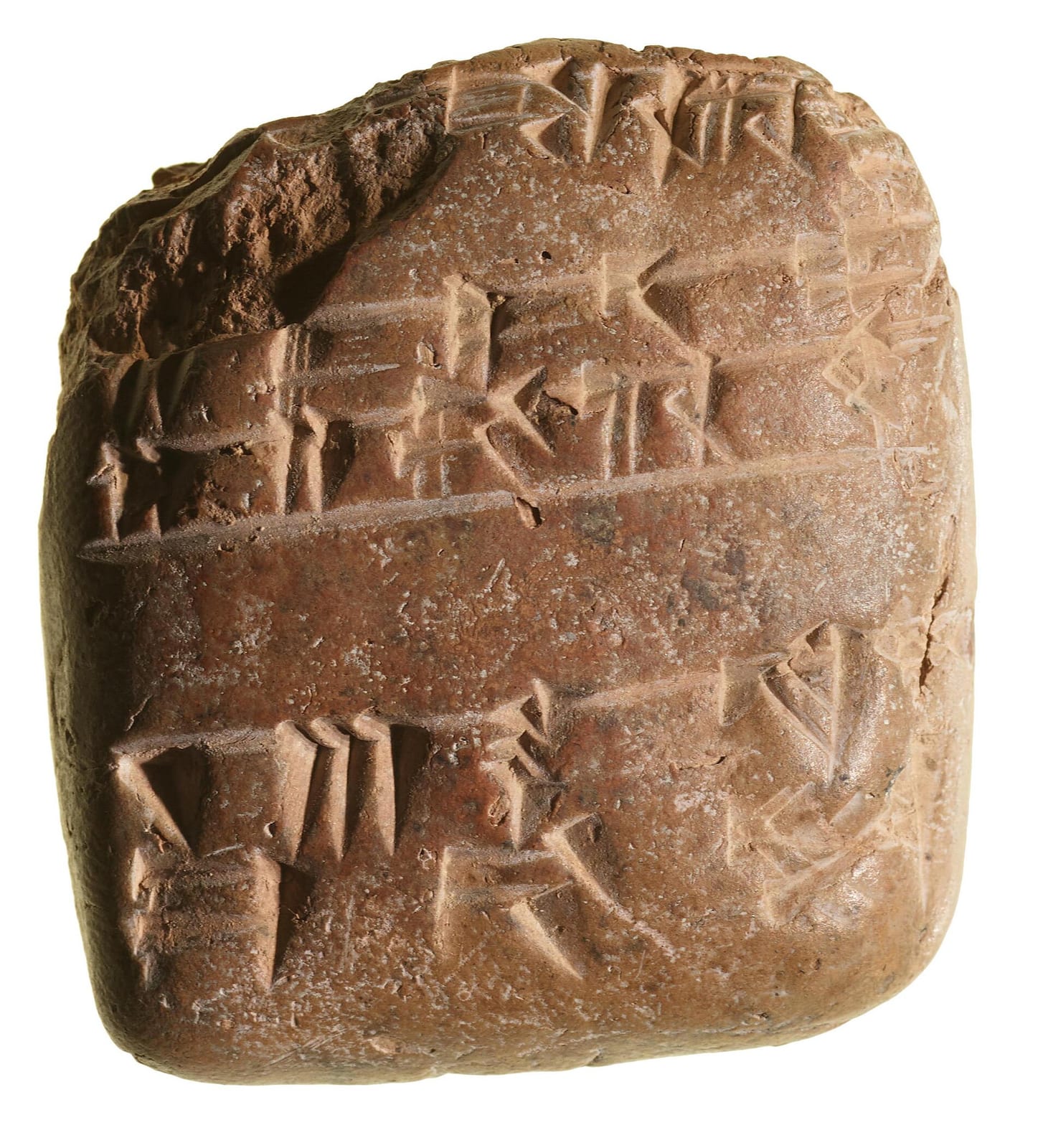
Decades of unregulated digging and private collecting ensued before institutional excavations commenced. The source of the artifacts was eventually identified near the village of Xiaotun, matching the site of Yin, the final capital of the late Shang dynasty. Formal field archaeology began in 1928, when the Academia Sinica's Institute of History and Philology opened the first of fifteen excavation seasons at Anyang that continued until 1937 and yielded large quantities of oracle bones. Modern tallies count well over 100,000 inscribed fragments, with one official estimate of about 160,000, now held in collections across China and overseas. The discovery dramatically transformed historians' understanding of ancient Asia, confirming the Shang lineage recorded in traditional histories and providing an indigenous corpus comparable in historical scope to Near Eastern cuneiform.

Keep reading in Yester
Coming soon to the App Store
Keep following the story
Sources
- Chinese oracle bone inscriptions added to UNESCO world memory register (Xinhua / People's Daily Online)
- Oracle Bone Script: Signature of Ancient Chinese (Science and Technology Daily)
- Museum Offers $15,000 Per Character to Decipher Oracle Bone Script (Smithsonian Magazine)
- Department of Archaeology (Institute of History and Philology, Academia Sinica)
- Anyang Research Group (Institute of History and Philology, Academia Sinica)
- Oracle bone