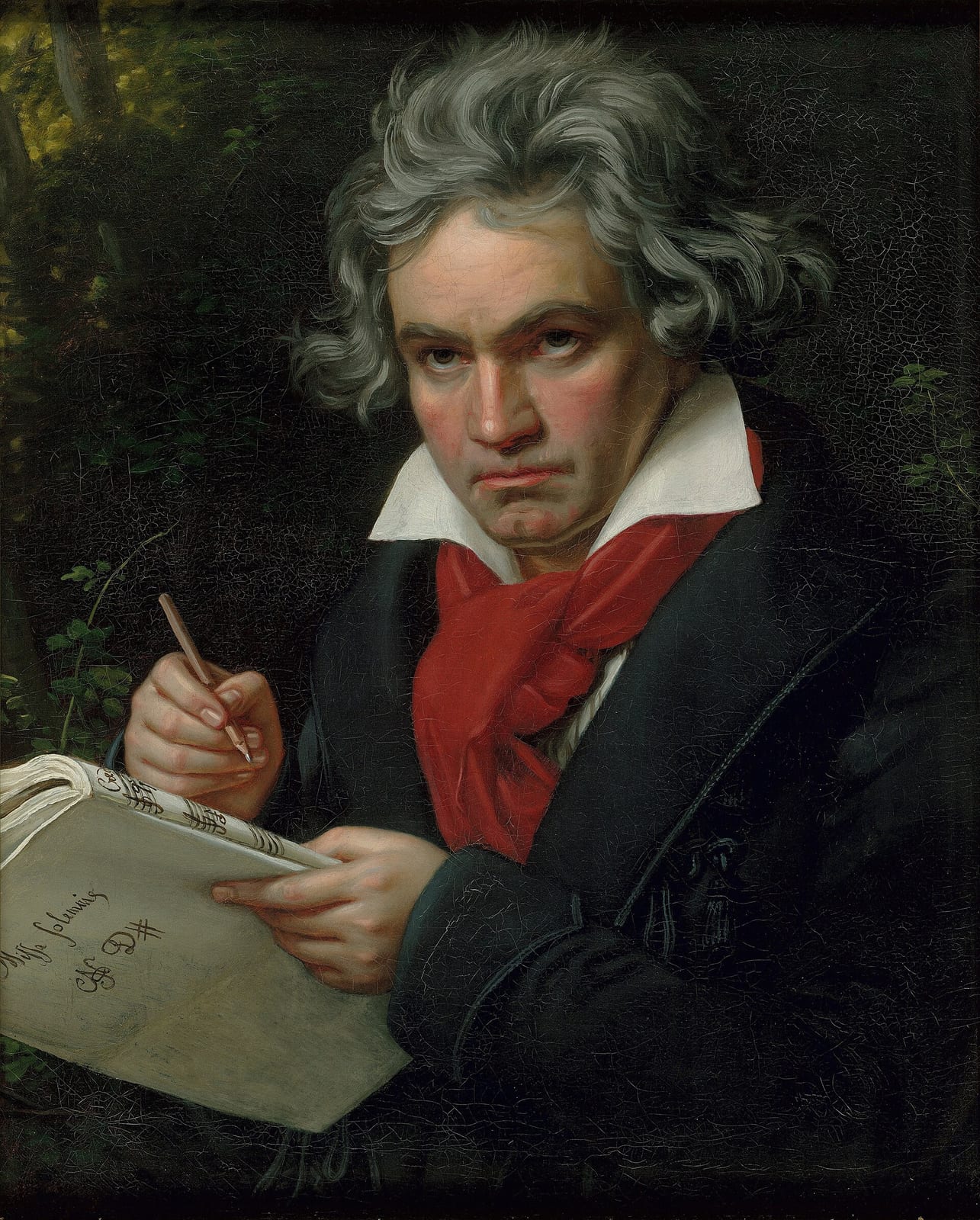
When Beethoven Gave the Symphony a Voice
After three instrumental movements, Beethoven’s Ninth brought singers into the symphony. Its appeal to shared joy became music that later generations would claim for very different moments.
For much of Beethoven’s Ninth Symphony, no singer speaks. The orchestra carries the argument through three large movements before the finale introduces human voices. That change is part of the work’s force. Listeners who have been following instruments alone suddenly encounter words and a direct invitation to shared joy. At the premiere in Vienna on May 7, 1824, the symphony offered not simply another memorable melody but a striking expansion of what the form could contain.
Beethoven drew the sung text from Friedrich Schiller’s poem about joy and human fellowship. He did not merely attach a song after an unrelated instrumental work. The finale recalls and responds to earlier musical material before establishing the theme that has become familiar far beyond concert halls. Its eventual vocal entry gives language to an experience already built through sound. Knowing the famous tune in isolation can conceal how much preparation, resistance and transformation surrounds its arrival.

Keep reading in Yester
Coming soon to the App Store
Keep following the story
Sources
Image: Joseph Karl Stieler