Mozart’s Figaro Puts Servants at the Center of the Stage
An opera drawn from a controversial play turned social tension into comedy.
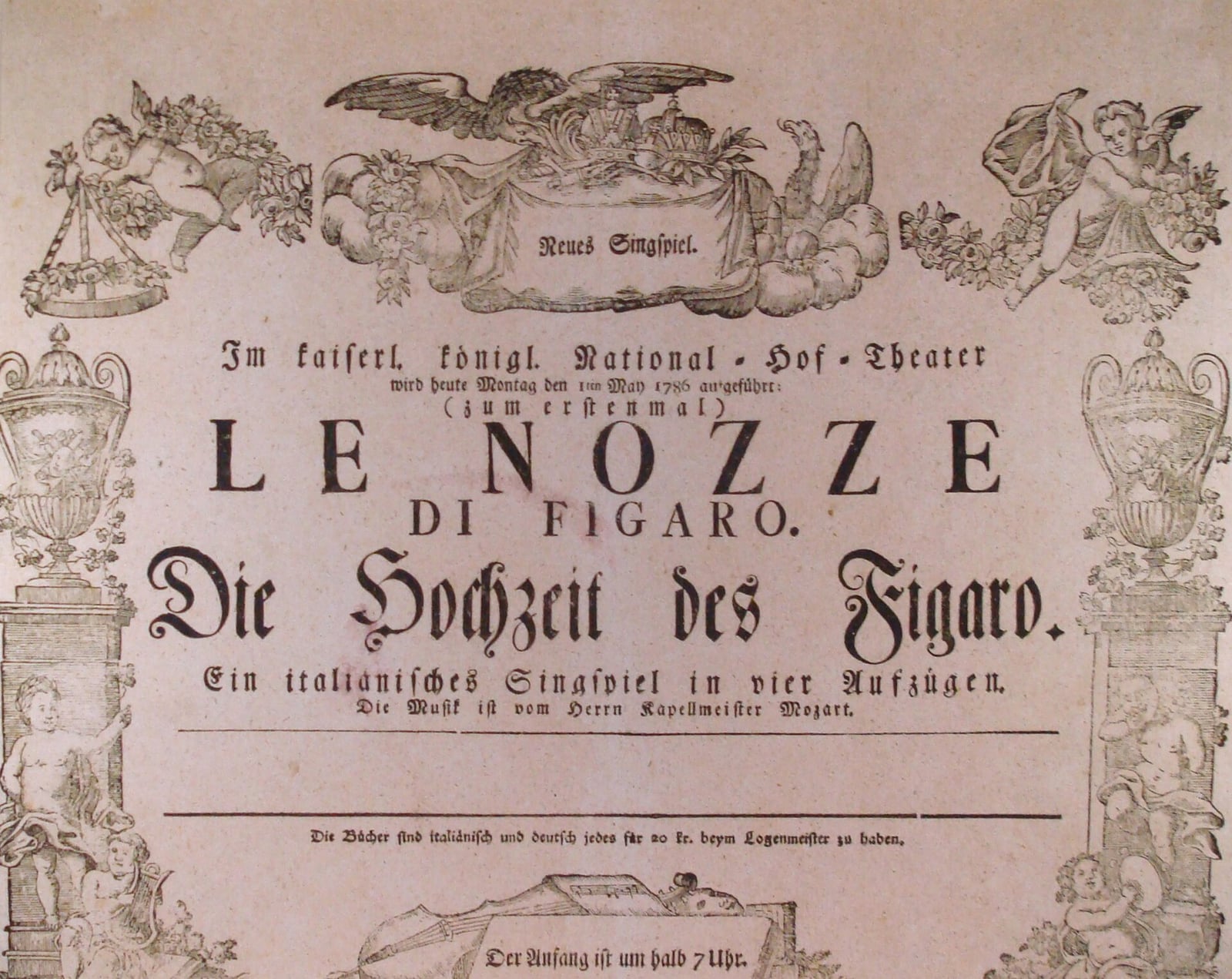
On 1 May 1786, the Burgtheater in Vienna staged the premiere of The Marriage of Figaro, composed by Wolfgang Amadeus Mozart with an Italian libretto by Lorenzo Da Ponte. Mozart chose the subject from Pierre Beaumarchais's 1784 French stage comedy, a sequel to The Barber of Seville whose German translation the Viennese censors allowed to be printed but not performed. Emperor Joseph II, who had heard from his sister Marie Antoinette about the trouble the play had caused in Paris, refused permission to stage it. Da Ponte, a court poet, removed the political content and faithfully translated the rest into Italian, and the emperor let the project go ahead. Mozart wrote major parts of the score within about six weeks, apparently in November and December 1785.
Despite these alterations, the core plot remained firmly anchored in the friction between high nobility and their household staff. Set across a single turbulent day at Count Almaviva's estate outside Seville, the narrative follows the valet Figaro and the chambermaid Susanna as they maneuver to celebrate their wedding. Their central obstacle is the count himself, who seeks to reassert the feudal privilege of sleeping with a servant bride on her wedding night while backing a rival claim on Figaro to stall the nuptials. Through continuous stratagems, anonymous letters, and clever alliances with the neglected Countess Almaviva, the two servants expose their master's predatory hypocrisy and force him into public repentance.

Keep reading in Yester
Coming soon to the App Store
Keep following the story
Sources
Image: Unknown author Unknown author