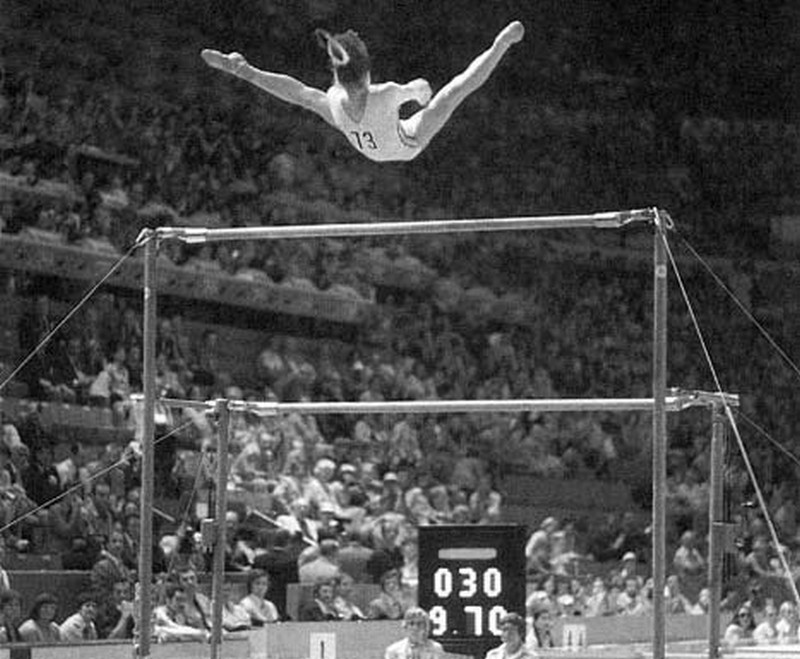
Nadia Comăneci and the Scoreboard That Could Not Show Ten
The scoreboard displayed 1.00, but the judges meant a perfect ten. A fourteen-year-old Romanian gymnast had reached a mark Olympic gymnastics had never awarded before.
On July 18, 1976, a scoreboard in Montreal appeared to give Nadia Comăneci a disastrous result. It read 1.00. The Romanian gymnast had actually received the first perfect ten awarded in Olympic gymnastics, but the display could not present that score in the expected form. A technical limitation created the visual punchline to a remarkable routine. The judges had found no deduction to make under their rules; the machine seemed unable to imagine that outcome.
Comăneci was fourteen, but she was not an unknown beginner suddenly succeeding on the largest stage. Her training in Romania and earlier international performances had already established her as an exceptional gymnast. Montreal transformed that reputation into worldwide recognition. The distinction is important because the famous scoreboard compresses years of work into a few seconds of surprise. It shows the public discovery of an athlete, not the moment at which her abilities first came into existence.

Keep reading in Yester
Coming soon to the App Store
Keep following the story



Sources
Image: Unknown (Comitetul Olimpic si Sportiv Roman)