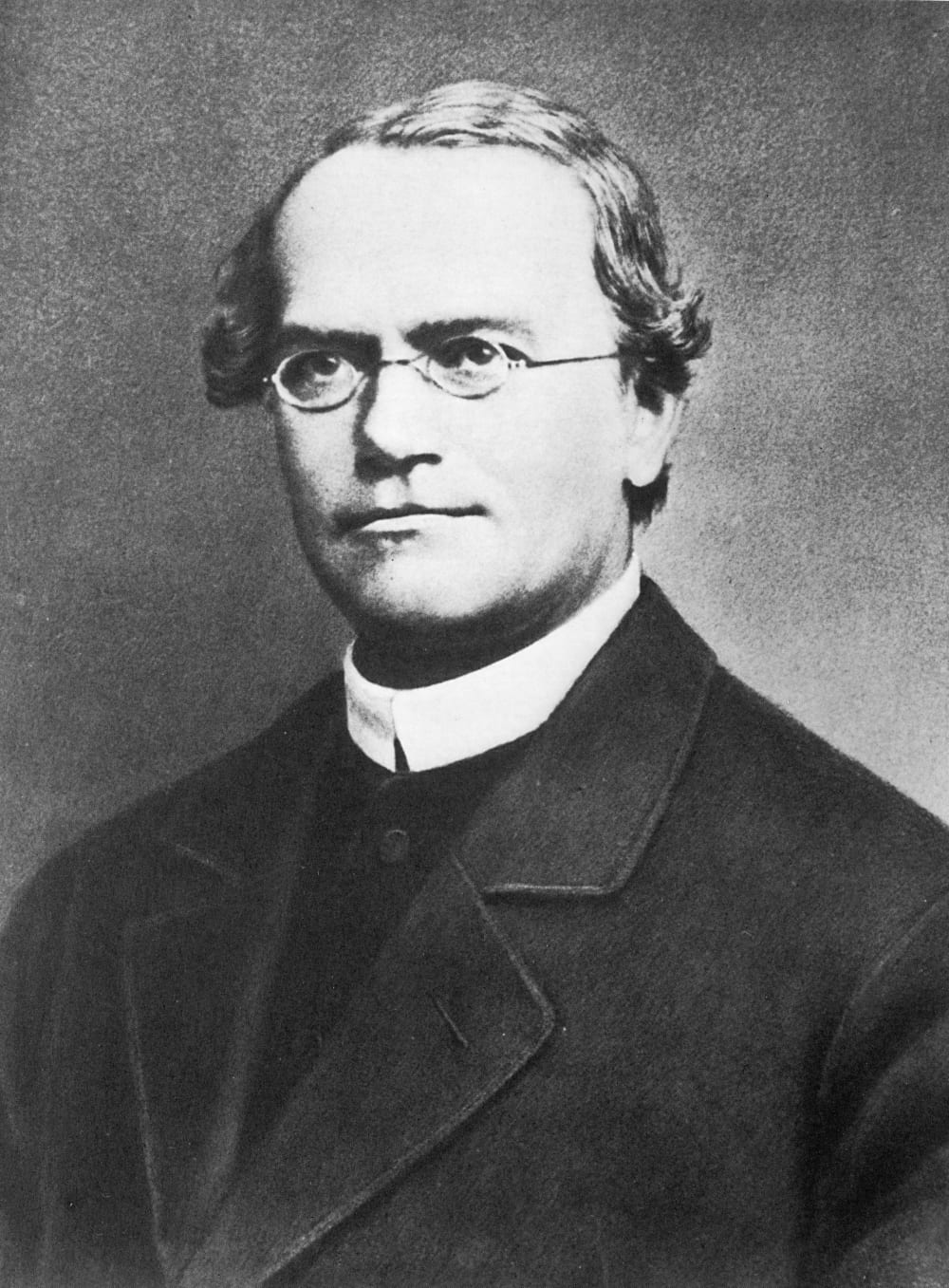
What the Peas Kept Bringing Back
A trait could disappear in one generation and return in the next. By counting those returns, Gregor Mendel found a pattern that transformed the study of inheritance.
A missing trait posed a surprisingly large question. Cross two pea varieties and one visible characteristic might disappear from the offspring, only to return in a later generation. If inheritance simply blended parental qualities together, how could something apparently lost come back? Gregor Mendel approached that puzzle through planned crosses and careful counting at an Augustinian monastery in Brno, then part of the Austrian Empire. His garden became a place where repetition could make an invisible process legible.
Peas offered practical advantages. Their reproduction could be controlled, and Mendel selected characteristics with distinguishable alternatives, such as seed shape or flower color. He began with plants that reliably produced the relevant traits and followed what happened when different varieties were crossed. That preparation mattered as much as the final arithmetic. A pattern in the results would mean little if the starting plants were inconsistent or if uncontrolled pollination made their parentage uncertain.

Keep reading in Yester
Coming soon to the App Store
Keep following the story


Sources
Image: Unknown author Unknown author