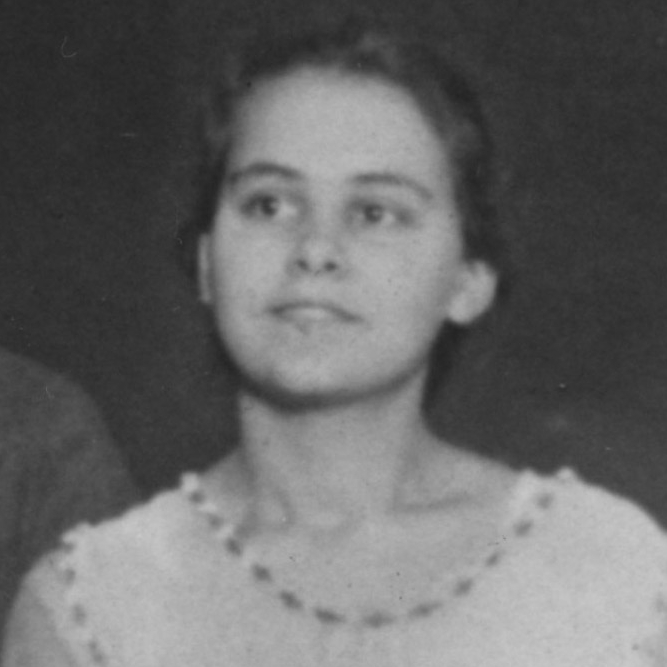
Barbara McClintock Finds Genes That Change Position
Research on maize revealed a more dynamic genome than prevailing models allowed.
In 1950, American cytogeneticist Barbara McClintock published a landmark paper in the Proceedings of the National Academy of Sciences detailing the behavior of mutable genetic loci in maize. Working at the Cold Spring Harbor Laboratory on Long Island, she reported that specific chromosomal elements did not remain fixed in permanent positions. Instead, these elements could move along a chromosome, altering the activity of nearby genes and producing unpredictable, mosaic patterns of pigmentation in maize kernels. Her findings questioned the conventional assumption that genetic material formed an entirely static blueprint passed without physical rearrangement across generations.
McClintock had established her reputation in cytology decades earlier at Cornell University. In the late 1920s and early 1930s, she pioneered methods to identify each of the ten maize chromosomes under a microscope, using carmine staining on microspore cells rather than root tips. Collaborating with Harriet Creighton in 1931, she provided physical confirmation of genetic crossing-over during meiosis, showing that the physical exchange of chromosome segments correlated directly with the recombination of inherited traits. She later characterized chromosome structures including the centromere, the nucleolus organizer region, and telomeres, which protect chromosome ends from degradation.

Keep reading in Yester
Coming soon to the App Store
Keep following the story

Sources
- Barbara McClintock: Facts, Nobel Prize in Physiology or Medicine 1983 (Nobel Foundation)
- Barbara McClintock: Biographical (Nobel Foundation)
- Controlling Elements: Cold Spring Harbor, 1942-1967 (Profiles in Science, U.S. National Library of Medicine)
- Education and Research at Cornell, 1925-1931 (Profiles in Science, U.S. National Library of Medicine)
- Barbara McClintock and the discovery of jumping genes (PNAS, via PubMed Central)
- Barbara McClintock
Image: Unknown author Unknown author