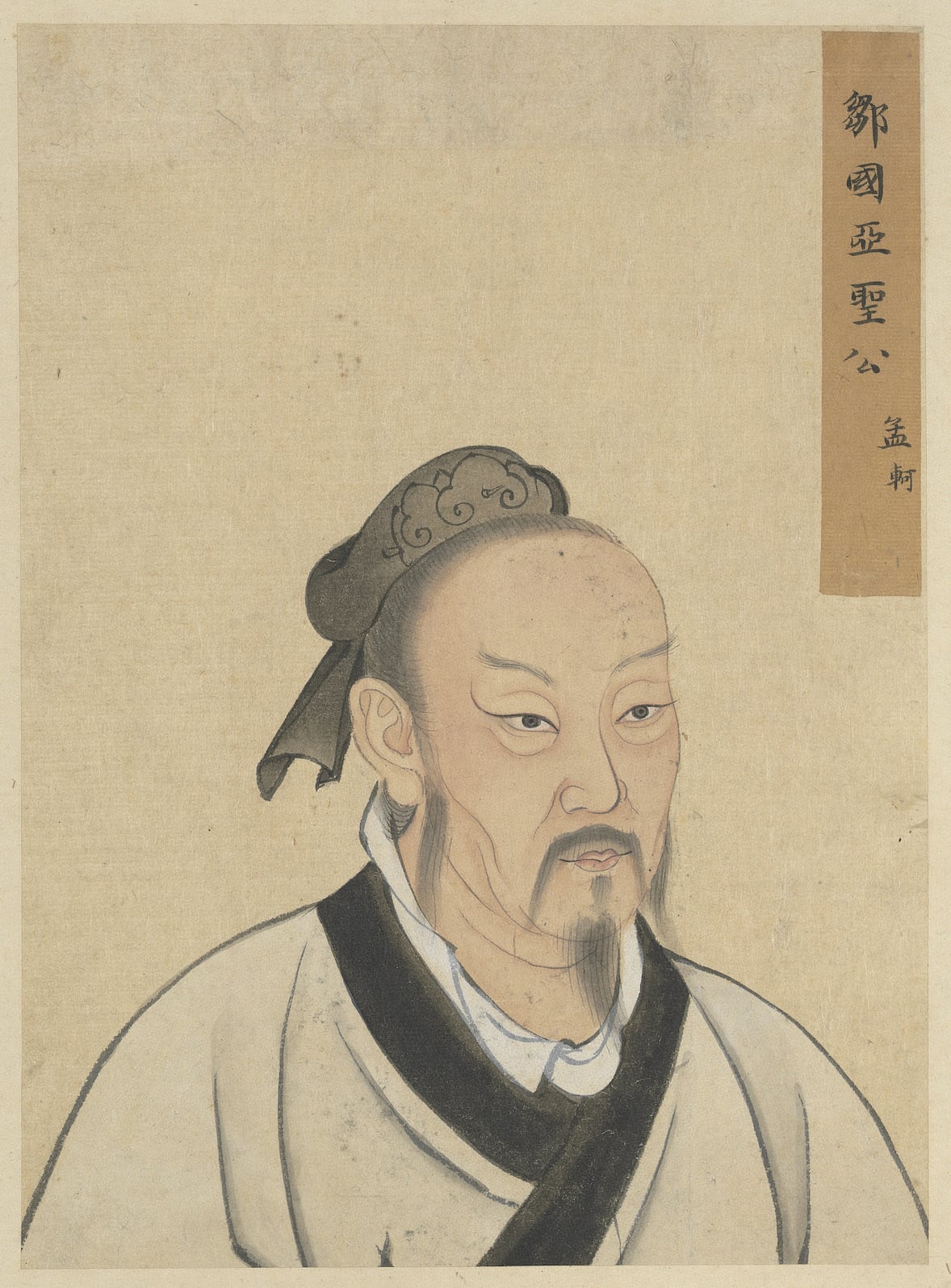
Mencius Argues That Human Nature Is Good
The Confucian sage told kings that a cruel ruler loses the right to rule.
During the turbulent Warring States period of ancient China, the philosopher born Meng Ke traveled among rival courts seeking to persuade rulers to govern with benevolence. Originating from the state of Zou, in modern Shandong province, he became widely known as Mencius and was later revered as the Second Sage in the Confucian tradition. According to historical tradition, he stood in the intellectual line of Confucius, being remembered as a pupil of the earlier sage's grandson Zisi. Mencius brought an uncompromising moral standard to political authority, insisting that government existed primarily to serve the welfare of common people rather than the ambition of kings.
A central premise of his philosophy was the doctrine that human nature possesses an inherent tendency toward goodness, humanity, and righteousness. Mencius maintained that people are not born morally corrupt, but rather with innate moral beginnings that resemble limbs on a body. To illustrate this, he cited the universal alarm and distress that ordinary bystanders feel upon suddenly witnessing a young child about to fall into a well, an immediate reaction driven neither by calculated self-interest nor by a craving for social praise. External circumstance and poor upbringing could easily warp or stifle these natural sprouts, but intentional cultivation through education and supportive environments could develop them into mature virtues.

Keep reading in Yester
Coming soon to the App Store
Keep following the story
Sources
Image: anonymous