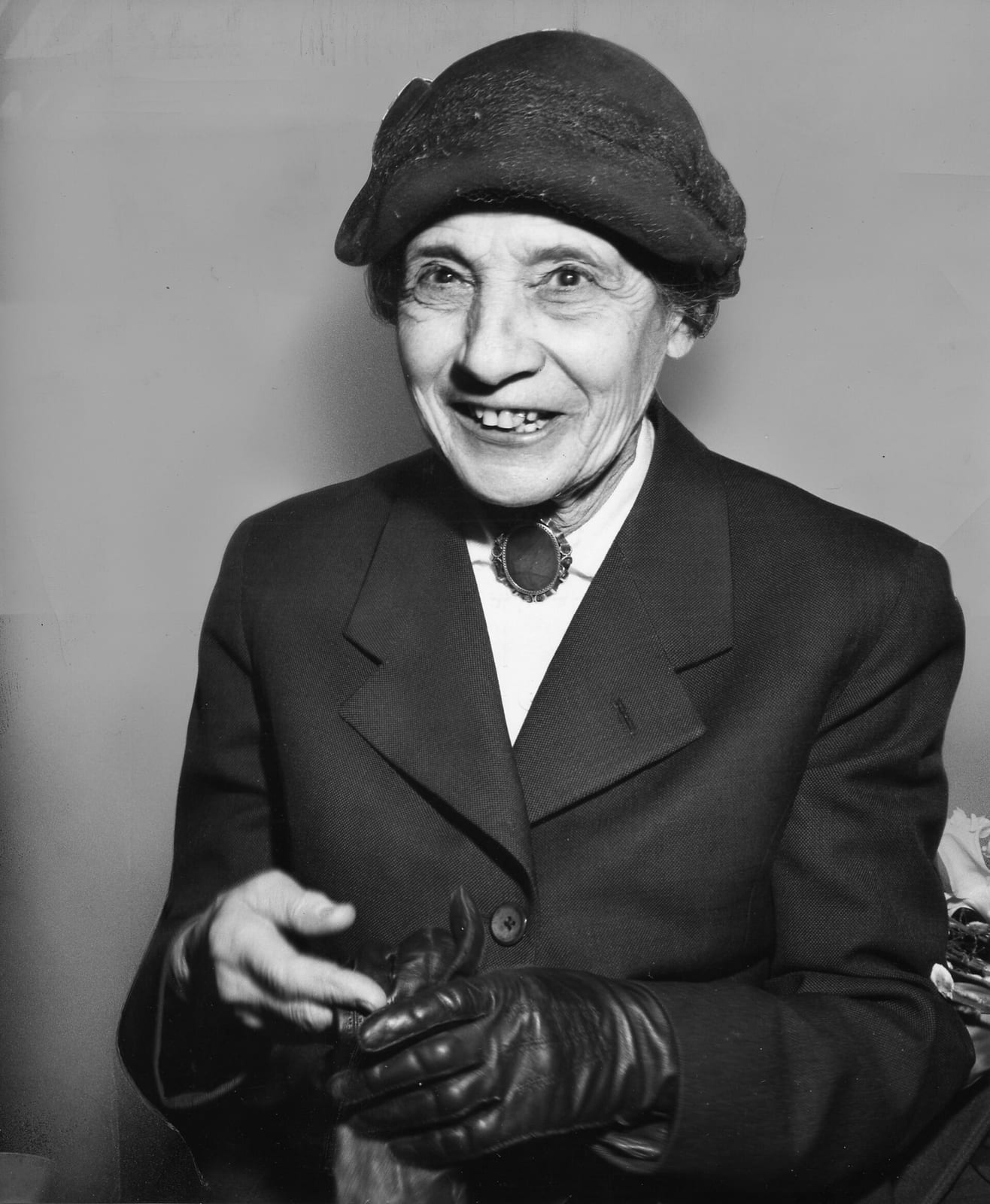
Lise Meitner Helps Explain How an Atom Can Split
Unexpected experimental results required a new interpretation. Meitner and Otto Frisch’s explanation of nuclear fission emerged across borders shaped by persecution and exile.
In the early decades of the twentieth century, physicist Lise Meitner carved out an exceptional scientific career despite widespread institutional barriers against women. After becoming the second woman to receive a physics doctorate from the University of Vienna in 1906, she moved to Berlin to attend lectures by Max Planck and conduct experimental work. She formed a lasting partnership with chemist Otto Hahn, first sharing makeshift laboratory quarters in a converted carpentry shop at the university and later working at the newly established Kaiser Wilhelm Institute for Chemistry.
Their initial studies in radioactivity focused on identifying radioactive recoil techniques and measuring atomic emissions. During the First World War, Meitner served as an Austrian army X-ray nurse-technician before returning to Berlin to lead her own physics laboratory section. Working largely alone while Hahn was deployed, she isolated the mother isotope of actinium, which she and Hahn subsequently named protactinium. In 1926, Meitner broke further ground by becoming the first female physics professor at a German university.

Keep reading in Yester
Coming soon to the App Store
Keep following the story
Sources
Image: Fotograf im Auftrag der United States Information Agency (Pictorial Section der Information Services Branch (ISB))