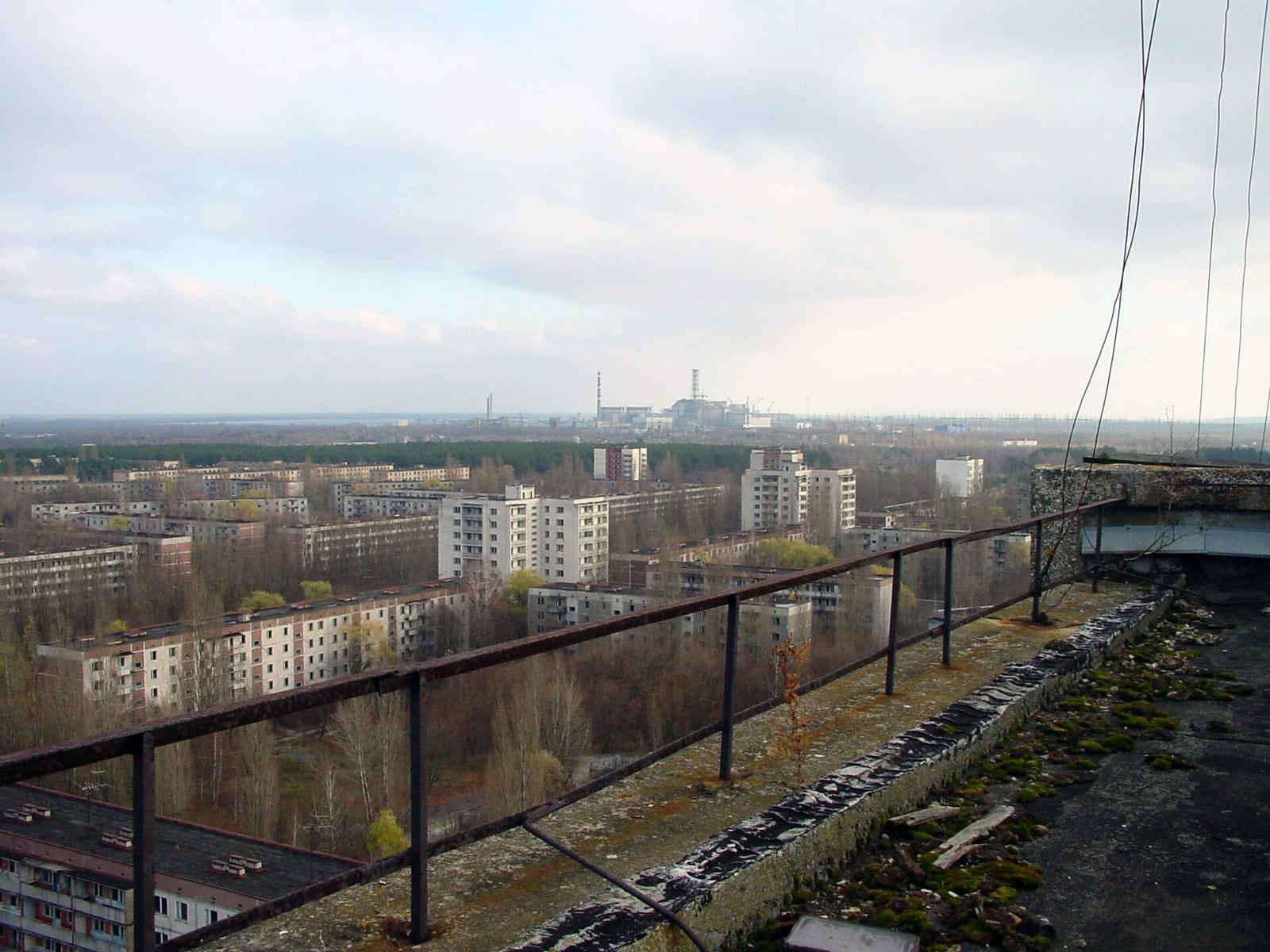
A Reactor Explodes at Chernobyl
The worst accident in the history of nuclear power spread radiation across Europe.
In the early hours of 26 April 1986, technicians at the Chernobyl Nuclear Power Plant in northern Ukraine initiated a test on reactor number four. The trial aimed to confirm whether rotational momentum from a coasting steam turbine could power crucial emergency cooling pumps during the initial minute of a potential station blackout, before backup diesel generators reached full load. Preparations had already experienced extensive delays when regional grid controllers in Kiev postponed the scheduled reactor shutdown to satisfy evening electricity demand. Clearance to resume came only at about 23:00 on 25 April, so the test passed to the night shift, under the supervision of deputy chief engineer Anatoly Dyatlov.
During the power reduction, neutron-absorbing fission byproducts led to severe reactor poisoning. Control room staff attempted to maintain stability after an unexpected drop in thermal output, eventually withdrawing nearly all control rods to raise power back to 200 megawatts. Operating at this depressed level left the RBMK reactor primed for disaster. The design possessed a positive void coefficient, meaning increased boiling in the coolant water accelerated the nuclear chain reaction instead of damping it. At 01:23:40, an operator pressed the emergency scram button, AZ-5, to shut down the unit. Because the control rods were tipped with graphite extensions that initially displaced water in the core, their downward movement caused an instantaneous surge in reactivity instead of halting the reaction.

Keep reading in Yester
Coming soon to the App Store
Keep following the story
Sources
- Chernobyl Accident 1986 (World Nuclear Association)
- Chernobyl Accident Appendix 1: Sequence of Events (World Nuclear Association)
- Chernobyl accident: areas of work (UNSCEAR, United Nations Scientific Committee on the Effects of Atomic Radiation)
- Chernobyl: the true scale of the accident (World Health Organization)
- Chernobyl: The True Scale of the Accident (IAEA press release)
- HEALTH-EUROPE: Chernobyl's Elusive Bottom Line (Inter Press Service)
- Chernobyl disaster
Image: Jason Minshull