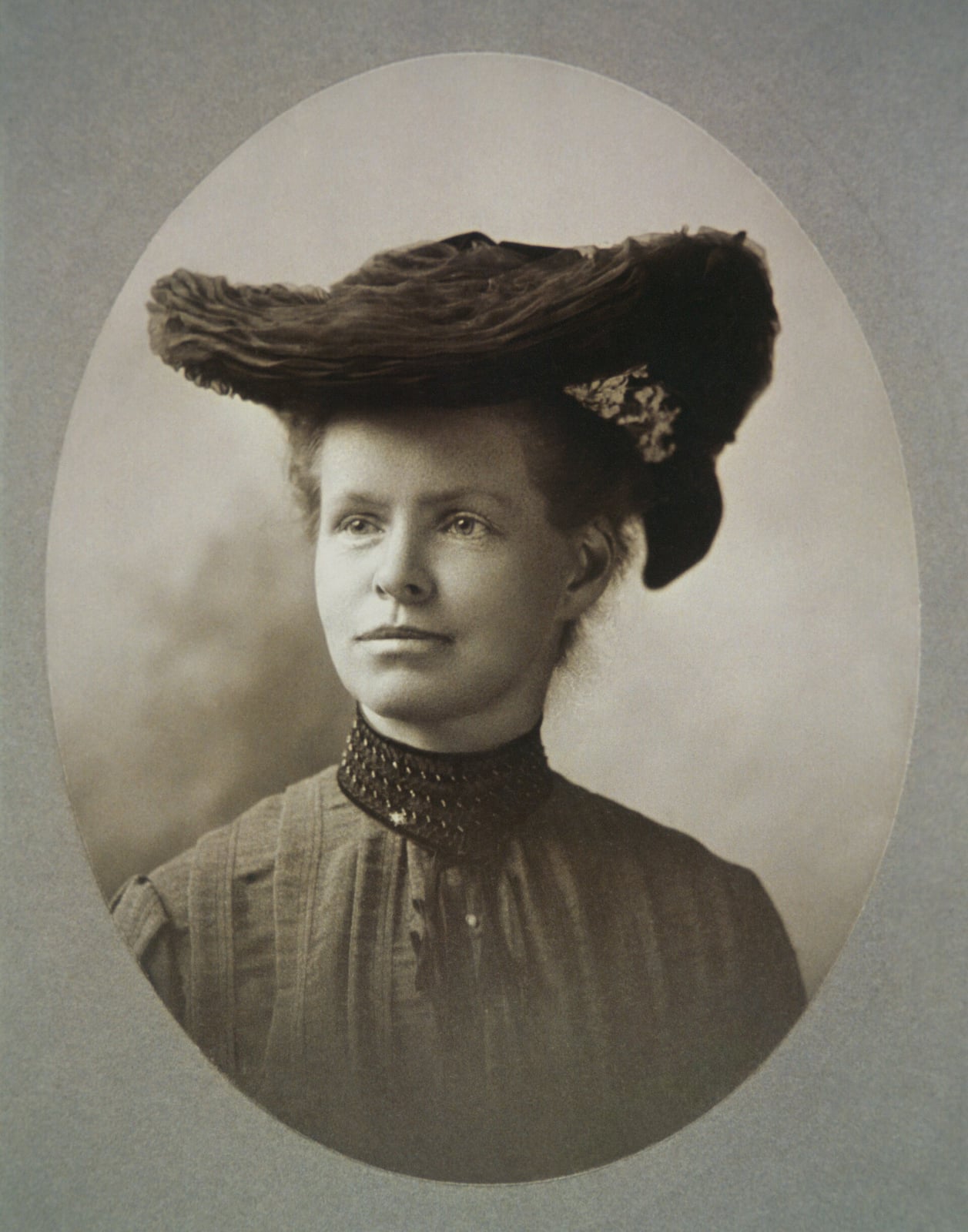
Nettie Stevens Finds a Chromosomal Clue to Sex Determination
Microscopic studies of insects helped establish that chromosomes, rather than environment alone, shape biological sex.
In 1905, the American cytologist Nettie Maria Stevens investigated the cellular mechanisms of inheritance while working on a research assistantship funded by the Carnegie Institution of Washington. Stationed primarily at Bryn Mawr College, Stevens conducted microscopic examinations of germ cells across diverse insect species to evaluate how hereditary material divided during reproduction. At the time, biological science was actively reassessing the laws of Gregor Mendel following their rediscovery five years earlier, and researchers were searching for physical structures inside cells that could account for specific inherited traits, including biological sex.
Stevens focused her cytological analysis on the mealworm beetle, Tenebrio, examining both male and female reproductive tissues. She documented that female cells contained paired chromosomes of equal size, whereas male cells contained an unequal pair consisting of one large chromosome and one noticeably smaller chromosome. During spermatogenesis, this unequal pair separated, leading male mealworms to produce two distinct classes of sperm in equal numbers. One class carried the larger chromosome, while the other carried the smaller element.

Keep reading in Yester
Coming soon to the App Store
Keep following the story
Sources
- Nettie Maria Stevens (1861-1912) (Embryo Project Encyclopedia, Arizona State University)
- Nettie Stevens: A Discoverer of Sex Chromosomes (Nature Education, Scitable)
- Studies in Spermatogenesis, by N. M. Stevens, Carnegie Institution of Washington Publication No. 36, 1905 (Project Gutenberg)
- Nettie Stevens
Image: Carnegie Institution of Washington (according to the back of the photograph, visible at the download page) Restored by Adam Cuerden .