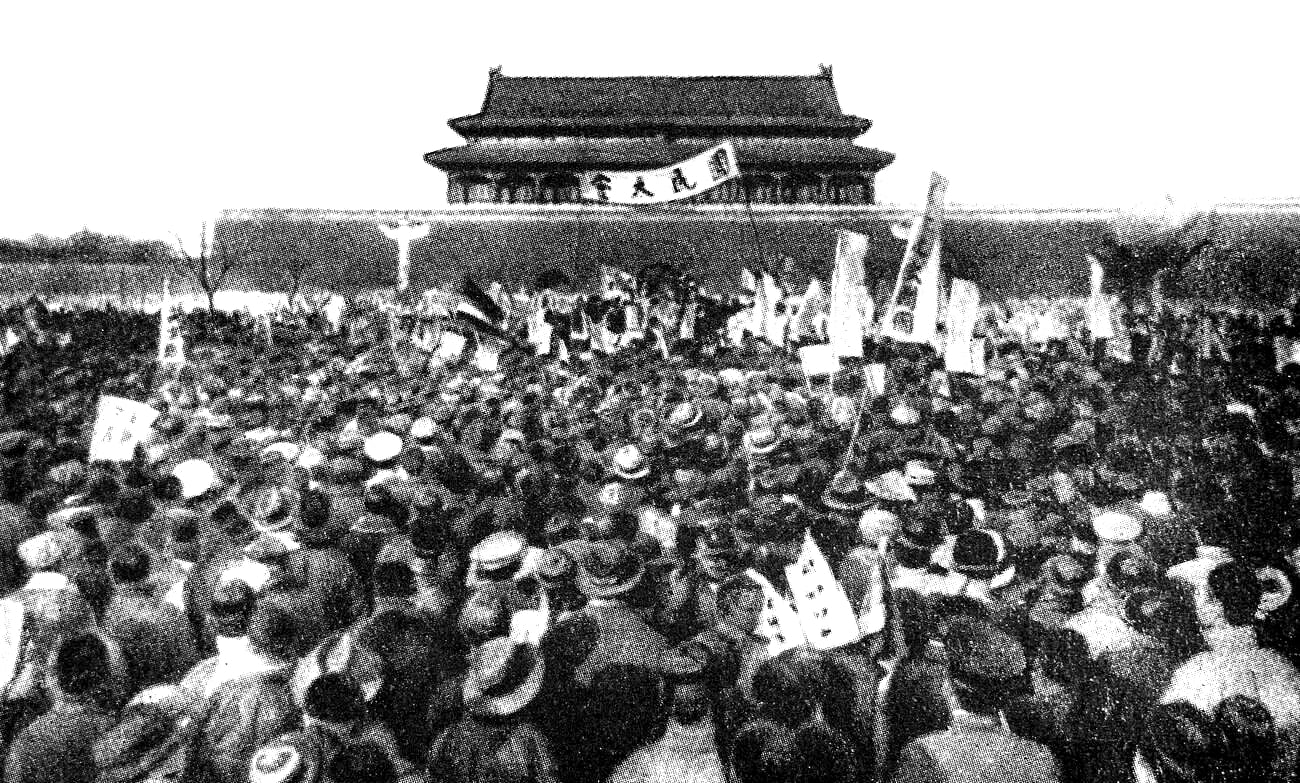
Students Protest in Beijing on May Fourth
Anger at the Versailles settlement became a movement for a new China.
On the afternoon of May 4, 1919, thousands of students from thirteen Beijing universities and colleges converged in front of the Tiananmen gate. That morning, their representatives had formulated resolutions demanding resistance to the Versailles Peace Conference decisions and calling for a coordinated student assembly. China had contributed about 140,000 laborers to the Allied effort on the Western Front during World War I, yet the diplomats gathering in Paris awarded former German concessions in Shandong province to Japan instead of returning them to Chinese rule. Gathering at the monumental gate, demonstrators denounced what they viewed as an Allied betrayal, condemned their own government's weakness, and demanded the immediate dismissal of officials accused of collaborating with Japanese interests.
The demonstration rapidly intensified beyond symbolic assembly. Protesters marched to the residences of the accused officials, setting fire to the house of cabinet minister Cao Rulin and severely beating China's envoy to Japan, which led to arrests by Beijing police. In response, Beijing students soon launched a citywide strike, while their organizers used the press and sent delegates to mobilize cities across the country. The nationalist grievance gained swift traction among an urban public already incensed by earlier territorial concessions, including the Twenty-One Demands presented by Japan in 1915 and a secret bilateral defense agreement signed by the Beijing government in 1918.

Keep reading in Yester
Coming soon to the App Store
Keep following the story
Sources
Image: Unknown author Unknown author