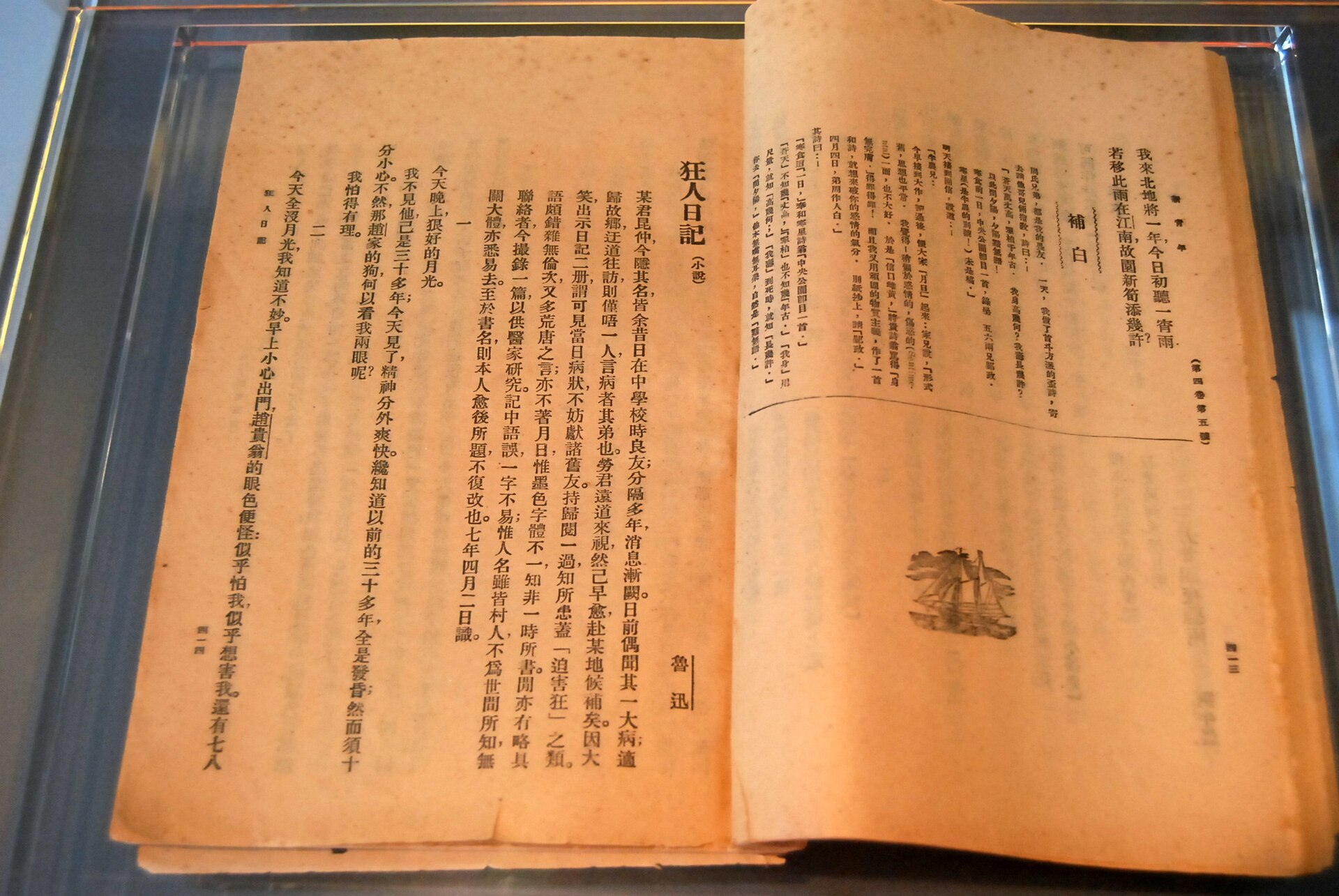
Lu Xun Makes a Disturbing Voice Speak in the Vernacular
A short story used an unreliable narrator to question inherited social values and literary conventions.
In 1918, the Chinese writer Lu Xun published Diary of a Madman, a groundbreaking short story that quickly became a foundational text of the New Culture Movement. Drawing inspiration from Nikolai Gogol's tale of the same title, Lu Xun adopted the form of a personal journal to scrutinize the deep-seated traditions of early twentieth-century Chinese society. The publication emerged during the turbulent transition to Republican-era governance following the fall of the Qing Dynasty, when intellectuals increasingly questioned inherited hierarchies and sought new creative forms.
The story is structured through an intentional linguistic contrast. It opens with an introductory framing note composed in traditional Classical Chinese, in which an unnamed narrator describes visiting an old friend whose brother had supposedly fallen ill. Upon arrival, the narrator learns that the brother has recovered from his affliction and departed to accept an official post. The narrator receives and copies thirteen detached journal entries left behind by the brother, which abandon the classical idiom entirely in favor of modern vernacular Chinese, known as baihua.

Keep reading in Yester
Coming soon to the App Store
Keep following the story

Sources
Image: Shizhao