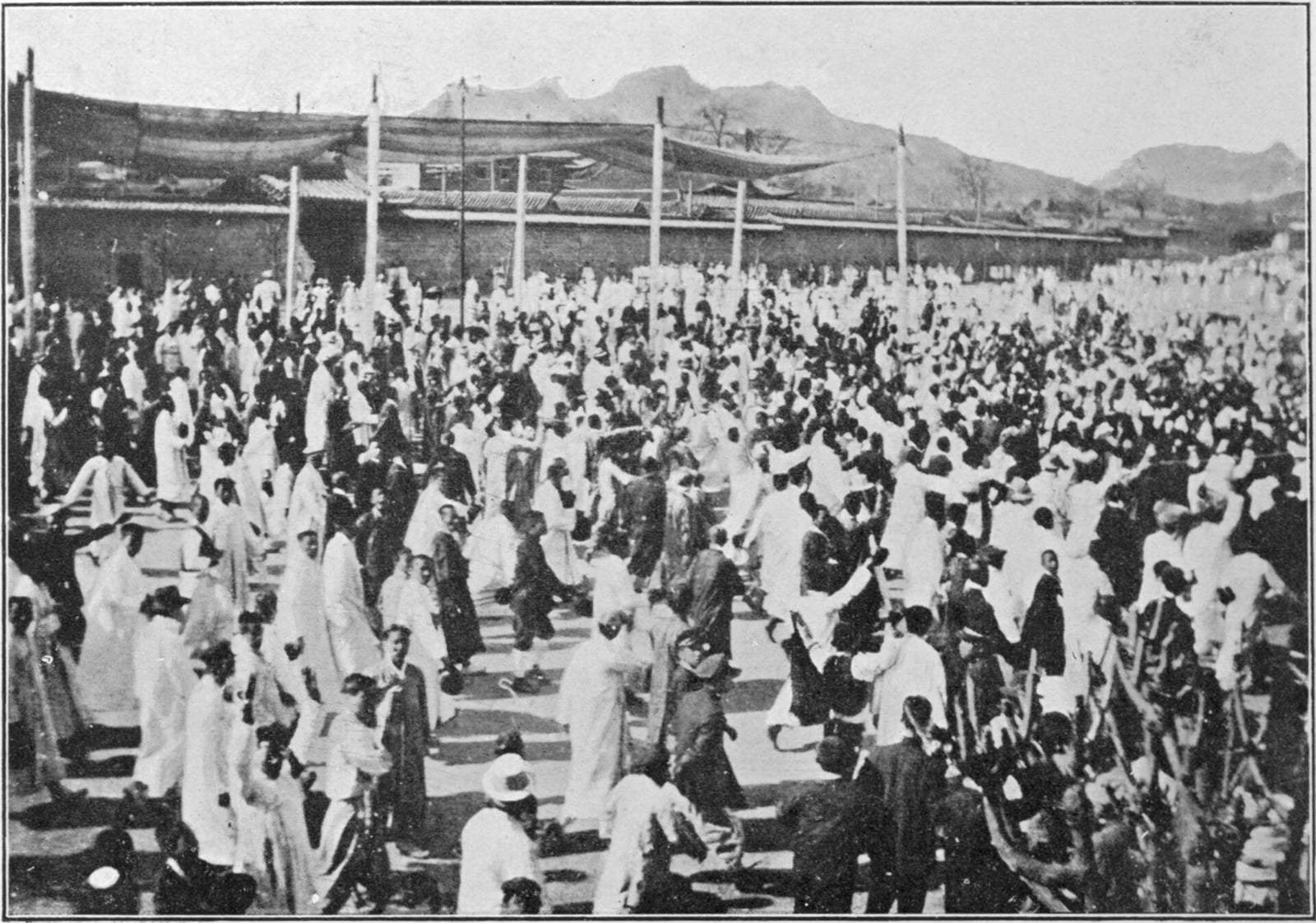
Koreans Declare Independence on March First
Peaceful demonstrations against Japanese rule spread across Korea.
On March 1, 1919, twenty-nine Korean religious and civic leaders met at the T'aehwagwan restaurant in Seoul to read aloud the Korean Declaration of Independence. Simultaneously, several thousand people gathered in nearby Tapgol Park, where the same text was read aloud to the assembly. The crowd chanted for independence and marched out toward the main thoroughfares of the city. As word traveled, tens of thousands of demonstrators joined the procession, distributing thousands of printed copies of the manifesto. These events initiated what became known as the March First Movement, an extensive series of protests opposing Japanese rule.
Tensions had mounted since the Empire of Japan formally annexed Korea in 1910. The colonial administration imposed strict cultural assimilation, seized agricultural lands, curtailed basic civil liberties, and required significant economic output to be directed toward Japan. Resentment grew among workers and farmers, mirrored by an increase in labor strikes in the late 1910s. Grievances deepened following the sudden death of former Korean emperor Gojong on January 21, 1919. Although Japanese officials reported natural causes, widespread rumors that he had been poisoned stoked public outrage and led organizers to time their protests with his scheduled state funeral.

Keep reading in Yester
Coming soon to the App Store
Keep following the story
Sources
Image: Bureau d'information coréen