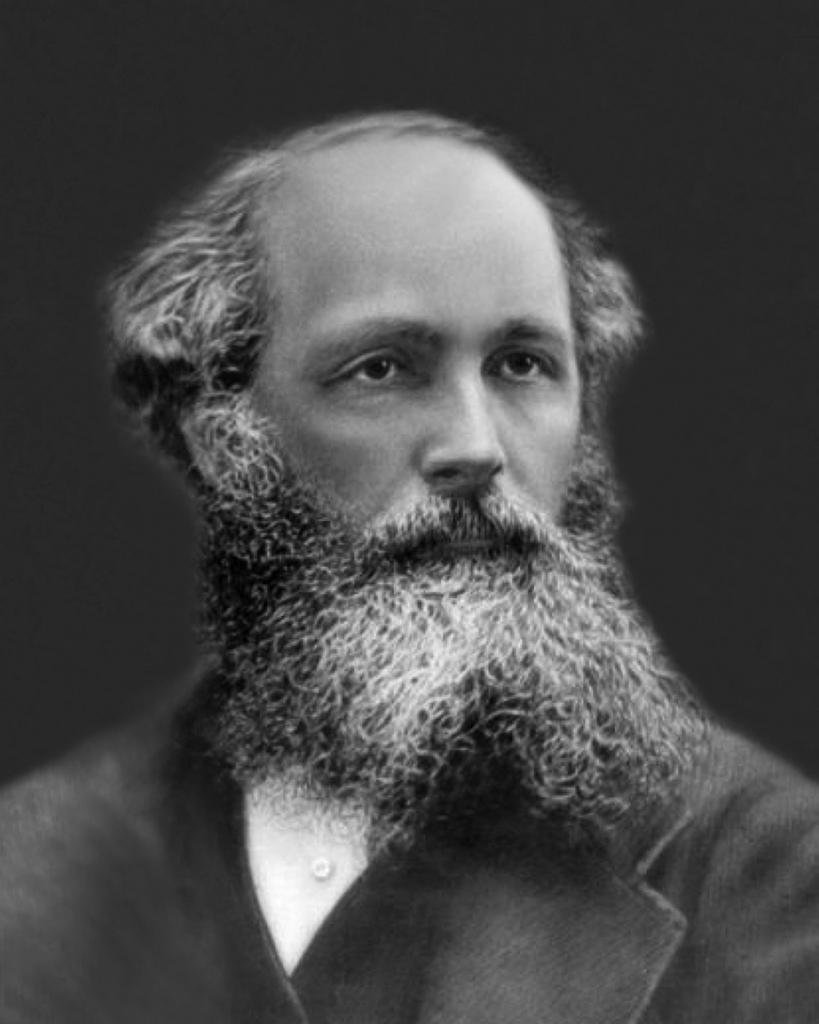
Maxwell Connects Electricity, Magnetism and Light
A mathematical account of electromagnetic fields suggested that light belonged to the same physical story. The insight joined phenomena that had often been studied separately.
On 8 December 1864, James Clerk Maxwell's paper "A Dynamical Theory of the Electromagnetic Field" was read before the Royal Society in London. Maxwell had transmitted the manuscript in late October, beginning a formal evaluation process that involved refereeing by William Thomson and George Gabriel Stokes. Following approval by the Committee of Papers on 15 June 1865, the work went to the printer the following day. Bound copies of the Philosophical Transactions were customarily readied late in the year, but Maxwell received separate printed offprints for private distribution shortly after the June order.
The publication offered a unified mathematical description of electrical and magnetic behaviors that researchers had long treated through separate empirical formulas. In the third section, Maxwell laid out twenty distinct component equations, designated across categories from A through H. Rather than presuming universal material properties, his initial calculations assumed linear, isotropic, and nondispersive media, though he noted that anisotropic conditions were possible. Within these expressions, he accounted for elastic displacement, conductivity, and continuous distributions of electric charge.

Keep reading in Yester
Coming soon to the App Store
Keep following the story
Sources
Image: Unknown author Unknown author