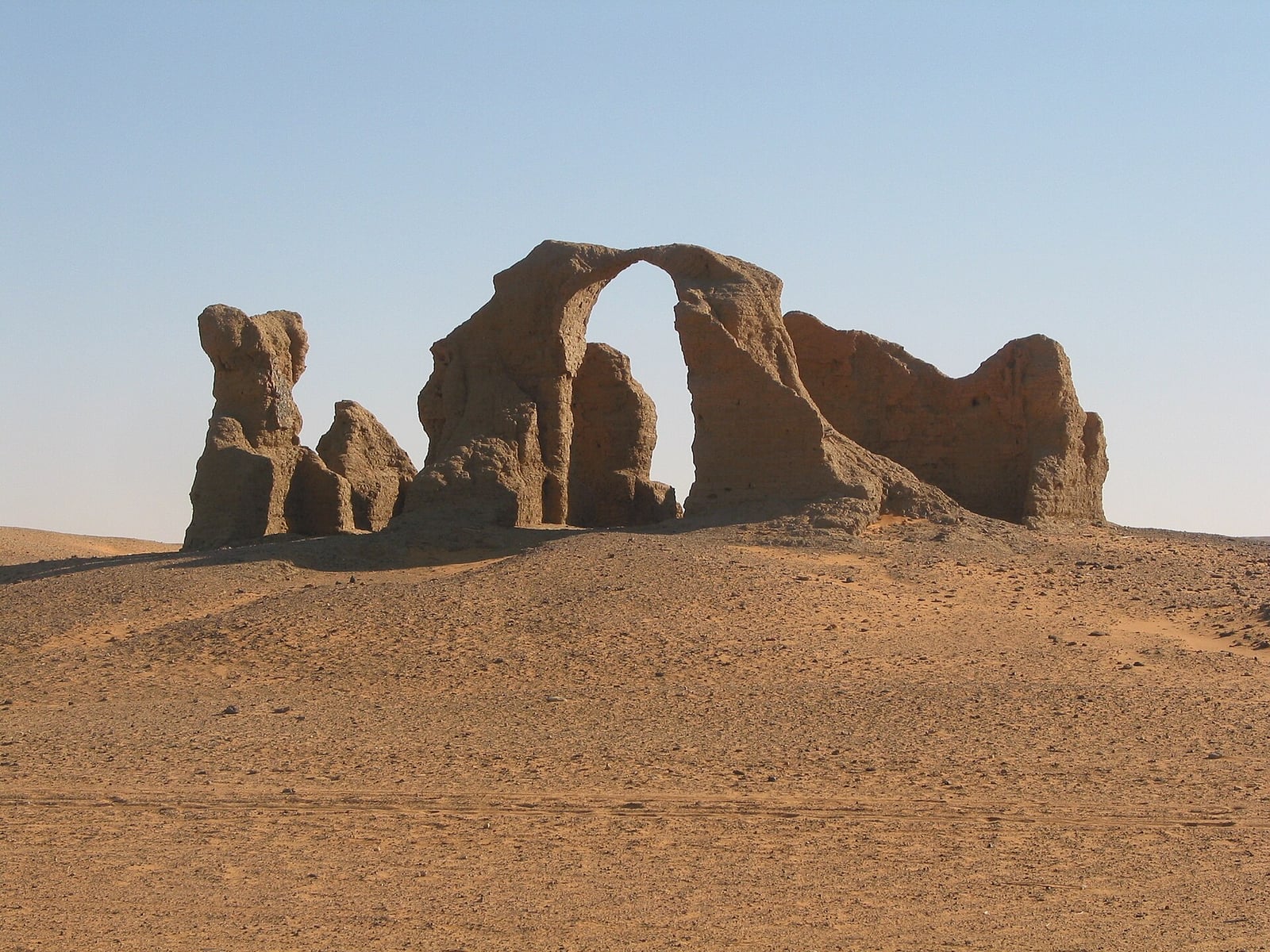
Makuria Holds Off an Arab Army and Signs the Baqt
A Nubian Christian kingdom secured a treaty that lasted for about six centuries.
In 652, an army dispatched by the Rashidun Caliphate pressed southward along the Nile Valley into the heart of Nubia. Under the command of Abd Allah ibn Sa'd ibn Abi al-Sarh, the Muslim expedition reached Dongola, the capital of the Christian kingdom of Makuria. Arab siege engines bombarded the settlement and inflicted damage upon the town, but the attackers could not break through the citadel fortifications. Muslim chronicles gave particular credit to the defensive skill of Makurian archers, who checked the offensive and brought the fighting to a stalemate.
Recognizing that neither side could force a decisive outcome, Abi al-Sarh and the Makurian king, Qalidurut, convened to halt the campaign. Rather than ending in vassalage or conquest, the encounter resulted in a formal pact known as the Baqt. The agreement established an enduring truce alongside an annual reciprocal exchange of goods. Makuria delivered slaves, while Egypt supplied commodities such as grain and textiles. Far from representing an act of political submission, the accord functioned as a mutual settlement that formally acknowledged Makurian sovereignty.

Keep reading in Yester
Coming soon to the App Store
Keep following the story
Sources
- Dongola: Capital of Early Makuria, by Wlodzimierz Godlewski (Festschrift Wenig, Sudanarchaologische Gesellschaft zu Berlin)
- Ruins of Monumental Church Linked to Medieval Nubian Kingdom Found in Sudan (Smithsonian Magazine)
- Discovery of the remains of the largest church in Old Dongola (University of Warsaw)
- Makuria
Image: Nubian Image Archive