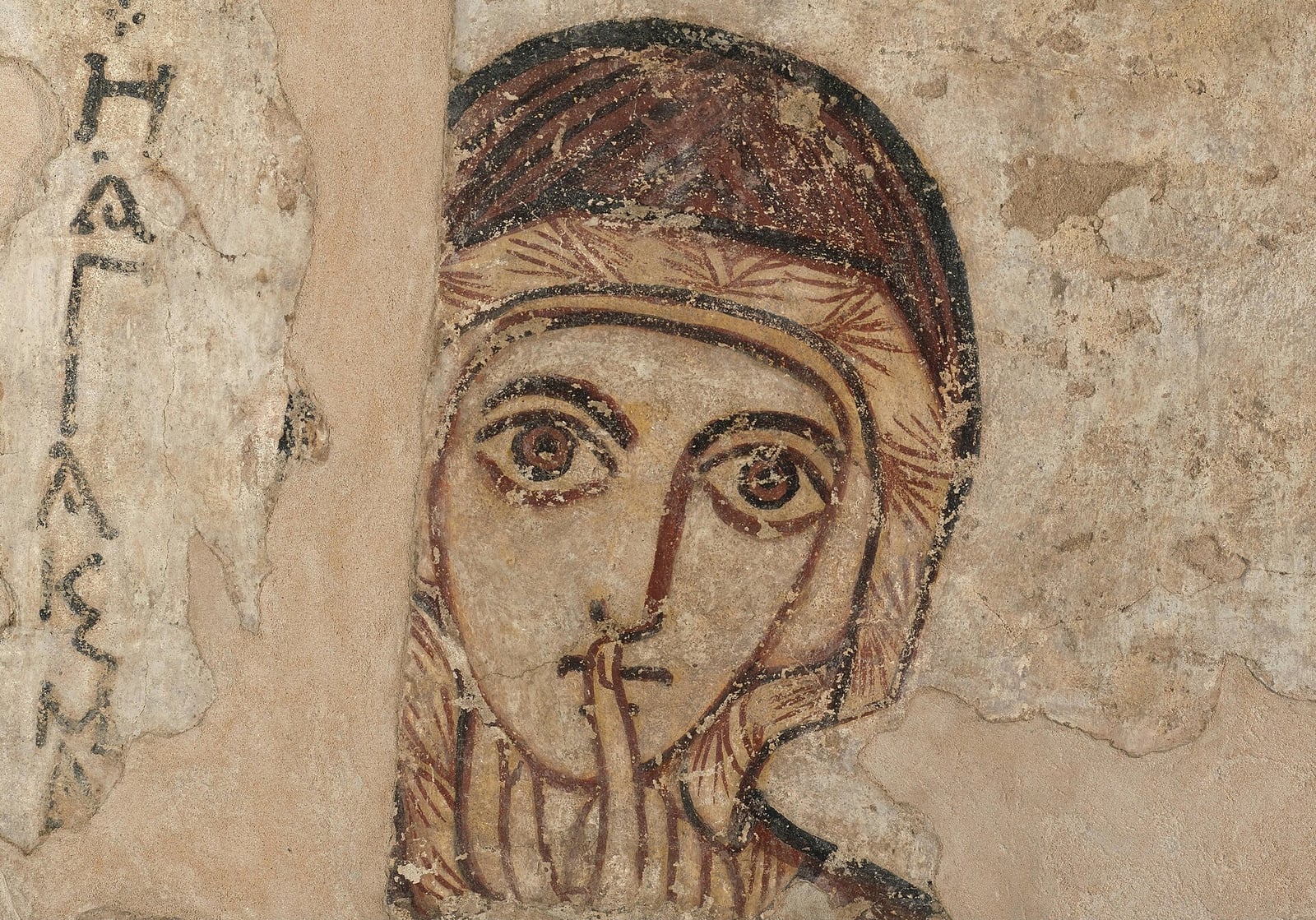
Painters Fill the Cathedral of Faras with Murals
A Christian Nubian cathedral preserved centuries of wall paintings.
The ancient city of Faras, known in Greek and Old Nubian as Pakhoras, stood on the banks of the Nile along the border between modern Egypt and Sudan. Settled as far back as the A-Group period, the community grew into a prominent regional centre during the ancient Egyptian administration of Lower Nubia, absorbing significant northern cultural influences upriver from Abu Simbel. Long before its medieval prominence, the settlement also served as a major regional centre during the era of Meroe, boasting significant temples and cemeteries that reflected Nubia's long and diverse religious history.
Pakhoras attained its greatest political and religious standing during the Christian era of Nubia. It functioned as the royal capital under the Nobadian ruler Silko and remained the principal northern administrative seat after the kingdom of Nobadia was absorbed into Makuria. As the official residence of the eparch of Nobadia, the city directed civic and military affairs for the northern province, while nearby religious establishments such as the monastery at Qasr el-Wizz reinforced the region's strong monastic and liturgical presence.

Keep reading in Yester
Coming soon to the App Store
Keep following the story
Sources
- Faras Gallery (National Museum in Warsaw)
- The Faras Gallery story (National Museum in Warsaw on Google Arts and Culture)
- Treasures of Africa in the heart of Poland (Embassy of Poland in Egypt, gov.pl)
- Foundation inscription of Bishop Paulos, 707 (Database of Medieval Nubian Texts, University of Warsaw)
- The Cathedral of Faras: rediscovering the submerged Nubian site of remembrance (Leiden Medievalists Blog, Leiden University)
- Faras
Image: Anonymous ( Faras ) Unknown author