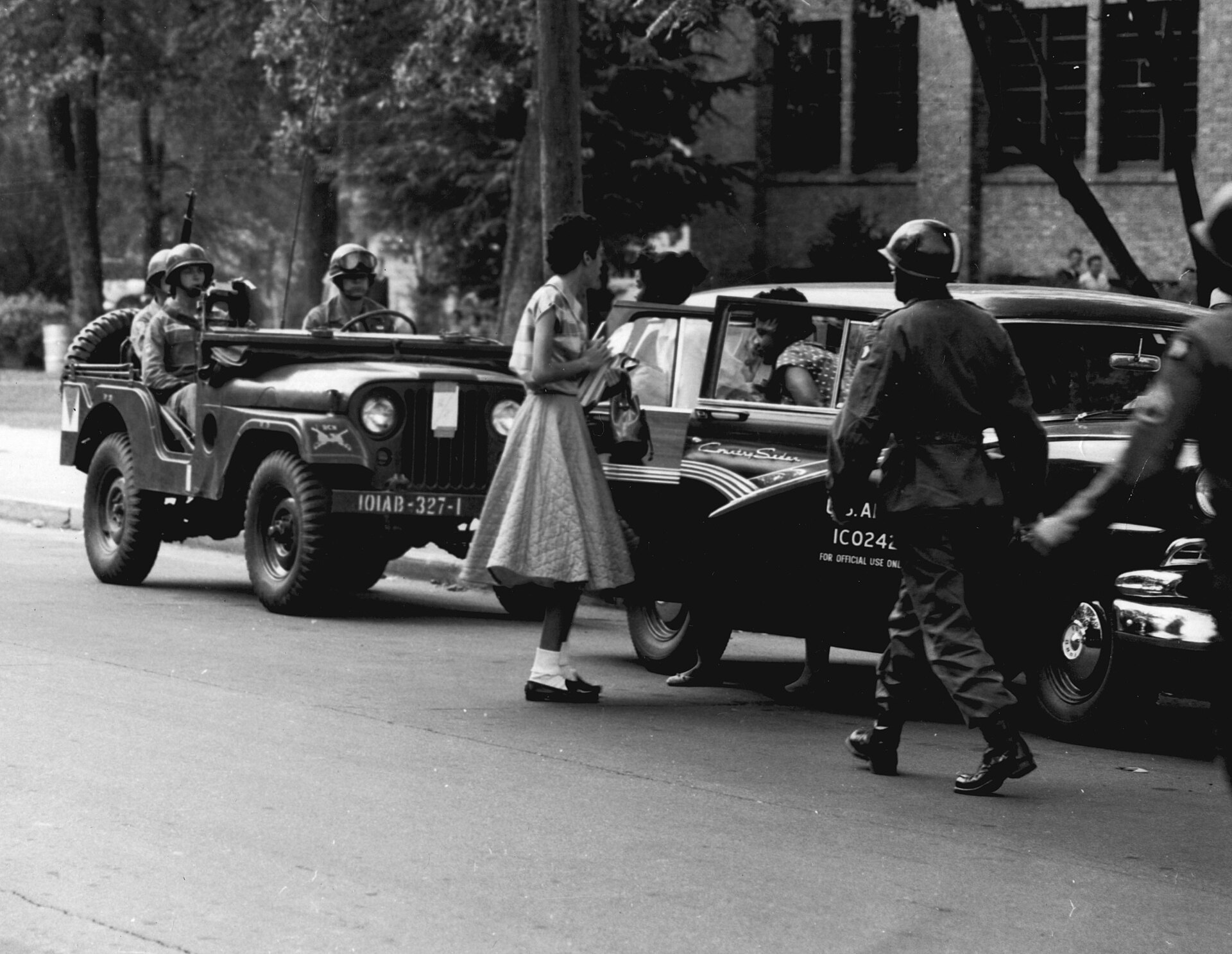
Nine Students and a Schoolhouse Door
A Supreme Court ruling promised an end to segregated schools. In Little Rock, nine teenagers discovered how far a legal victory could be from an ordinary school day.
The difficult part was supposed to be schoolwork. Instead, Black teenagers approaching Central High School in September 1957 encountered soldiers and a hostile crowd. Three years earlier, the Supreme Court had ruled racial segregation in public education unconstitutional. In Little Rock, Arkansas, that principle now had to survive a much more immediate question: would the students actually be allowed through the door?
The school district had adopted a gradual integration plan, with Central scheduled to begin admitting Black students in 1957. Those who volunteered were seeking access to an education, not simply a place in a historic photograph. They also faced restrictions on extracurricular participation and pressure reaching into their families’ lives. Daisy Bates, an Arkansas NAACP leader, helped support the students as the conflict moved from school administration into a confrontation with the state.

Keep reading in Yester
Coming soon to the App Store
Keep following the story
Sources
Image: The U.S. Army